
"Arabian Gulf" vs "Persian Gulf"
A Name, a Nation, and the Weight of History: How Trump's Reported Renaming of the Gulf Rekindles Centuries-Old Identity Struggles, Fuels Regional Tensions, and Challenges the Politics of Geography
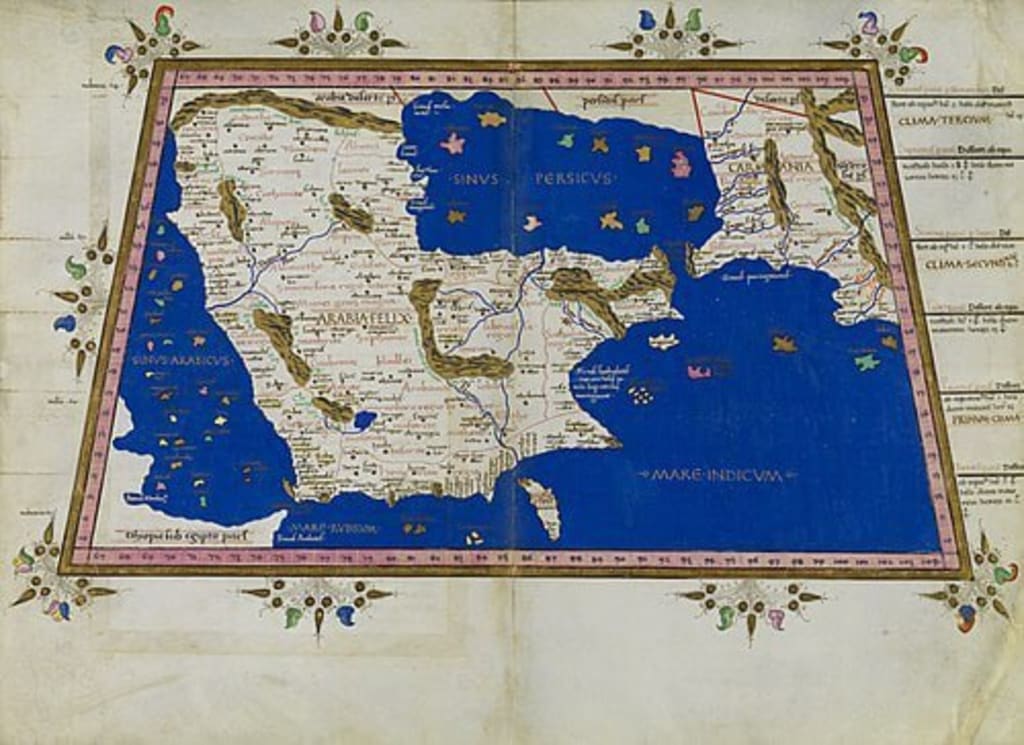
President Donald Trump has once again thrust himself into the global spotlight—this time not with tariffs or troop deployments, but with toponymy. His administration’s decision to officially adopt the name “Arabian Gulf” for the body of water traditionally known as the Persian Gulf has ignited celebration in many Arab capitals, fury in Tehran, and bewilderment among cartographers, historians, and international diplomats.
For many Iranians—particularly those who oppose the ruling clerical regime but maintain pride in their Persian heritage—Trump’s move is not merely a jab at the ayatollahs. It is seen as an erasure of culture and a symbolic alignment of U.S. policy against the Persian identity itself. In a region where names carry the weight of empires and centuries of rivalry, this administrative rebranding lands with the force of a missile—political, not ballistic.
Historically, there’s little ambiguity about the name of the gulf. Ancient Greek and Roman geographers, including Strabo and Ptolemy, referred to the body of water between modern-day Iran and the Arabian Peninsula as Sinus Persicus, or the Persian Gulf. By contrast, Sinus Arabicus—what some now suggest calling the Arabian Gulf—originally referred to the Red Sea. During the Islamic Golden Age, Muslim scholars referred to the body of water as the Bahr al-Fars (Sea of the Persians), and European maps from the Renaissance to the 20th century continued using the Persian nomenclature.
The global consensus remained firmly in favor of the name Persian Gulf until the mid-20th century. On almost every map printed before 1960, and in nearly all international treaties and legal documents, that was the universally accepted designation. Only in the wake of rising Arab nationalism—particularly post-1950s—did the name Arabian Gulf begin to appear, pushed largely by Arab League members as a counter-narrative to Iranian influence in the region.
Arab Gulf states began adopting the term in official discourse, school curricula, airline routes, and government maps. By the 1990s, it had become standard practice in much of the Arab world. Iran, meanwhile, has consistently pushed back—launching campaigns, international protests, and even threatening legal action against companies or media outlets that use the alternate term.
Now, with President Trump’s administration throwing its weight behind “Arabian Gulf”, the United States is taking a clear side in one of the region’s most bitter symbolic battles. Trump's supporters argue the move reflects stronger strategic ties with Gulf Arab allies like Saudi Arabia and the UAE—nations central to his foreign policy doctrine in the Middle East. Critics, however, see it as a reckless provocation that undermines decades of diplomatic language and alienates an entire population that already views the U.S. with suspicion.
What does this mean in practice? Not much will change on the ground. Shipping lanes will remain unchanged. Missiles, unfortunately, won’t care what the water is called. Iran’s ballistic capabilities, the Saudi-Iranian rivalry, and the geopolitical dance of oil, influence, and ideology will march on.
Still, symbols matter. Names carry the weight of pride and memory. When a superpower chooses a side in a naming dispute, it sends a message that transcends maps. For some in the Arab world, this is a triumph—a symbolic assertion of dominance over a long-time rival. For Iranians, even those who dream of regime change, it feels like an insult. To many, it confirms fears that Washington no longer distinguishes between the regime and the people.
And for the rest of us—diplomats, academics, and map publishers—it’s another headache. One more adjustment in an already fraught region where every name has a history, and every history a wound.
About the Creator
Keep reading
More stories from writers in The Swamp and other communities.
Parallel Protests
I haven't written for quite some time, but I have A LOT of thoughts about yesterday's protest rally against our government's involvement and complicity in America's war on Iran, on the harbourside of my home city Bristol, and I need to put them somewhere. My gorgeous girlfriend is always a loving and listening ear and sharing it all with her will always be a healthy and happy way of processing the mental and emotional weight, but getting it straight in my brain to share means writing it all down in straight lines, so, here we are and thanks for being here.
By Steph Cole10 days ago in The Swamp
Why Didn't Anyone Tell Us
Men, move along. This is not for you. This is for the women. I was forty-five when I began menopause. It is pretty young for that to be going on in a woman’s life, but I had undiagnosed PCOS, my entire life. Thank you to all the gynecologists I had seen my entire life. That in itself should encourage women to keep seeking second opinions, especially when you are not getting correct answers or any at all.
By Alexandra Grant3 days ago in Humans



Comments
There are no comments for this story
Be the first to respond and start the conversation.