
Anthony Albanese Vows to Deploy All Resources Against Antisemitism as Criticism Mounts After Bondi Attack
Prime Minister Albanese pledges decisive action after the Bondi antisemitic attack.

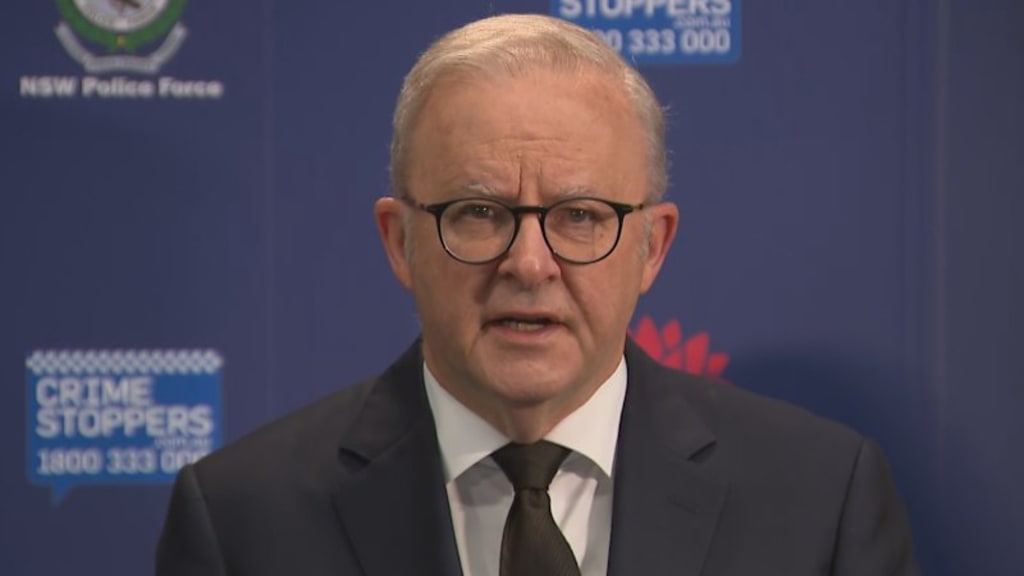
Australian Prime Minister Anthony Albanese has pledged to deploy “every available resource” to combat antisemitism following a violent incident in Bondi that has reignited national debate over hate crimes, public safety, and political responsibility. The attack, which occurred in one of Sydney’s most iconic and diverse suburbs, has sent shockwaves across the country and drawn sharp criticism from opposition figures, community leaders, and civil rights advocates.
As details of the incident emerged, public attention quickly shifted toward broader concerns about rising antisemitism in Australia and whether authorities are doing enough to address hate-driven violence.
A Nation Confronts Rising Tensions
The Bondi attack has become a focal point in an already tense national conversation. While investigations into the motive are ongoing, the incident has intensified fears within Jewish communities and raised questions about how extremist ideologies are spreading in modern Australian society.
Community leaders have warned that antisemitic rhetoric—both online and offline—has become more visible in recent years. Jewish advocacy groups argue that verbal abuse, vandalism, and threats have escalated into more dangerous territory, making decisive government action essential.
In response, Prime Minister Albanese made a strong public commitment, stating that the government would use law enforcement, intelligence agencies, and legislative tools to confront antisemitism wherever it appears.
Albanese’s Pledge and Government Strategy
Speaking amid growing criticism, Albanese emphasized that antisemitism has “no place in Australia” and described it as a direct threat to the country’s democratic values. He stressed that hate-based violence undermines social cohesion and public trust.
According to government officials, the strategy includes:
Enhanced monitoring of extremist activity
Stronger coordination between federal and state police
Increased funding for community protection programs
Support for education initiatives targeting hate speech and misinformation
The Prime Minister also reaffirmed his commitment to ensuring Jewish Australians feel safe in public spaces, places of worship, and schools.
Criticism From Opposition and Community Leaders
Despite the government’s pledge, criticism has mounted from opposition parties and some civil society groups, who argue that action has come too late. Critics claim warning signs were visible long before the Bondi attack and accuse authorities of underestimating the scale of the problem.
Opposition figures have called for:
Faster implementation of hate crime legislation
Tougher penalties for incitement and harassment
Greater transparency in intelligence assessments
Some community leaders also expressed frustration, noting that repeated condemnations have not always translated into concrete preventive measures.
The Role of Online Platforms
A key element of the debate revolves around online radicalization. Experts say antisemitic conspiracy theories and hate narratives spread rapidly on social media, often escaping moderation. These digital spaces can normalize extremist views and contribute to real-world violence.
The Albanese government has indicated it will engage more aggressively with technology companies to limit harmful content. Officials argue that tackling antisemitism requires confronting its digital roots, not just its physical consequences.
Balancing Security and Civil Liberties
While there is broad agreement on the need to combat antisemitism, some civil liberties advocates warn against overreach. They caution that expanded surveillance and policing powers must be carefully balanced to protect freedom of expression and prevent discrimination against other communities.
The Prime Minister acknowledged these concerns, stating that Australia must fight hate without compromising democratic principles. Legal experts suggest that clearly defined laws and judicial oversight will be critical in maintaining this balance.
A Test of Leadership and Trust
The Bondi attack has become a defining moment for Albanese’s leadership on social cohesion and national security. For many Australians, the government’s response will be judged not by words, but by outcomes—whether incidents of hate decline and whether vulnerable communities feel genuinely protected.
Political analysts note that how the government navigates this crisis could shape public trust ahead of future elections, particularly as global conflicts and geopolitical tensions continue to influence domestic discourse.
Looking Ahead
As investigations continue and policy measures are rolled out, Australia finds itself at a crossroads. The challenge is not only to respond to a single incident, but to address the deeper causes of antisemitism and extremism.
Albanese’s vow to deploy all resources sends a clear signal of intent. Whether that commitment leads to lasting change will depend on sustained political will, community cooperation, and a collective rejection of hate in all its forms.
About the Creator
Fiaz Ahmed Brohi
I am a passionate writer with a love for exploring and creating content on trending topics. Always curious, always sharing stories that engage and inspire.
Keep reading
More stories from Fiaz Ahmed Brohi and writers in The Swamp and other communities.
UN Expert Decries Imran’s Detention, Urges Compliance With International Standards
A United Nations human rights expert has raised serious concerns over the continued detention of former Pakistani Prime Minister Imran Khan, calling on authorities to ensure that his treatment fully complies with international legal and human rights standards. The statement has renewed global attention on Pakistan’s political and judicial climate, as well as broader questions about the rule of law in the country.
By Fiaz Ahmed Brohi3 months ago in The Swamp
The Forsyth House Fire
Since 1851, Forsyth House has stood on the corner of Union Street and Gordon Street in the heart of Glasgow. Its iconic, or was... because on Sunday 8th of March, 2026, a fire broke out in a small, seemingly un-named shop in the building and tore all that history down. As I write, the rubble is still unsettled and the street is still blocked off. Central Station is quiet on the upper level, and around 30 small businesses have quite literally gone up in smoke.
By S. A. Crawford3 days ago in The Swamp
Shots Fired at U.S. Consulate in Toronto, Police Say
Early Tuesday morning, authorities in Canada launched an investigation after gunfire was reported at the United States Consulate in downtown Toronto. The incident, which occurred before sunrise, has drawn international attention and prompted heightened security around diplomatic buildings across the country. Fortunately, no injuries were reported, but officials say the event is being treated as a serious national security matter.
By Jameel Jamali6 days ago in The Swamp


Comments
There are no comments for this story
Be the first to respond and start the conversation.