
Andrew Invited Epstein to Buckingham Palace After Child Sex Offender’s Release, Files Show
Newly released documents reignite questions about royal judgment, accountability, and continued elite access after conviction.
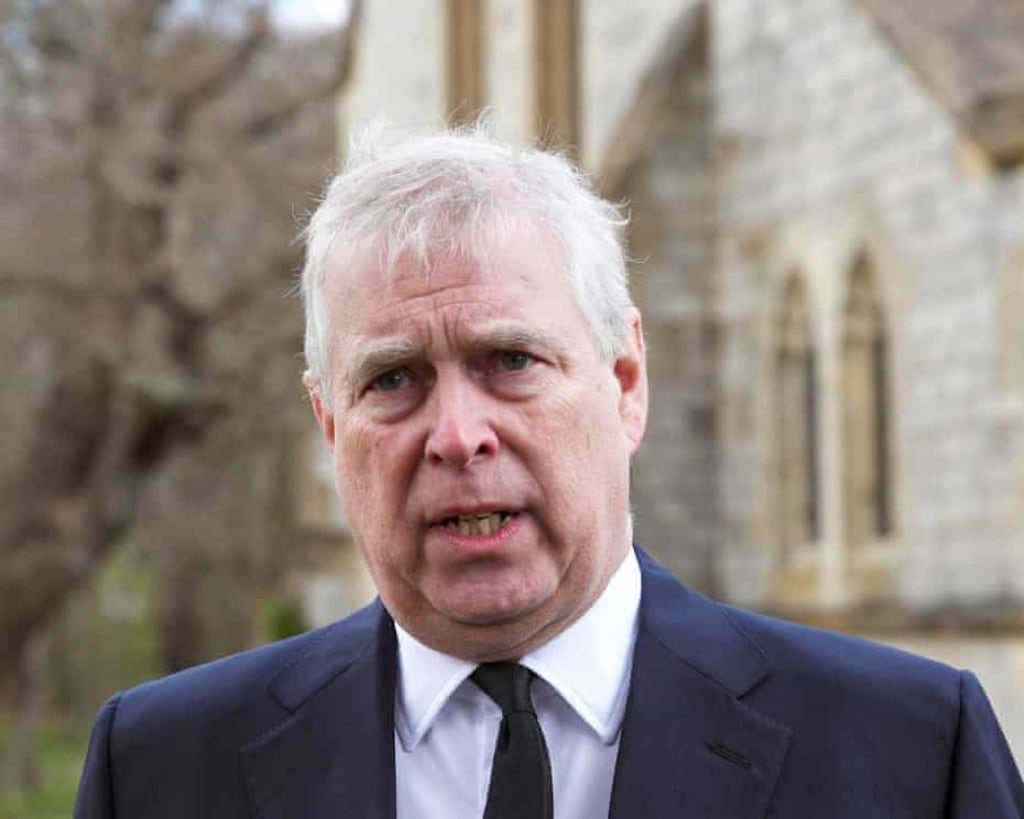
Recently unsealed court documents and previously undisclosed correspondence have reignited scrutiny of the relationship between Britain’s Prince Andrew and the late financier Jeffrey Epstein. According to the files, Epstein—who had been convicted in the United States for sex-related offenses involving a minor—was invited to Buckingham Palace after his release from prison. The revelation has intensified public debate about judgment, accountability, and the responsibilities of public figures when associating with individuals known to have committed serious crimes.
The documents emerged as part of broader legal proceedings in the United States that have led to the release of emails, schedules, and witness statements connected to Epstein’s social network. While many of these materials were known to exist, their contents were not previously accessible to the public. Together, they paint a detailed picture of Epstein’s continued access to powerful circles even after his conviction, raising uncomfortable questions about how reputational barriers can fail.
Prince Andrew, the Duke of York and a member of the British royal family, has long faced questions over his association with Epstein. The relationship reportedly began in the late 1990s, when Epstein was a wealthy financier with connections to politicians, academics, and celebrities. At the time, Epstein’s social reach allowed him to cultivate relationships across the Atlantic, including with members of the British elite.
Epstein pleaded guilty in 2008 to charges involving a minor and served a custodial sentence in Florida, followed by a period of house arrest. His conviction was widely reported, and he was required to register as a sex offender. Despite this, the newly released files indicate that Epstein continued to be welcomed in certain elite settings. One of the most striking claims in the documents is that Epstein was invited to Buckingham Palace after his release, suggesting that his prior conviction did not fully sever his access to royal or high-profile environments.
Buckingham Palace has historically declined to comment in detail on specific allegations involving Epstein, often citing legal sensitivities or the passage of time. Prince Andrew has previously stated that he regrets his association with Epstein and has denied wrongdoing. In a 2019 television interview, he said he cut off contact with Epstein after becoming aware of his conviction, a claim that has since been challenged by reports and documents indicating continued communication.
The idea that Epstein could be invited to the monarch’s official residence after a criminal conviction has sparked significant public concern. Buckingham Palace is not only a private residence but also a symbol of the British state and monarchy. Invitations to such a location are therefore seen by many as an implicit endorsement or at least a sign of acceptance. Critics argue that allowing Epstein access undermined public trust and sent the wrong message about accountability for serious crimes.
Supporters of Prince Andrew’s position have cautioned against drawing definitive conclusions from partial records. They note that invitations can be extended for a variety of reasons, and that not all events at royal residences carry the same level of formality or significance. They also emphasize that Epstein’s social presence in elite circles was, at the time, unfortunately common, reflecting broader systemic failures rather than the actions of a single individual.
Nevertheless, the revelations come at a time when institutions worldwide are under increasing pressure to confront past associations and failures to act. The Epstein case has become emblematic of how wealth and influence can enable individuals to evade meaningful social consequences even after criminal convictions. The continued release of documents has kept the focus on not only Epstein’s actions but also on those who maintained relationships with him.
For Prince Andrew, the renewed attention adds to existing challenges. He stepped back from public duties in 2019 amid growing controversy and has since remained largely out of public view. The British monarchy, under King Charles III, has sought to modernize its image and emphasize transparency and responsibility. Ongoing revelations tied to Epstein complicate those efforts, keeping difficult questions in the public eye.
More broadly, the files have fueled calls for clearer standards around associations with convicted offenders, especially for public officials and figures of influence. Advocates argue that transparency about past relationships and decisive action when credible concerns arise are essential to maintaining public trust. They also stress the importance of centering discussions on accountability and institutional reform, rather than solely on individual scandal.
As additional documents continue to be examined and reported, the full implications of Epstein’s post-conviction access to elite spaces may take time to emerge. What is clear, however, is that the issue extends beyond one invitation or one relationship. It highlights how power, privilege, and reputation can intersect in ways that shield wrongdoing and delay accountability. The public response to these revelations reflects a growing expectation that such dynamics be openly addressed—and not quietly overlooked—regardless of status or title.
About the Creator
Keep reading
More stories from Sain Hafiz and writers in The Swamp and other communities.
What to Know About the Partial Government Shutdown
A partial government shutdown is one of the most disruptive events in U.S. governance, affecting millions of workers, public services, and the broader economy. While it does not mean the entire government stops functioning, it does create widespread uncertainty and tangible consequences for federal employees and the public. Understanding what a partial government shutdown is, why it happens, and how it impacts daily life can help make sense of an often confusing political situation.
By Sain Hafizabout 3 hours ago in The Swamp
What we know about Alex Pretti, the ICU nurse shot and killed in Minneapolis
For another individual to be gunned down in the street by ICE agents is appalling. Among the alphabet soup of government organizations that need to be abolished, ICE ranks among the highest. There is no reason for Alex Pretti to be dead right now. As a law-abiding citizen of the United States of America, he was exterminated because of his own individualism. The fact he had a right to carry a firearm shows that the Second Amendment only applies to only a few.
By Skyler Saunders7 days ago in The Swamp




Comments
There are no comments for this story
Be the first to respond and start the conversation.