
Amid Destruction, Loss, Gaza Clings to Ramadan Traditions with Resilience
How faith, family, and community endure in the face of devastation

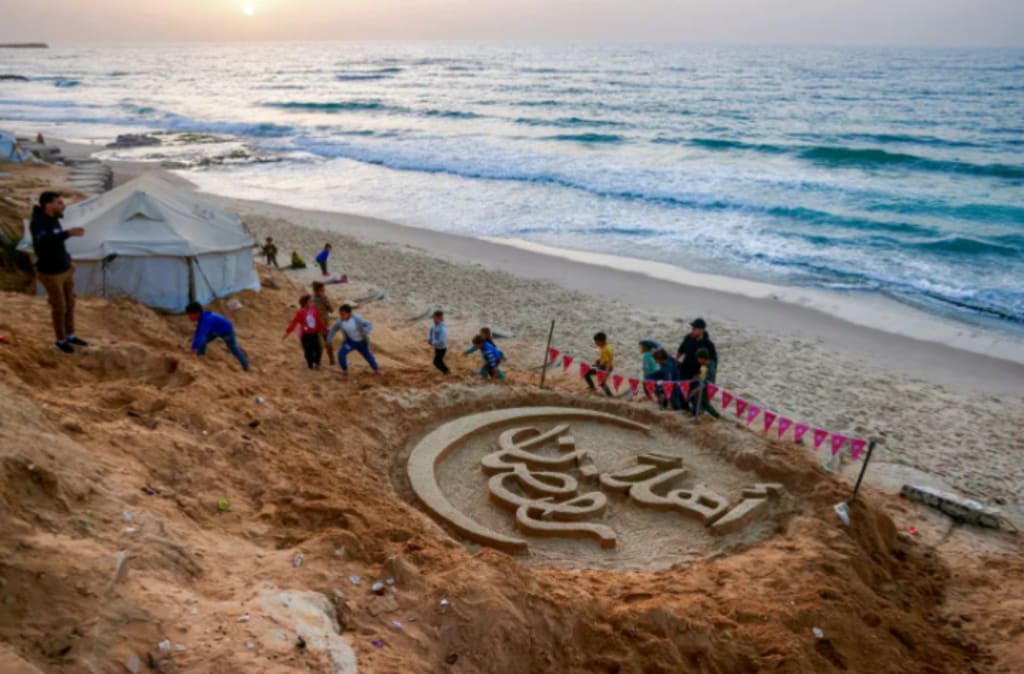
As the crescent moon signals the arrival of Ramadan, the streets of the Gaza Strip look very different from years past. Once vibrant neighborhoods decorated with glowing lanterns and bustling markets now stand scarred by rubble and silence. Homes have been reduced to debris, electricity is scarce, and the rhythm of daily life has been shattered by months of conflict and loss.
Yet, despite the devastation, Gaza’s people are holding tightly to one thing that war has not taken from them: their Ramadan traditions.
In a place where grief has become part of everyday life, fasting, prayer, and community meals have become acts of quiet resistance — proof that identity and faith can survive even in the harshest conditions.
Ramadan Without the Familiar Lights
Before the war, Ramadan in Gaza was a season of joy and renewal. Streets glowed with colorful lanterns, children roamed markets after sunset, and families gathered for iftar meals filled with traditional dishes. Mosques overflowed with worshippers during nightly prayers, and the atmosphere was one of spiritual reflection mixed with celebration.
This year, however, much of Gaza is unrecognizable.
Many mosques have been damaged or destroyed. Entire families have been displaced into crowded shelters or makeshift tents. Food shortages and power outages make preparing meals a daily struggle. Still, as sunset approaches, families sit together — often on the floor of damaged homes or inside refugee camps — waiting to break their fast.
What would normally be a feast has become a simple meal: bread, dates, canned food, or whatever aid has arrived that day. Yet the meaning of iftar remains unchanged. It is still a moment of gratitude, prayer, and togetherness.
Faith as a Source of Strength
In times of peace, Ramadan is about discipline and devotion. In times of war, it becomes something more — a source of emotional survival.
Many residents say prayer has helped them cope with trauma and fear. Even when mosques are inaccessible, people pray in courtyards, tents, or among the ruins of their homes. The call to prayer still echoes across neighborhoods, sometimes broadcast from small speakers powered by generators or mobile phones.
Religious leaders have encouraged people to continue observing Ramadan traditions as best they can, reminding them that faith is not limited to buildings but lives within the heart of the believer.
Children, too, try to participate. Some fast for part of the day, while others help parents distribute food or water to neighbors. In a landscape shaped by destruction, these small rituals provide a sense of normalcy — something that war cannot erase.
Community in the Face of Scarcity
Perhaps the most powerful expression of resilience in Gaza this Ramadan is the spirit of sharing.
With food in short supply, families pool resources together. Aid organizations and volunteers set up communal kitchens, preparing large pots of soup or rice for hundreds of people at sunset. Neighbors check on one another, ensuring the elderly and sick are not forgotten.
Charity, a core value of Ramadan, has taken on even greater meaning. People who have lost almost everything still give what little they can — a piece of bread, a cup of tea, or a kind word.
International relief groups such as UNRWA and local volunteers continue distributing food and water, though access remains difficult due to damaged roads and limited supplies. These efforts help sustain not only physical health but also morale.
Grief at the Iftar Table
Ramadan is traditionally a time when families gather, but many Gaza households now face empty seats at the table.
Thousands have lost loved ones, and the absence is deeply felt during moments meant for togetherness. Mothers prepare meals for children who no longer come home. Fathers break their fast in silence, remembering those who once sat beside them.
Still, remembrance itself has become part of the ritual. Families say prayers for the dead before eating, turning grief into spiritual reflection. Some light candles at sunset, honoring those who are gone while reaffirming their commitment to those still living.
Children Growing Up Too Fast
For Gaza’s children, this Ramadan is unlike any they have known.
Instead of school celebrations and evening treats, many spend their days helping their families find water or waiting in long lines for food aid. Toys have been replaced by responsibilities. Yet children continue to draw Ramadan lanterns in the dust, sing traditional songs, and ask parents about the meaning of fasting.
Parents do their best to protect their children’s sense of wonder, even in tragedy. They tell stories, recite verses, and explain that Ramadan teaches patience — a lesson Gaza’s youngest generation is learning far too early.
Resilience Beyond Ruins
Observers say Gaza’s perseverance this Ramadan reflects a deeper cultural strength. Faith, family, and community have long been central to Palestinian life, and in moments of crisis, these values become lifelines.
The war has changed the outward form of Ramadan, but not its spirit. There may be no lanterns, no crowded markets, and no grand feasts, but there is still prayer, sharing, and hope.
Residents say that maintaining Ramadan traditions is not just about religion — it is about dignity. It is a way of declaring that even amid destruction, life continues and identity remains intact.
A Quiet Message to the World
As the rest of the Muslim world celebrates Ramadan with lights, food, and gatherings, Gaza observes it with courage and endurance. Each fast broken under difficult conditions becomes a reminder of human resilience.
In tents and shattered homes, families still whisper prayers at sunset. They still greet one another with “Ramadan Mubarak.” They still believe that patience will one day give way to peace.
This Ramadan in Gaza is not defined by abundance, but by perseverance. Amid destruction and loss, the people cling to their traditions — not because it is easy, but because it reminds them who they are.
And in a land marked by sorrow, that quiet resilience may be the most powerful form of worship of all.
About the Creator
Sajida Sikandar
Hi, I’m Sajida Sikandar, a passionate blogger with 3 years of experience in crafting engaging and insightful content. Join me as I share my thoughts, stories, and ideas on a variety of topics that matter to you.
Keep reading
More stories from Sajida Sikandar and writers in The Swamp and other communities.
Lunar New Year Horoscopes for 2026, the Year of the Fire Horse
The Lunar New Year of 2026 ushers in the Year of the Fire Horse, a powerful combination of speed, passion, and transformation. In Chinese astrology, the Horse symbolizes freedom, courage, and relentless movement forward. When paired with the Fire element, its natural intensity is amplified, bringing a year charged with ambition, emotional clarity, and dramatic shifts.
By Sajida Sikandar2 days ago in The Swamp
Why Black History Matters in America?
The United States of America is celebrating their 250th anniversary in 2026. I'm proud to be an American and as someone who was born here, I wouldn't imagine myself living anywhere else. This is a country where opportunities are possible. Where anyone can be successful in anything they desire to do. Equality, community, and togetherness are the backbones of what America is and should be about. However, we have an administration who wants to erase and disregard those who have made positive, meaningful impacts in our country, specifically Black figures, such as Martin Luther King, Jr., Rosa Parks, and Maya Angelou. President Trump and his administration have been constantly complaining and fighting against what they call the "Woke agenda". They use this excuse as a distraction from other issues they refuse to address, such as the high cost of living, climate change, and inflation. That equality is dividing America, when in reality, it's bringing us together. Being woke is not tied to a specific political party. No matter where you stand on the political spectrum, you can still care about other people and their plights. Compassion and empathy for others isn't tied to a political party, either. We were taught as children to treat others the way we want to be treated and not judge others because they're different from us. Caring about others isn't a personal attack on your beliefs. It doesn't make you any less of a person. People who are easily offended over African American figures, past or present, or anything related to it, are grasping at straws. Current and future generations need to know who people like Harriet Tubman and Shirley Chisholm were, especially in the classroom. Black History is part of American History. It should be recognized, not hidden or forgotten. Besides, you can't shield children from everything, just because your feelings are easily hurt.
By Mark Wesley Pritchard 18 days ago in The Swamp
Woodside Energy Asks for Second Round of Offers on LNG Newbuildings
Woodside Energy, one of Australia’s leading liquefied natural gas (LNG) producers, has initiated a second round of bids for new LNG carrier construction, signaling its commitment to expanding its shipping fleet amid rising global demand for natural gas. The move reflects both strategic planning for long-term supply contracts and efforts to secure favorable construction terms from shipbuilders. Expanding the LNG Fleet Woodside Energy, which operates multiple LNG facilities in Australia, is seeking additional carriers to transport its gas from remote production sites to international markets, particularly in Asia and Europe. The company had previously issued a first round of offers, but escalating costs, evolving technology requirements, and competitive pressures prompted the decision to reopen negotiations. Industry analysts note that securing new LNG carriers is critical as the company ramps up production to meet long-term contracts with customers in Japan, South Korea, China, and increasingly Europe. LNG shipments are a key component of Woodside’s revenue stream, and reliable transport capacity is essential for meeting delivery commitments. Second Round Bidding Process The second round of offers is expected to attract international shipbuilders specializing in LNG vessels. Woodside has emphasized the importance of efficiency, low emissions technology, and adherence to evolving maritime environmental regulations. Builders are being asked to submit competitive bids that account for construction timelines, fuel efficiency, and vessel capacity. A company spokesperson said, “Our focus is on securing LNG carriers that meet our operational needs and sustainability targets. We are carefully evaluating proposals to ensure the fleet expansion aligns with our long-term strategic objectives.” Market Context Global LNG demand has grown steadily, driven by efforts to reduce carbon emissions and shift from coal and oil to cleaner fuels. Europe’s recent energy crisis has accelerated the need for secure LNG supply chains, while Asian economies continue to rely heavily on natural gas for power generation and industrial use. Shipbuilders face challenges in meeting demand for specialized LNG carriers, including longer lead times and rising steel and labor costs. Woodside’s second round of bidding allows the company to explore cost optimization while securing vessels equipped with modern propulsion technology, such as dual-fuel engines and reduced boil-off systems, to minimize environmental impact. Strategic Importance The expansion of the LNG fleet is part of Woodside’s broader strategy to maintain and grow its market share globally. With energy transition policies influencing the mix of fuels, LNG is positioned as a bridge energy source, and having a reliable, efficient shipping fleet ensures that Woodside can respond to shifting demand patterns and contract obligations. Investors and industry observers see fleet expansion as a signal that Woodside is preparing for increased export volumes and a longer-term commitment to LNG as part of its portfolio. The company’s ability to negotiate favorable terms in the second round could have significant financial implications, influencing capital expenditure, operational efficiency, and profitability. Environmental and Regulatory Considerations In addition to operational efficiency, the company is emphasizing compliance with international maritime regulations, including those related to carbon emissions and fuel sulfur content. LNG carriers are increasingly being evaluated not just on transport capacity but also on environmental performance, as stricter rules come into effect globally. Woodside’s emphasis on low-emission technology and sustainability aligns with broader trends in the shipping and energy sectors. By selecting vessels that meet higher environmental standards, the company seeks to future-proof its fleet against regulatory and market pressures. Looking Ahead The outcome of the second round of offers is expected in the coming months, with contracts awarded to builders capable of delivering vessels that meet both technical and environmental criteria. The decision will set the tone for Woodside’s fleet strategy and capacity planning over the next decade. As LNG markets remain competitive and global energy demand evolves, Woodside Energy’s fleet expansion demonstrates the company’s proactive approach to securing shipping capacity, optimizing costs, and supporting its long-term growth objectives in the liquefied natural gas sector.
By Fiaz Ahmed 2 days ago in The Swamp



Comments
There are no comments for this story
Be the first to respond and start the conversation.