
American Rights to Free Speech vs. European Rights to Set Their Own Rules
A comparative look at how the U.S. and Europe define the boundaries of free expression and the implications for society and technology.

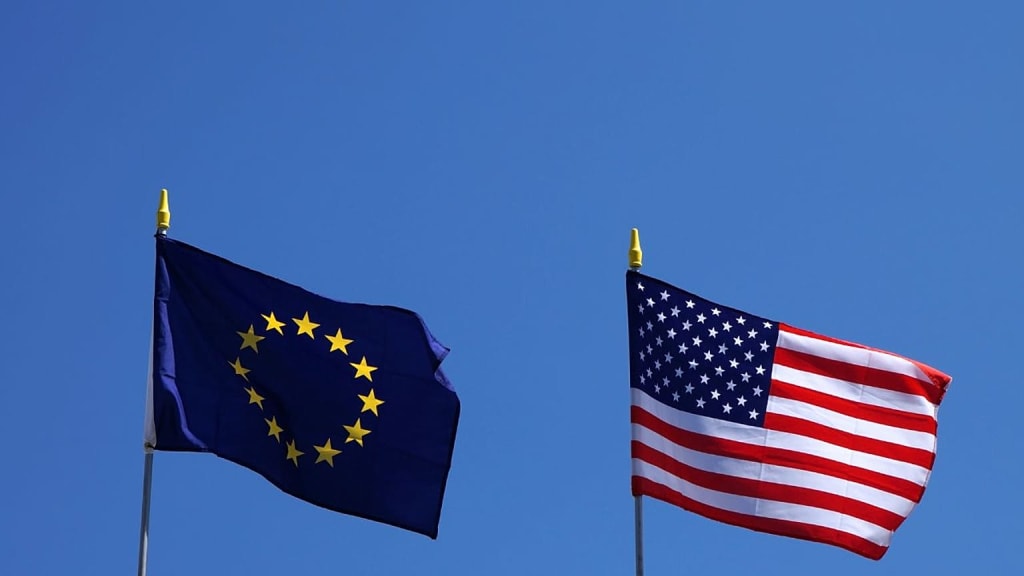
The debate over free speech often finds itself at a crossroads between the United States and Europe, where contrasting legal frameworks and cultural attitudes have created vastly different approaches to what citizens can say and how governments respond. While Americans enjoy one of the broadest constitutional protections for speech in the world, European countries generally exercise greater regulatory discretion, balancing individual expression with other societal interests such as public order, privacy, and protection from hate speech.
The American Model: Broad Protections
In the United States, the First Amendment guarantees that “Congress shall make no law… abridging the freedom of speech.” This protection extends to individuals, organizations, and even the press, covering political expression, commercial speech, and artistic work. American courts have historically interpreted this right expansively, often favoring the speaker over the government, even when speech is controversial or offensive.
Landmark Supreme Court cases, such as Brandenburg v. Ohio (1969), have set high thresholds for limiting speech, requiring that any restriction demonstrate a direct incitement to imminent lawless action. This has allowed public discourse to remain vibrant, ensuring that ideas, including unpopular or provocative ones, can be aired without fear of government censorship.
American culture tends to value robust debate, even when speech causes discomfort or challenges societal norms. The assumption is that truth emerges through dialogue, and that the government should rarely intervene in regulating expression. As a result, even extreme or incendiary speech is often protected, creating an environment in which social consequences, rather than legal penalties, serve as the primary check.
The European Model: Balancing Rights and Responsibilities
In contrast, European nations often operate under civil law traditions that allow governments to impose greater limits on speech. Countries such as Germany, France, and the United Kingdom have laws against hate speech, Holocaust denial, and speech that incites discrimination or violence. These laws reflect a historical context in which governments have sought to prevent the recurrence of extreme ideologies that threatened democracy and public safety.
The European Convention on Human Rights (ECHR), particularly Article 10, guarantees freedom of expression but explicitly allows for restrictions deemed “necessary in a democratic society” to protect national security, public safety, or the rights of others. Courts in Europe balance free speech against other societal priorities, often ruling in favor of harm reduction and social cohesion rather than absolute expression.
Implications for Social Media and Global Platforms
The divergence between American and European approaches has become particularly relevant in the digital age, as global platforms struggle to comply with conflicting rules. Social media companies based in the United States are accustomed to broad free speech protections, yet they must navigate European regulations such as Germany’s NetzDG or the EU’s Digital Services Act, which require the swift removal of illegal content.
This regulatory mismatch has sparked debate over whether U.S. tech firms should apply American standards globally or adapt to local European laws. Critics argue that enforcing the U.S. model abroad could enable harmful or illegal content, while proponents warn that strict European-style moderation may stifle debate and innovation.
Cultural Context Matters
The tension between U.S. and European approaches also reflects differing cultural attitudes toward freedom, responsibility, and historical memory. Americans often view speech as an inalienable right, whereas Europeans emphasize the social responsibility that accompanies it. For example, speech that glorifies totalitarian regimes or promotes racial hatred is broadly condemned and often criminalized in Europe, reflecting lessons from the 20th century’s tumultuous history.
In contrast, the U.S. model prioritizes individual liberty, even when it allows speech that many find offensive or inflammatory. This divergence has implications not only for law and policy but also for international diplomacy, media regulation, and corporate governance.
Finding a Balance
Experts suggest that neither system is perfect. Advocates for U.S.-style free speech argue that excessive regulation risks government overreach and censorship, while proponents of European-style regulation caution that unrestricted speech can facilitate harm, misinformation, and social division. Some scholars have called for a hybrid approach, where the law protects robust debate but imposes carefully defined limits on speech that directly harms others or undermines democratic norms.
Ultimately, the American and European models reflect different historical experiences, cultural values, and legal traditions. Understanding these differences is critical in an era where speech flows across borders, and platforms, policymakers, and citizens must navigate competing expectations of freedom and responsibility.
About the Creator
Fiaz Ahmed
I am Fiaz Ahmed. I am a passionate writer. I love covering trending topics and breaking news. With a sharp eye for what’s happening around the world, and crafts timely and engaging stories that keep readers informed and updated.
Keep reading
More stories from Fiaz Ahmed and writers in The Swamp and other communities.
Chinese Vessel Sits Off Garden Island Naval Base as British Submarine HMS Anson Arrives
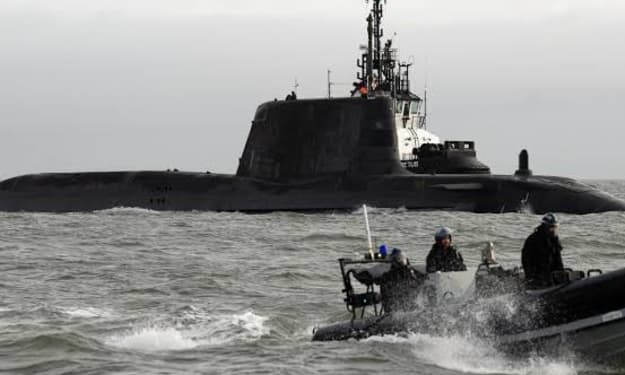
A Chinese naval vessel was observed lingering off the coast near Garden Island Naval Base at the same time a British nuclear-powered submarine, HMS Anson, arrived at the strategically important Australian facility, triggering heightened security attention and diplomatic unease. According to defense officials, the Chinese ship remained in international waters but within visible proximity of the base, where the submarine docked as part of a previously scheduled visit. The timing of the encounter has fueled speculation about maritime surveillance, intelligence gathering, and the growing competition for influence in the Indo-Pacific region. The Royal Australian Navy confirmed that the arrival of HMS Anson was routine and conducted under established defense cooperation agreements with the United Kingdom. However, officials declined to comment in detail on the presence of the Chinese vessel, citing operational security. Strategic Significance of the Visit HMS Anson is one of the Royal Navy’s Astute-class nuclear-powered attack submarines, capable of long-range patrols and advanced intelligence operations. Its arrival in Australia comes amid intensified military cooperation between Australia, United Kingdom, and the United States under the AUKUS security partnership. Defense analysts say the submarine’s visit underscores the West’s commitment to maintaining a strong naval presence in the Indo-Pacific, particularly in light of increased Chinese maritime activity across the South China Sea and beyond. “This is a visible symbol of allied deterrence and interoperability,” said one former Australian naval commander. “But when a Chinese ship is watching from nearby waters, it sends its own message.” China’s Presence Raises Questions The Chinese vessel, believed to be part of the China’s navy or a research fleet with surveillance capability, did not violate Australian territorial waters. Still, experts note that such ships are often equipped with sensors capable of collecting electronic and acoustic data. While Chinese authorities have not publicly commented on the incident, Beijing has previously defended similar deployments as lawful navigation in international waters. Nonetheless, the proximity to a sensitive military installation has prompted scrutiny from both Australian officials and allied defense observers. Security around Garden Island was reportedly elevated during HMS Anson’s arrival, with patrol boats and aerial monitoring ensuring no interference occurred. A Growing Pattern of Encounters This incident reflects a broader pattern of close encounters between Western and Chinese military assets across the Indo-Pacific. Over the past two years, Chinese naval vessels have been sighted near U.S. and allied exercises in the Pacific, as well as near undersea cable routes and naval ports. Analysts argue that these maneuvers are part of an evolving strategic competition that is increasingly being played out at sea. “These are not random sightings,” said a regional security expert. “They are calculated signals in a contest over influence and access.” The presence of HMS Anson also ties into Australia’s long-term plans to acquire nuclear-powered submarines under AUKUS, a move China has repeatedly criticized as destabilizing. Diplomatic Sensitivities Australian officials emphasized that the situation was handled calmly and in accordance with international maritime law. Privately, however, some defense insiders expressed concern about the potential for miscalculation or escalation should such encounters become more frequent. Opposition politicians called for greater transparency about foreign military movements near Australian bases, urging the government to reassure the public that national security is not being compromised. The British government described the submarine visit as part of routine cooperation with partners and declined to address the Chinese ship directly. Looking Ahead For now, the Chinese vessel has reportedly moved further offshore, and HMS Anson has continued with its scheduled port activities. But the episode highlights the increasingly crowded and contested nature of Indo-Pacific waters. As Australia deepens its military ties with Western allies, such moments are likely to become more common. Each encounter serves as a reminder that the region is now at the forefront of global strategic rivalry — where even routine port visits can take on symbolic and geopolitical weight.
By Fiaz Ahmed a day ago in The Swamp
A Gathering of Evil Bosses
“I’m the queen of chin jutting while I smooth my hair, attacking, insulting, and deflecting to protect my appointer.” “Oh, please, Blondi, my hair is curled, highlighted, and longer than yours. I feature television commercials telling immigrants that we will give them a free plane ride home, and if they voluntarily turn themselves in, they will be allowed to legally apply for re-entry. It runs everywhere, and I look good in it! You can’t compete because of your blond hair. Mine is nicer, and my lips are prettier than yours.”
By Andrea Corwin 5 days ago in The Swamp
There's A Hole in My Bucket
It’s a well-known fact that Liza Dufresne was always the brains in the family. She was the one who always came up with the brilliant schemes the Dufresne kids carried out when they were younger. Like when they tricked Mrs. Claybourn into paying for a trip to Disney World. Liza convinced her that their parents had been kidnapped and were being held for ransom for the total price of three tickets. In reality, they were away on a weekend getaway for their anniversary. When they returned, Liza told the Claybourns that they did not like to talk about the ordeal. Their parents never found out how they got the money. Mrs. Claybourn never found out that the Dufresne parents were never really in any danger.
By David E. Perry5 days ago in Fiction


Comments
There are no comments for this story
Be the first to respond and start the conversation.