
Al Green's Bold Protest at Trump's Congressional Address: What Led to the Disruption
Reasons Behind Al Green's Bold Protest and Its Impact on American Politics

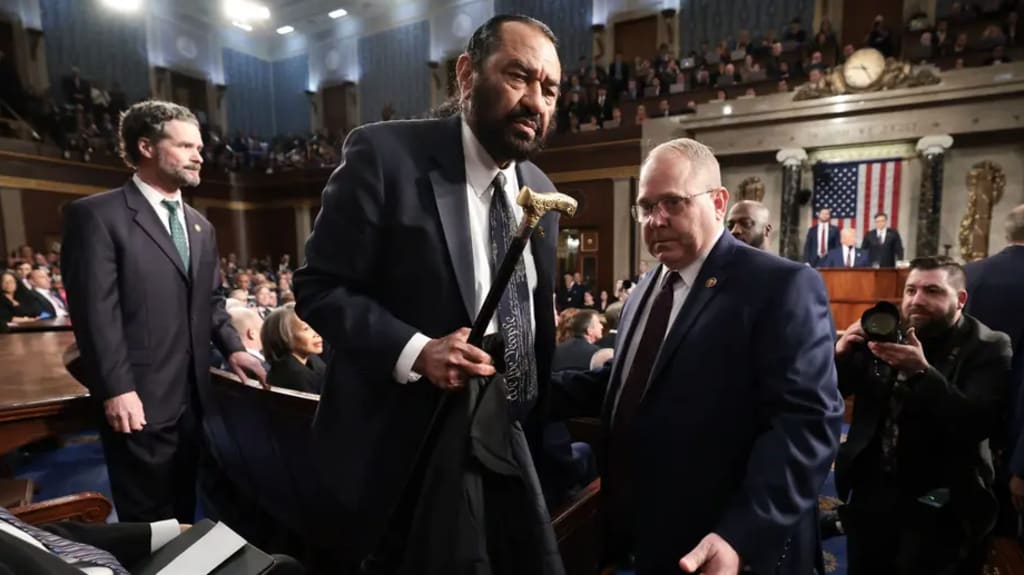
On March 4, 2025, the U.S. House of Representatives witnessed a dramatic scene that quickly became the talk of the nation. Rep. Al Green of Texas, known for his vocal opposition to former President Donald Trump and his staunch advocacy for progressive policies, was escorted out of the chamber during Trump’s address to Congress. His protest, which was bold and unfiltered, sparked both outrage and praise, prompting conversations about the effectiveness of such disruptions in the world of politics.
The Scene in the House Chamber
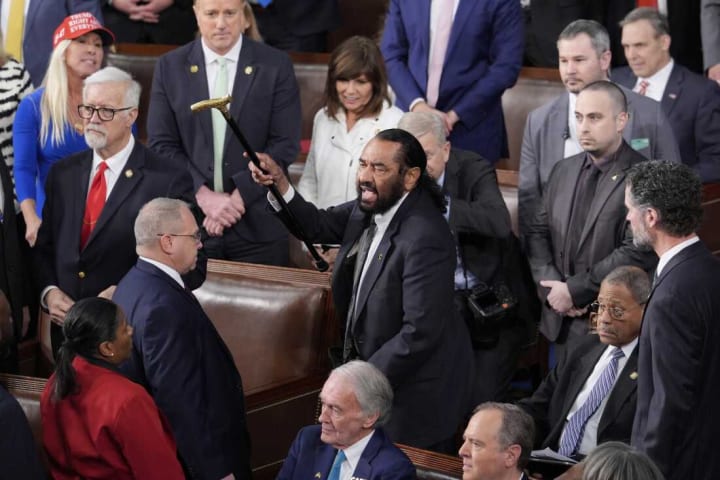
It was a highly anticipated evening. The chamber was filled with lawmakers, dignitaries, and the media, all gathered to hear President Donald Trump’s address to a joint session of Congress. The room was buzzing with the usual sense of political theatre until Rep. Al Green stood up.
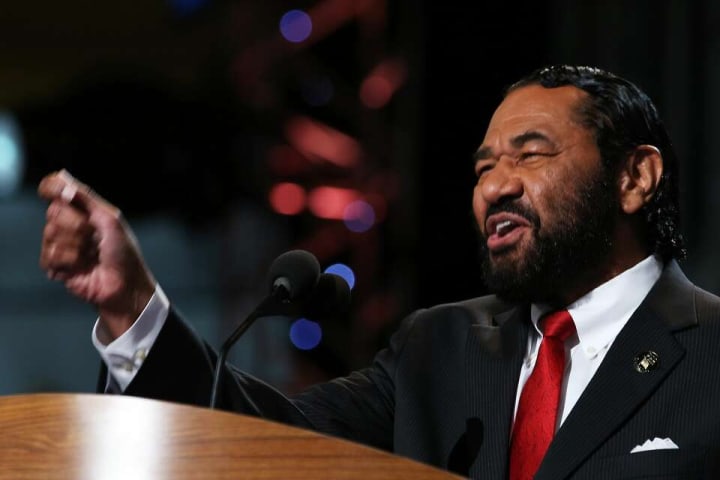
In a moment that caught the attention of everyone in the room, Green, holding a cane, loudly interrupted President Trump’s speech.
He yelled, "You don’t have a mandate!"
as he waved the cane in the air, his voice cutting through the air like a sharp knife. The disruption was immediate and jarring.
As the noise escalated, the House Sergeant-at-Arms moved swiftly, escorting Green out of the chamber. The scene was surreal. Green, a congressman from Texas with a history of confronting Trump’s administration, had made his stance clear in the most public way possible by disrupting a speech in front of an entire nation.
The Motivation Behind the Protest
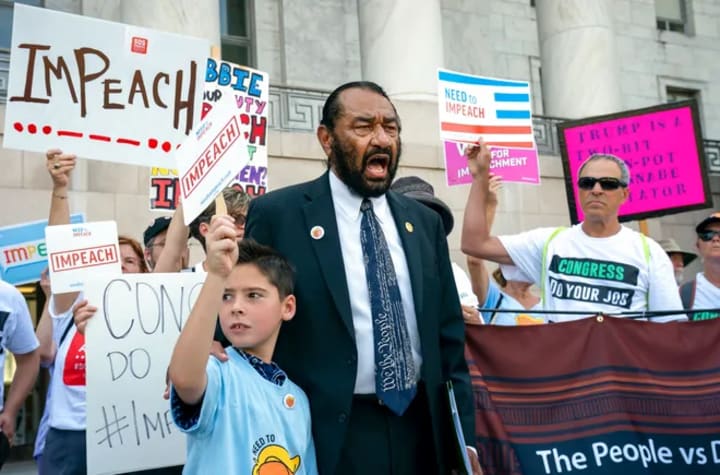
Al Green’s protest wasn’t a random outburst. It was deeply rooted in his long-standing opposition to President Trump’s policies. Known for his outspoken resistance, Green had already made waves in the political scene by being one of the leaders in the effort to impeach Trump. This protest wasn’t just a knee-jerk reaction, it was a statement against what he perceived as Trump’s disregard for democratic principles, especially regarding issues like healthcare and civil rights.
Green's words, "You don’t have a mandate,"
pointed to what he believed was the illegitimacy of Trump’s political power. With several controversies clouding Trump’s time in office, including ongoing discussions about healthcare cuts and foreign policy, Green felt the need to remind the nation that, in his view, Trump’s presidency lacked the moral authority to enact sweeping changes. The protest, in many ways, was a manifestation of Green's frustration with what he saw as an administration that threatened the social safety net and undermined the values he held dear.
Political Implications: A Bold Statement
Rep. Green’s actions were not without political consequences. Within moments of the outburst, news outlets around the world were covering the incident. Some saw it as a powerful moment of resistance, a defiant stand against an administration that many on the left felt had caused irreparable harm to America. Others, however, viewed it as an unnecessary distraction that took away from the seriousness of the address.
Green, ever the political firebrand, likely understood the risks of such an act. Yet, in his view, the stakes were too high to remain silent. His protest speaks to the deep divisions within American politics and the willingness of some lawmakers to challenge authority in unconventional ways.
This incident also brings to light the current state of political discourse in the U.S. The line between protest and decorum has become increasingly blurred, and events like this remind us of the importance of standing up for what one believes in—even if it disrupts the status quo.
The Aftermath: Reactions from the Public and Fellow Lawmakers

After Green’s removal, reactions poured in from all sides. For some, the protest was seen as a heroic act of defiance, a necessary disruption in the face of an administration that seemed intent on pushing through divisive policies. Progressive lawmakers, many of whom had long championed Green's efforts to hold Trump accountable, praised his courage. The outburst, they argued, was just another chapter in the ongoing fight for justice and equality.
On the other hand, some of Green’s critics were quick to condemn the protest. They argued that it was an act of disrespect toward the institution of Congress and that it overshadowed the significance of the address itself. For these individuals, the protest seemed like a theatrical stunt that detracted from the real issues at hand.
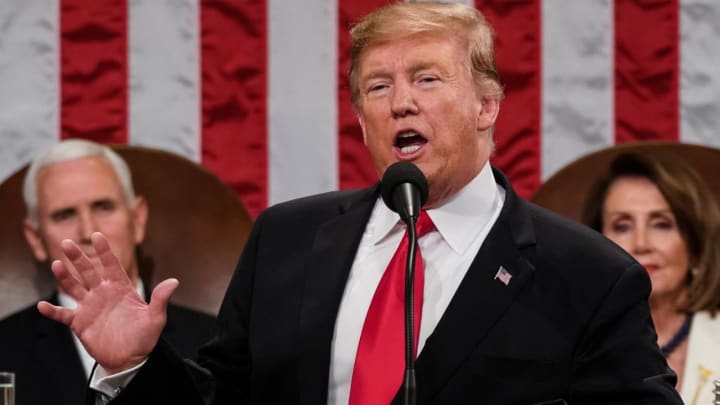
President Trump, in his address, barely acknowledged the disruption, continuing his speech without missing a beat. But outside of the chamber, the incident became the subject of intense debate, with pundits on both sides of the political spectrum weighing in.
Al Green: A Legacy of Resistance

This protest is only the latest chapter in Al Green's career as a vocal and sometimes controversial figure in American politics. From his efforts to impeach Trump to his work on healthcare and civil rights, Green has long been a thorn in the side of the Republican Party. His bold stance has made him a hero to some and a target for others, but one thing is clear: he is unafraid to stand up for his beliefs, no matter the consequences.
In the months leading up to this protest, Green had already made headlines with his push for articles of impeachment against Trump. His willingness to confront the president directly, both in the halls of Congress and in the media, has established him as one of the most outspoken Democrats in Washington. For Green, this protest was just another way to make his voice heard in a political landscape that often seems to drown out those who speak truth to power.
What’s Next for Al Green and American Politics?
While this protest may have been a fleeting moment in the grander scope of American politics, it raises important questions about the role of protest in a democracy. Green’s actions highlight the frustration many Americans feel about the current state of politics and the urgency with which they believe change needs to happen.
As the political landscape continues to evolve, the legacy of this protest will likely be debated for years to come. Will it lead to more protests in Congress? Will it embolden other lawmakers to take bold stands, even if it means risking their political futures? Only time will tell.
For now, one thing is certain: Al Green’s protest has added another layer to the ongoing battle for the soul of American democracy. Whether you agree with his methods or not, his defiant stand will be remembered as one of the most talked-about moments of the 2025 political year.
Conclusion
Rep. Al Green’s protest at President Trump’s Congressional address was a moment that captured the attention of both lawmakers and the general public. His bold actions in the House chamber highlighted the deep ideological divides within American politics, and sparked debates about the role of protest in government. Whether seen as an act of bravery or a reckless disruption, Green’s protest has left an indelible mark on the political discourse of the moment. It serves as a reminder that, in times of great political polarization, even the smallest acts of defiance can become moments of historical significance.
About the Creator
Keep reading
More stories from Bevy Osuos and writers in The Swamp and other communities.
Elon Musk’s 'Nazi Salute' Controversy – The Truth Behind the Shocking Allegations
Elon Musk is no stranger to controversy, but his latest scandal might be one of the most damaging yet. The tech billionaire and CEO of Tesla and SpaceX has found himself at the centre of a media storm after making a gesture that some have interpreted as a 'Nazi salute' during a public event. While Musk and his supporters insist that the accusations are unfounded, critics argue that the move has severe implications for his businesses and public image. So, what really happened, and what does this mean for Musk’s future?
By Bevy Osuosabout a year ago in The Swamp
The Forsyth House Fire
Since 1851, Forsyth House has stood on the corner of Union Street and Gordon Street in the heart of Glasgow. Its iconic, or was... because on Sunday 8th of March, 2026, a fire broke out in a small, seemingly un-named shop in the building and tore all that history down. As I write, the rubble is still unsettled and the street is still blocked off. Central Station is quiet on the upper level, and around 30 small businesses have quite literally gone up in smoke.
By S. A. Crawford3 days ago in The Swamp


Comments
There are no comments for this story
Be the first to respond and start the conversation.