
AirBorneo plans expansion, to introduce jet-engine ops in second half of year
Regional carrier moves beyond turboprops as rising demand fuels growth strategy New jet fleet aims to boost connectivity between Borneo and major Southeast Asian hubs Expansion marks a major milestone in the airline’s post-pandemic recovery AirBorneo prepares for its first jet aircraft amid growing competition in regional aviation Investment in jet operations signals confidence in long-term travel demand

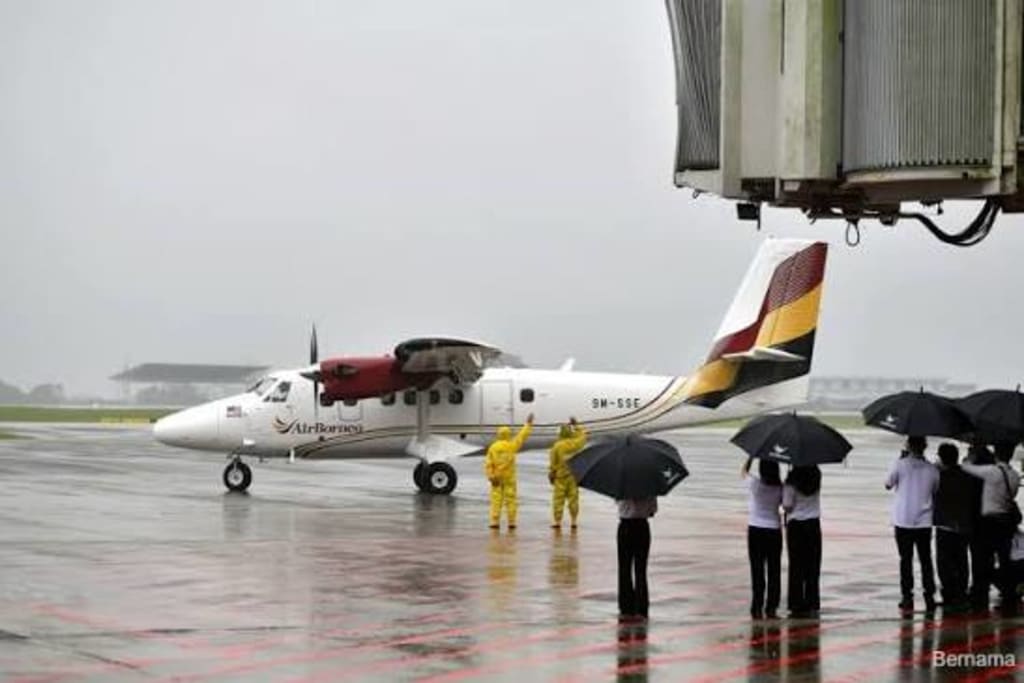
AirBorneo has announced ambitious expansion plans that will see the regional airline introduce jet-engine aircraft into its fleet for the first time in the second half of the year, marking a major milestone in its transformation from a turboprop-focused operator into a broader commercial aviation player.
The move is aimed at meeting rising travel demand across Malaysia and neighboring Southeast Asian markets, as well as strengthening connectivity between Borneo and major regional hubs. Company executives said the expansion reflects confidence in the airline’s long-term growth strategy and the recovery of air travel following years of disruption caused by the pandemic and economic uncertainty.
Transition from Turboprops to Jets
Since its launch, AirBorneo has primarily operated turboprop aircraft on short-haul domestic routes, serving secondary cities and remote communities where larger jets are impractical. The introduction of jet-engine aircraft represents a significant shift in operational scale and ambition.
According to company officials, the airline is finalizing lease agreements for a small fleet of narrow-body jets, expected to be deployed on higher-demand routes connecting Borneo with Kuala Lumpur and select international destinations in the region.
“Our goal is to complement our existing turboprop services with jet aircraft that allow us to serve longer routes more efficiently,” said an AirBorneo spokesperson. “This expansion will improve connectivity for passengers while supporting tourism and business development in East Malaysia.”
The airline did not disclose the exact aircraft type but indicated it is considering models known for fuel efficiency and lower operating costs, in line with industry trends toward sustainability and cost control.
Growing Demand Drives Strategy
AirBorneo’s decision comes amid a rebound in passenger traffic across Southeast Asia, driven by the return of international tourism and increased domestic travel. Industry data shows that air traffic in the region has approached or surpassed pre-pandemic levels in several markets, prompting airlines to expand fleets and routes.
For AirBorneo, the expansion also responds to rising demand for direct flights between Borneo and key economic centers. Many travelers currently rely on indirect connections through major hubs, increasing travel time and cost.
Tourism operators welcomed the announcement, saying improved air links could boost visitor numbers to Sabah and Sarawak, which are known for their rainforests, beaches, and cultural heritage.
“Jet services will make Borneo more accessible to regional travelers,” said a tourism association representative. “This could have a strong positive impact on hotels, local businesses, and employment.”
Operational Challenges Ahead
Despite optimism, industry analysts caution that moving into jet operations brings new challenges. Jet aircraft require different maintenance infrastructure, pilot training, and regulatory approvals. Airports that previously handled mostly turboprops may also need upgrades to support increased traffic and larger aircraft.
AirBorneo said it has been working closely with aviation authorities to secure the necessary certifications and ensure compliance with safety standards. Training programs for pilots and ground staff are already underway, according to company sources.
“Expanding into jet operations is not just about acquiring aircraft,” said an aviation consultant familiar with regional carriers. “It requires significant investment in systems, personnel, and procedures. Execution will be key.”
Fuel costs also remain a concern for airlines worldwide. While jet aircraft offer greater capacity, they expose airlines more directly to fluctuations in global oil prices. AirBorneo officials acknowledged this risk but said modern aircraft technology and careful route planning would help manage expenses.
Regional Competition Intensifies
AirBorneo’s expansion places it in more direct competition with established low-cost and full-service carriers operating in Southeast Asia. Airlines such as AirAsia, Scoot, and Malaysia Airlines already dominate major routes, creating a highly competitive environment.
However, AirBorneo believes its strong presence in underserved regional markets gives it an advantage. By combining turboprop and jet services, the airline hopes to create a network that connects smaller communities directly to major cities without relying solely on large hubs.
“This hybrid model could work if managed carefully,” said a regional aviation analyst. “AirBorneo has built goodwill in Borneo, and if it maintains reliability and affordability, it can carve out a niche.”
Economic and Social Impact
Local governments have expressed support for the airline’s growth plans, seeing them as a way to stimulate economic development and improve transport links. Improved air connectivity is expected to benefit industries such as agriculture, tourism, and small business exports.
Residents in remote areas also see potential advantages. Faster and more frequent flights could improve access to healthcare, education, and government services.
“Better flights mean better opportunities,” said a community leader in Sarawak. “It helps people travel for work and study and brings more visitors to our region.”
Looking Ahead
AirBorneo plans to roll out its first jet services by the final quarter of the year, starting with a limited number of routes before gradually expanding its network. The airline said it would announce destinations and schedules once aircraft delivery and regulatory approvals are finalized.
Executives emphasized that growth would be phased and cautious, avoiding overexpansion that has troubled other regional carriers in the past.
“We want sustainable growth, not rapid growth at any cost,” the spokesperson said. “Our focus is on safety, reliability, and serving the communities that depend on us.”
As AirBorneo prepares to enter a new chapter, its move into jet-engine operations highlights the changing landscape of regional aviation in Southeast Asia. If successful, the expansion could reshape travel patterns across Borneo and strengthen the airline’s position as a key player in connecting one of the region’s most diverse and economically important areas to the wider world.
For now, industry observers will be watching closely to see whether AirBorneo can balance ambition with operational discipline as it takes its biggest step yet into the competitive jet aviation market.
About the Creator
Fiaz Ahmed Brohi
I am a passionate writer with a love for exploring and creating content on trending topics. Always curious, always sharing stories that engage and inspire.
Keep reading
More stories from Fiaz Ahmed Brohi and writers in The Swamp and other communities.
Naval aviator recognised for cat-like reactions to save £2.5m drone helicopter
A Royal Navy aviator has been formally recognised for his lightning-fast reflexes after preventing the loss of a £2.5 million drone helicopter during a dangerous landing incident at sea, an act colleagues have described as displaying “cat-like reactions” under extreme pressure. The unnamed pilot, who was operating from a naval vessel during a routine training mission, was awarded a commendation for exceptional professionalism after intervening just seconds before the unmanned aircraft was destroyed. The incident occurred in rough seas when the drone helicopter encountered sudden instability while attempting to land on the ship’s flight deck. A Split-Second Decision According to an official account released by naval authorities, the drone helicopter began to veer off course due to unexpected wind gusts and deck movement caused by heavy swells. The aircraft, designed for reconnaissance and surveillance missions, risked slamming into the deck or tumbling overboard — either outcome would have resulted in the loss of a valuable piece of military equipment and potential danger to nearby crew members. Witnesses said the aviator reacted instinctively, seizing manual control and executing a rapid corrective maneuver that stabilized the aircraft long enough for it to be safely secured by deck crew. “It all happened in a matter of seconds,” said one officer who observed the incident. “The aircraft was drifting sideways, and the conditions were deteriorating fast. His reactions were extraordinary — precise, calm, and decisive.” The successful recovery prevented damage to the drone and avoided what could have been a hazardous situation on the busy flight deck. A High-Value Asset The drone helicopter, valued at approximately £2.5 million, plays a critical role in modern naval operations. Capable of extended flight times and fitted with advanced sensors, it is used for surveillance, search-and-rescue support, and intelligence gathering. Such systems are increasingly important as navies rely more heavily on unmanned platforms to reduce risks to human pilots. Military analysts note that losing a drone at sea is not just a financial setback but also a blow to operational readiness. “These systems are not easily replaced, and each one carries highly sensitive equipment,” said a defense technology expert. “Saving it preserved both the hardware and the mission capability of the ship.” Recognition for Professionalism The aviator’s actions earned him a formal commendation during a ceremony attended by senior naval officers. In praising his conduct, commanders highlighted the importance of training, discipline, and composure in high-risk environments. “This incident demonstrated outstanding airmanship and judgment,” said a senior Royal Navy official. “His ability to respond instantly under pressure reflects the highest standards of naval aviation.” The aviator himself played down the praise, crediting teamwork and preparation. “I was just doing my job,” he said in a brief statement. “The deck crew and the control team worked together, and the training kicked in.” The Challenge of Landing at Sea Landing aircraft on a moving ship remains one of the most demanding tasks in aviation. Unlike airfields on land, ship decks constantly shift with waves and wind, creating unpredictable conditions for both manned and unmanned aircraft. Drone helicopters present unique challenges. While they remove the risk to a pilot’s life, they rely on complex control systems and data links that can be disrupted by weather or technical interference. In this case, strong crosswinds combined with rolling seas made the landing especially difficult. Naval aviation instructors say the incident serves as a reminder that even highly automated systems require human oversight and quick thinking. “Technology is impressive, but it doesn’t replace the need for skilled operators,” said one instructor. “Human judgment still makes the difference when something goes wrong.” Broader Implications The episode comes as the Royal Navy expands its use of unmanned aerial systems across its fleet. Drone helicopters are increasingly deployed for maritime patrol, anti-piracy missions, and intelligence collection in contested waters. With tensions rising in several global regions, including the Red Sea and Indo-Pacific, maintaining reliable reconnaissance capability has become a strategic priority. Incidents like this highlight the vulnerability of advanced equipment and the importance of safeguarding it. Defense officials say lessons learned from the event will be incorporated into training programs to further improve safety procedures for drone recovery operations in rough conditions. Public and Military Reaction News of the aviator’s actions has drawn praise from both military circles and the public. Social media users described the incident as a reminder of the skill and dedication of service personnel behind high-tech military systems. One former naval officer commented that such moments rarely make headlines but are common in the daily life of military operations. “People see the technology and assume it runs itself,” he said. “But it’s the people who make sure things don’t go wrong.” Looking Ahead The saved drone helicopter has since returned to service following a technical inspection, and operations aboard the ship have resumed as normal. Officials confirmed there was no damage to the vessel or injuries to personnel. While the incident ended safely, it underscores the narrow margin between success and failure in maritime aviation. A single miscalculation could have resulted in significant financial loss and operational disruption. For the aviator at the center of the story, the recognition is a proud moment but also a reminder of the responsibility that comes with the role. “When you’re out at sea, every decision matters,” he said. “You train for these moments, hoping you never need them — but ready when you do.” The episode stands as a testament to the value of human skill in an increasingly automated military world and highlights how a split-second response can protect both lives and vital equipment worth millions of pounds.
By Fiaz Ahmed Brohi3 days ago in The Swamp
Why Black History Matters in America?
The United States of America is celebrating their 250th anniversary in 2026. I'm proud to be an American and as someone who was born here, I wouldn't imagine myself living anywhere else. This is a country where opportunities are possible. Where anyone can be successful in anything they desire to do. Equality, community, and togetherness are the backbones of what America is and should be about. However, we have an administration who wants to erase and disregard those who have made positive, meaningful impacts in our country, specifically Black figures, such as Martin Luther King, Jr., Rosa Parks, and Maya Angelou. President Trump and his administration have been constantly complaining and fighting against what they call the "Woke agenda". They use this excuse as a distraction from other issues they refuse to address, such as the high cost of living, climate change, and inflation. That equality is dividing America, when in reality, it's bringing us together. Being woke is not tied to a specific political party. No matter where you stand on the political spectrum, you can still care about other people and their plights. Compassion and empathy for others isn't tied to a political party, either. We were taught as children to treat others the way we want to be treated and not judge others because they're different from us. Caring about others isn't a personal attack on your beliefs. It doesn't make you any less of a person. People who are easily offended over African American figures, past or present, or anything related to it, are grasping at straws. Current and future generations need to know who people like Harriet Tubman and Shirley Chisholm were, especially in the classroom. Black History is part of American History. It should be recognized, not hidden or forgotten. Besides, you can't shield children from everything, just because your feelings are easily hurt.
By Mark Wesley Pritchard 6 days ago in The Swamp
📢 Raise Your Voice Thread: 02/05/2026
Our “Raise Your Voice Threads” are hosted most alternating Thursdays at 12PM ET to offer creators more avenues to uncover exceptional stories on Vocal. As we are continuously searching for fresh creators and inspiring stories, this thread provides an opportunity to exchange and discuss the stories that have moved and motivated us on Vocal.
By Raise Your Voice by Vocal3 days ago in Resources



Comments
There are no comments for this story
Be the first to respond and start the conversation.