
A New Cold War? Experts Believe 2025 Marks a Major Turning Point
War expected

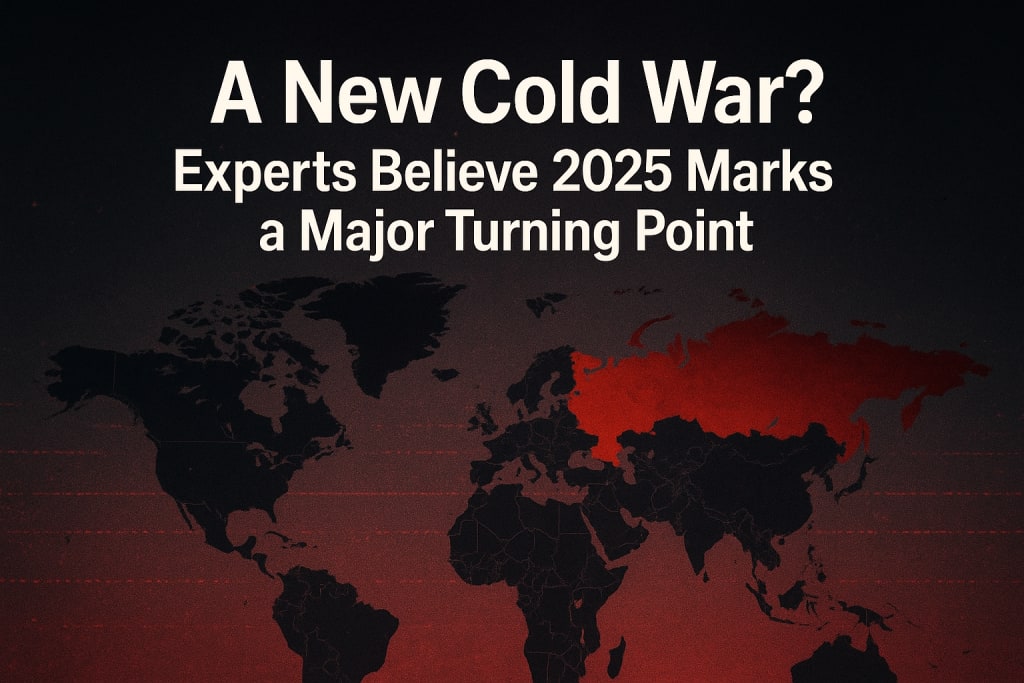
For years, analysts warned that the international order was drifting toward a new era of rivalry. But 2025 is the year many now identify as the point when that drift became a decisive shift. From rising military tensions to economic fragmentation and competing technological blocs, experts increasingly argue that the world has entered a new Cold War—one that is more complex, multipolar, and unpredictable than the one that shaped the 20th century.
2025: The Year the World Recalibrated
Several global developments converged in 2025 to redefine international power dynamics. Political realignments across Europe, escalating conflicts in Eastern Europe and the Indo-Pacific, and renewed competition in advanced technologies have pushed world powers into more confrontational postures. Analysts say the “post-Cold-War era”—a period of relative stability and economic globalization—has formally ended.
What replaced it is not a simple revival of the U.S.–Soviet rivalry. Instead, the emerging order is crowded with new actors and shifting alliances. Countries that once stayed on the sidelines—India, Türkiye, South Africa, Brazil, and several Gulf states—are asserting their influence, forming new blocs and refusing to align strictly with East or West. This marks a major departure from the rigid, two-camp world of the original Cold War.
A Multipolar Rivalry, Not a Bipolar One
Unlike the old Cold War, this new era is shaped by multipolar competition. The United States and China remain the primary players, but their influence is not absolute. Middle powers now wield more diplomatic, economic, and security leverage than ever before. As a result, alliances are fluid, strategic partnerships change rapidly, and no single country can claim uncontested dominance.
This multipolarity makes the world both more flexible and more unstable. Smaller states have more room to maneuver, but they also face pressure to take sides in disputes they cannot control. And without clear global leadership, crises escalate faster and are harder to contain.
Technology and Economics: The New Battlegrounds
While military tensions remain high, the most intense competition today takes place in technology, trade, and supply-chain dominance. This is a Cold War fought with microchips, satellites, energy routes, and data—not just missiles or ideology.
Major arenas of conflict include:
Semiconductor manufacturing and AI supremacy
Control over rare-earth minerals and battery production
Digital infrastructure, 5G networks, and cyber capabilities
Strategic energy routes and green-technology leadership
Nations are scrambling to secure their own production chains, wary of relying on rivals for technology that could determine national security and economic independence.
Rising Defense Spending and the Return of Hard Power
2025 also marks a turning point in global military posture. Defense budgets worldwide have surged to levels not seen since the late 20th century. Europe is rearming at a pace that would have been unthinkable a decade ago. The Indo-Pacific—home to the world’s most sensitive choke points—is becoming the center of naval expansion.
Meanwhile, hybrid warfare—cyberattacks, disinformation, economic coercion, and proxy conflicts—has become a central tool for state competition. This “shadow conflict” rarely makes headlines but shapes global politics every day.
Europe’s Awakening Moment
For Europe, especially Germany, 2025 is a moment of strategic reckoning. The war in Ukraine shattered old assumptions about security and forced European nations to confront the reality that peace cannot be taken for granted. Germany, long reliant on diplomacy and economic interdependence, is now reshaping its defense posture and calling for a more autonomous European security framework.
European leaders warn that alliances that once felt stable are now “unreliable,” forcing the continent to prepare for a future where it must defend itself in a fracturing world.
A Future Still Unwritten
Despite the growing consensus that the world has entered a new Cold War, this era does not guarantee inevitable confrontation. The outcome will depend on how world leaders manage competition, prevent escalation, and adapt to new forms of power.
Diplomacy, technological cooperation, and new global institutions could soften the rivalries. But miscalculations, proxy conflicts, and unchecked militarization could deepen them.
What’s clear is that 2025 marks a historic turning point—a moment when the global order shifted, permanently and unmistakably. We may look back on this year as the beginning of a new geopolitical chapter whose consequences will shape generations to come.
About the Creator
Two Men Died After Falls at an Overstretched A&E
A Tragedy That Raises Urgent Questions The deaths of two men following falls at an overstretched Accident and Emergency (A&E) department have sent shockwaves through the healthcare community. While hospitals are places of healing, these incidents highlight a harsh reality: when emergency departments are under extreme pressure, patient safety can be compromised in ways that are both tragic and preventable. These cases are not just about individual mistakes or isolated failures. They point to deeper, systemic problems facing emergency healthcare—problems that demand urgent attention, accountability, and reform. Understanding What Happened According to reports, the two men suffered fatal injuries after falling while receiving care in an overcrowded A&E unit. Investigations suggest that extreme pressure on staff, long waiting times, and limited supervision played a role in the circumstances surrounding the falls. Importantly, these incidents did not occur in a vacuum. They happened in a setting already struggling to cope with rising patient numbers, staff shortages, and limited physical space. While the precise details are subject to formal inquiries, the broader context is painfully familiar to both healthcare workers and patients. A&E Departments Under Relentless Strain Across the UK, A&E departments are facing unprecedented demand. Seasonal illnesses, an ageing population, and delays in social care have all contributed to overcrowded emergency rooms. Patients often wait hours—or even days—on trolleys for beds to become available. When departments become overstretched, the risk of accidents increases. Staff must monitor dozens of patients simultaneously, many of whom are elderly, confused, injured, or at risk of falling. In such conditions, even the most dedicated professionals can struggle to provide the level of observation each patient needs. Falls in Hospitals: A Known Risk Falls are among the most common patient safety incidents in hospitals. They are especially dangerous for older adults and those with underlying medical conditions. Hospitals typically have protocols in place to assess fall risk, such as mobility checks, regular monitoring, and the use of bed rails or alarms. However, these safeguards rely heavily on adequate staffing and time—two resources often in short supply in overcrowded A&E units. When corridors are filled with trolleys and staff are stretched thin, maintaining consistent fall prevention becomes far more difficult. The Human Cost Behind the Headlines Behind statistics and policy discussions are real people—families who entrusted their loved ones to the healthcare system and now face unimaginable loss. For them, explanations about “system pressure” offer little comfort. Families often ask difficult questions: Why wasn’t someone there to help? Were warning signs missed? Could these deaths have been prevented? These questions underscore the emotional toll such incidents take, not only on relatives but also on healthcare workers involved, many of whom experience guilt and distress even when systemic failures are to blame. Staff Under Pressure, Not at Fault It is crucial to distinguish between blame and responsibility. Frontline NHS staff repeatedly warn that unsafe conditions are becoming normalized. Doctors, nurses, and support staff frequently work long shifts with insufficient breaks, managing more patients than guidelines recommend. In many cases, staff raise concerns internally long before tragedies occur. When those warnings go unheeded due to funding constraints or workforce shortages, risk accumulates. The deaths of these two men highlight what happens when pressure reaches a breaking point. Investigations and Accountability Formal investigations into the deaths are now underway, aiming to establish exactly what went wrong and whether protocols were followed. Such reviews are essential—not to assign individual blame, but to identify systemic weaknesses and prevent future harm. Coroners, hospital trusts, and regulatory bodies all play a role in ensuring transparency. Past cases show that meaningful change often follows public scrutiny, especially when failings are clearly linked to overcrowding and under-resourcing. However, families and patient advocates argue that lessons are too often “learned” without being fully implemented. The Wider NHS Context These incidents come at a time when the NHS faces one of the most challenging periods in its history. Recruitment struggles, staff burnout, and funding pressures are combining with record demand for emergency care. Delayed discharges—patients medically fit to leave hospital but unable to do so due to lack of social care—create bottlenecks that spill back into A&E. The result is a system where emergency departments become holding areas rather than rapid-response units. In such an environment, safety risks multiply. What Needs to Change? Experts and healthcare leaders point to several urgent priorities: Increased staffing levels, especially in emergency departments Better-designed A&E spaces that reduce crowding and fall risks Stronger early-warning systems for vulnerable patients Investment in social care, to ease pressure on hospitals Listening to frontline staff, who often identify risks before harm occurs Without structural reform, similar tragedies are likely to recur. Public Trust and the Cost of Inaction Public trust in emergency healthcare depends on the belief that hospitals are safe, even under pressure. When deaths occur in circumstances linked to overcrowding, that trust is shaken. The danger lies in normalizing crisis conditions. If overstretched A&E departments become accepted as the standard rather than the exception, patient safety will continue to suffer—and avoidable harm will follow. Final Thoughts The deaths of two men after falls in an overstretched A&E are a stark reminder that healthcare systems have limits. Compassion, professionalism, and dedication cannot substitute for adequate resources and safe working conditions. These tragedies should not fade quietly into statistics. They must serve as a catalyst for honest reckoning and decisive action. Patient safety depends not only on the skill of healthcare workers, but on the systems that support—or fail—them. Until overcrowding and understaffing are addressed at their roots, stories like this will continue to emerge, each one a painful reminder of the human cost of systemic strain.
By Muhammad Hassanabout 4 hours ago in The Swamp



Comments
There are no comments for this story
Be the first to respond and start the conversation.