
A Monumental Church in Amsterdam Ravaged by Flames on New Year’s Day
History, heartbreak, and resilience after a devastating fire in the Dutch capital
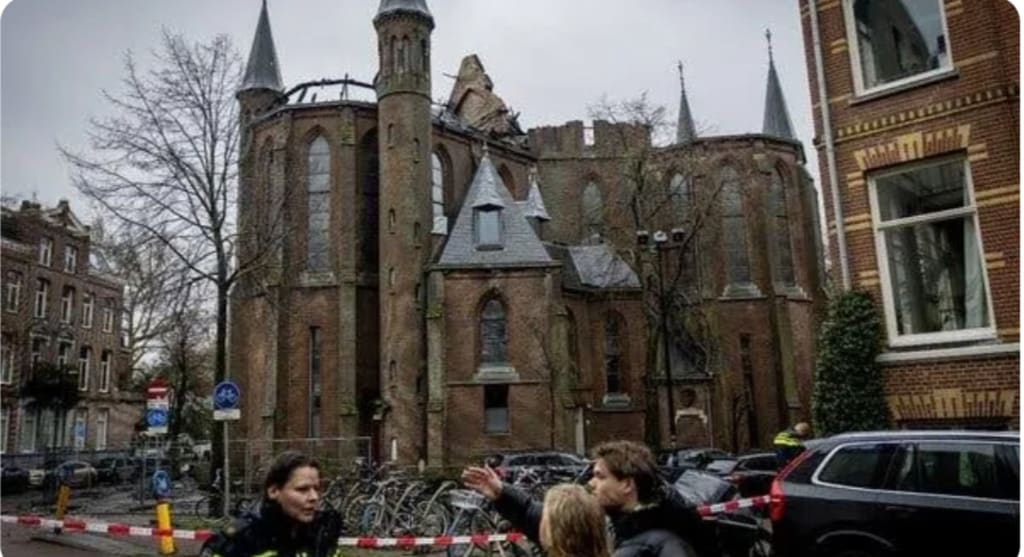
The New Year began with shock and sorrow in Amsterdam as a monumental historic church was ravaged by flames in the early hours of January 1. What should have been a day of celebration and renewal quickly turned into a moment of collective grief, as residents and visitors watched smoke rise above one of the city’s most cherished landmarks. The fire not only caused severe structural damage but also ignited an emotional response across the Netherlands and beyond.
A Tragic Start to the New Year
Shortly after midnight, emergency services were alerted to a blaze engulfing parts of the historic church. Firefighters rushed to the scene, battling intense flames that spread rapidly through the building’s roof and upper structures. The timing—New Year’s Day—added to the emotional weight of the event, transforming a moment of hope into one of loss.
Authorities worked tirelessly to contain the fire, prioritizing safety while attempting to save as much of the structure as possible. Streets surrounding the church were cordoned off as residents were evacuated and crowds gathered at a distance, watching in disbelief.
A Landmark of History and Culture
The church, recognized as a monumental symbol of Amsterdam’s architectural and spiritual heritage, has stood for centuries. Its towering presence, intricate design, and cultural significance made it a focal point not only for worship but also for tourism and community events.
Generations have passed through its doors—locals attending services, visitors admiring its craftsmanship, and historians studying its place in the city’s evolution. The fire threatened more than bricks and beams; it endangered a living piece of history.
The Battle Against the Flames
Firefighters faced numerous challenges during the operation. The age of the structure meant that traditional fire suppression methods had to be adapted to avoid further damage. Narrow staircases, wooden interiors, and fragile architectural elements made access difficult.
Despite these obstacles, emergency crews worked through the night, demonstrating professionalism and courage. Their efforts prevented the fire from spreading to nearby buildings and helped preserve portions of the church that might otherwise have been lost.
Community Shock and Emotional Impact
As dawn broke, the full extent of the damage became visible. Images of charred rooftops and collapsed sections quickly spread across social media, prompting an outpouring of grief and solidarity. Residents described the church as a “symbol of identity” and “a piece of Amsterdam’s soul.”
For many, the loss felt deeply personal. Churches often serve as anchors of community life, hosting weddings, funerals, concerts, and cultural gatherings. The fire disrupted these shared experiences, leaving a void that extended beyond the physical destruction.
Investigating the Cause
Authorities launched an investigation to determine the cause of the fire. While early speculation ranged from electrical faults to accidental ignition related to New Year celebrations, officials urged patience and caution. A thorough examination is required, especially in historic buildings where aging infrastructure can pose hidden risks.
Regardless of the cause, the incident has sparked renewed discussion about fire safety measures in heritage sites. Protecting historic structures while maintaining their authenticity remains a complex challenge.
Preservation Versus Vulnerability
Historic buildings are inherently vulnerable. Constructed long before modern safety standards, they often rely on outdated materials and designs. This tragedy highlights the ongoing tension between preservation and protection.
Experts argue that increased investment in fire detection systems, regular inspections, and emergency preparedness is essential. While such measures can be costly, the loss of irreplaceable cultural heritage carries an even greater price.
A Path Toward Restoration
Despite the devastation, there is hope. City officials, heritage organizations, and community leaders have already begun discussing restoration efforts. Rebuilding a monumental church is a long and complex process, requiring careful planning, expert craftsmanship, and substantial funding.
Public support is expected to play a crucial role. Fundraising campaigns, government grants, and international assistance may all contribute to restoring the church to its former glory. Past restorations in Europe have shown that even severe damage can be overcome with determination and collaboration.
Resilience in the Face of Loss
Amsterdam has faced adversity before and emerged stronger. This fire, while heartbreaking, has united the community in shared purpose. Messages of support have poured in from around the world, reflecting the church’s global significance.
The incident serves as a reminder that cultural heritage is fragile, yet the human commitment to preservation is powerful. Out of tragedy can come renewed appreciation and responsibility.
Conclusion
The fire that ravaged a monumental church in Amsterdam on New Year’s Day marked a sorrowful beginning to the year. Yet it also revealed the resilience of a city deeply connected to its history. As investigations continue and restoration plans take shape, the focus shifts from loss to recovery.
While the flames may have scarred the structure, they have not diminished its meaning. The church remains a symbol of endurance, reminding the world that even in moments of destruction, hope and renewal can still rise from the ashes.
About the Creator
Keep reading
More stories from Ayesha Lashari and writers in The Swamp and other communities.
Certificates: Why Official Recognition Still Matters in a Digital World
In an era defined by rapid technological change and digital transformation, the importance of certificates may seem less obvious than it once was. Skills can be learned online, knowledge is freely accessible, and experience often speaks louder than paper credentials. Yet certificates continue to play a crucial role in education, employment, and professional credibility. Far from becoming obsolete, they are evolving to meet the demands of a modern world.
By Ayesha Lashari20 days ago in The Swamp
Fields of Fetor and Destruction
“Fields of Fetor and Destruction” is a phrase that evokes more than physical devastation. It speaks of landscapes scarred by neglect, conflict, pollution, and human indifference, where once-fertile ground now bears the stench of decay and the visible marks of ruin. Across the world, such fields exist not only as geographic locations but as symbols of deeper moral and environmental failure.
By Aarif Lashari4 days ago in The Swamp



Comments
There are no comments for this story
Be the first to respond and start the conversation.