
5 Scenarios for How the Iran War Could End
Political, Military, and Diplomatic Scenarios That Could Decide the War’s Future
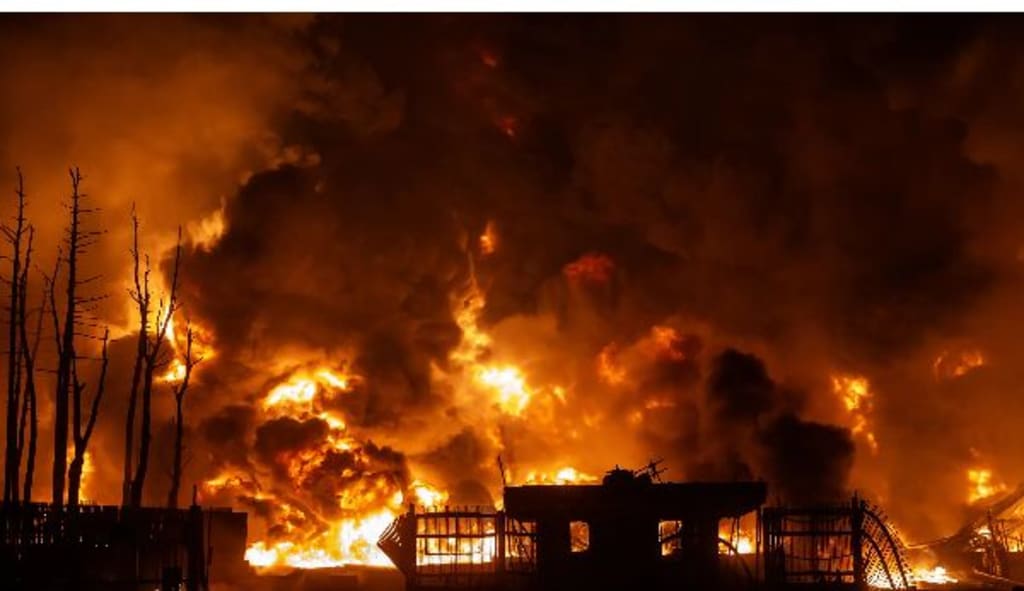
Wars rarely end the way they begin. What starts as a limited military operation can grow into a regional crisis—or unexpectedly end through diplomacy. As tensions involving Iran continue to shape the security landscape of the Middle East, analysts around the world are asking the same question: How could this war actually end?
The conflict involves several powerful actors, including Israel and the United States, making the outcome difficult to predict. Political decisions, military strategy, and international diplomacy will all influence the final result.
Below are five possible scenarios that experts believe could determine how the Iran war eventually concludes.
1. A Diplomatic Ceasefire Brings the War to an End
One of the most hopeful possibilities is a diplomatic solution.
In this scenario, international pressure pushes both sides toward negotiations. Countries in Europe, along with regional mediators, could help facilitate talks between Iran and its rivals. A ceasefire agreement might include limits on missile programs, nuclear inspections, and the reduction of military activity in the region.
Diplomatic solutions have ended many conflicts in the past. Even bitter rivals sometimes choose negotiation when the cost of continued fighting becomes too high.
For Iran and its opponents, a negotiated settlement could stabilize the region and prevent a broader war. However, achieving this would require rebuilding trust after years of hostility and failed negotiations.
Still, diplomacy remains the outcome many global leaders hope to see.
2. Military Pressure Weakens Iran’s Strategic Capabilities
Another possible ending is a military outcome without full regime change.
In this scenario, continued airstrikes and military operations target Iran’s nuclear facilities, missile bases, and strategic infrastructure. The goal would be to significantly weaken Iran’s military capabilities, making it harder for the country to threaten regional rivals.
If key facilities are destroyed or disabled, leaders in Washington or Tel Aviv could declare that their main objectives have been achieved. At that point, they might scale back operations and transition to deterrence rather than active warfare.
While this scenario might reduce immediate threats, it would not necessarily resolve long-term political tensions. Iran could eventually rebuild its capabilities, potentially leading to future confrontations.
3. Political Change Inside Iran
War often puts enormous pressure on governments. Economic sanctions, military strikes, and internal dissatisfaction can create political instability.
Some analysts believe the conflict could eventually trigger major political changes within Iran.
If protests grow stronger and economic conditions worsen, the government could face internal challenges from reform movements or opposition groups. Political change might lead to new leadership that seeks peace or different relations with the international community.
However, predicting political transformation is extremely difficult. Iran’s political system has survived decades of sanctions, external pressure, and internal protests.
While regime change is one possible outcome, it remains one of the most uncertain scenarios.
4. Regional Escalation Followed by Forced Peace
Another possibility is that the conflict spreads further across the region before ending.
Countries such as Lebanon, Syria, and Iraq could become more deeply involved through allied militias or regional alliances. If the fighting expands, the economic and humanitarian consequences could become severe.
At that point, global powers might intervene diplomatically to force a peace agreement.
International organizations like the United Nations could push for emergency negotiations to prevent the conflict from turning into a full regional war.
Ironically, some wars only end after they become so dangerous that world powers step in to stop them.
5. A Long-Term Stalemate
The final scenario is perhaps the most realistic—and the most troubling.
Instead of a clear victory or peace agreement, the conflict could turn into a prolonged stalemate. In this situation, direct large-scale battles might fade, but tensions remain high.
Missile attacks, cyber warfare, covert operations, and occasional airstrikes could continue for years without a formal end to the conflict.
This type of long-term rivalry has existed in many parts of the world, where nations remain locked in confrontation without open war.
For the Middle East, such a stalemate could mean continued instability, economic disruption, and constant military readiness.
Why the Outcome Matters Globally
The war involving Iran is not just a regional issue—it carries global consequences.
One reason is the importance of the Strait of Hormuz, a narrow waterway through which a significant portion of the world’s oil supply travels. Any disruption in this area could impact energy markets and economies worldwide.
Beyond energy concerns, the conflict also influences global alliances. Countries such as Russia, China, and European nations are watching closely, as the outcome may reshape international power dynamics.
For millions of people living in the region, however, the stakes are even more personal. The war affects everyday life—jobs, safety, and the future of entire communities.
The Unpredictable Nature of War
History shows that wars often end in unexpected ways.
Some conflicts conclude through dramatic peace agreements, while others slowly fade into uneasy ceasefires or prolonged rivalries. In the case of Iran, the final outcome will depend on a combination of military developments, political decisions, and international diplomacy.
What is certain is that the consequences will extend far beyond one country.
As the world watches events unfold, the question remains: Which of these scenarios will ultimately shape the end of the Iran war?
Only time—and the decisions of leaders on all sides—will determine the answer.
About the Creator
Parallel Protests
I haven't written for quite some time, but I have A LOT of thoughts about yesterday's protest rally against our government's involvement and complicity in America's war on Iran, on the harbourside of my home city Bristol, and I need to put them somewhere. My gorgeous girlfriend is always a loving and listening ear and sharing it all with her will always be a healthy and happy way of processing the mental and emotional weight, but getting it straight in my brain to share means writing it all down in straight lines, so, here we are and thanks for being here.
By Steph Cole9 days ago in The Swamp
US Military Prepares Explosive Ordnance at UK Air Base
The presence of United States military forces at key allied installations has long been a cornerstone of Western defense cooperation. Recently, attention has focused on preparations taking place at the Royal Air Force base at RAF Fairford, where American personnel were seen preparing explosive ordnance as part of heightened military activity. The developments highlight the strategic importance of the base and the growing tension surrounding ongoing conflicts in the Middle East. Witnesses and media reports observed U.S. military ground crews and technical specialists handling and positioning explosive ordnance at the air base in Gloucestershire. The preparations reportedly involved loading munitions and readying aircraft for potential missions. These activities took place shortly after senior U.S. defense officials signaled that upcoming operations could represent one of the most intense phases of ongoing military actions in the region. The activity at RAF Fairford coincides with the deployment of several heavy American bombers to the United Kingdom. Among the aircraft spotted at the base were B-1 Lancer and B-52 strategic bombers, both capable of carrying large payloads of conventional weapons. These aircraft are often used for long-range strike missions and deterrence operations due to their extended range and advanced targeting systems. Their presence indicates a significant buildup of operational capability at the base. RAF Fairford has a long history as a strategic site used by the United States Air Force during joint operations with NATO allies. The base’s runway—one of the longest in the United Kingdom—makes it particularly suitable for operating large bomber aircraft that require extensive takeoff and landing distances. Over the years, it has hosted numerous American deployments during international crises and major military exercises. The latest developments come after the British government granted permission for U.S. forces to use certain UK bases for what officials described as “limited defensive purposes.” The decision followed growing concerns about missile threats in the Middle East and the need to strengthen defensive measures against potential attacks. According to government statements, the goal of the authorization is to help prevent missile launches and protect allied countries in the region. At the same time, the move has sparked political debate within the United Kingdom. Some lawmakers and analysts have expressed concern that allowing American military operations from British territory could draw the country deeper into international conflicts. Others argue that cooperation with the United States is essential for maintaining collective security and supporting NATO commitments. Military experts say the preparation of explosive ordnance at RAF Fairford does not necessarily indicate an immediate strike but rather demonstrates operational readiness. Preparing weapons systems and aircraft is a standard procedure whenever forces are placed on heightened alert. Ground crews typically conduct extensive checks on munitions, aircraft systems, and support equipment before any mission is authorized. The presence of heavy bombers and munitions has also attracted public interest from local communities near the base. Residents have reported increased aircraft activity, including takeoffs and landings by large military planes. While such movements are not unusual for a facility that regularly hosts international forces, the scale of recent operations has been noticeably higher. Defense analysts note that RAF Fairford remains one of the few bases in Europe capable of supporting strategic bombers on short notice. This capability makes it a critical asset for the United States and its allies when rapid deployment is required. The base has previously supported missions in the Middle East, Eastern Europe, and other regions where NATO forces have been involved in security operations. As geopolitical tensions continue to evolve, the activity at RAF Fairford illustrates the close military cooperation between the United States and the United Kingdom. Whether used for deterrence, defensive operations, or broader strategic planning, the base remains a key hub in the network of allied defense infrastructure. While officials have not disclosed the precise missions connected to the ordnance preparations, the developments signal a period of heightened readiness among Western forces. In an era of rapidly shifting global security challenges, installations like RAF Fairford continue to play a central role in projecting power and supporting allied military coordination.
By Fiaz Ahmed about 21 hours ago in The Swamp


Comments
There are no comments for this story
Be the first to respond and start the conversation.