
5 Genius (and Controversial) Media Tactics That Made Donald Trump Unstoppable
How Trump Mastered Media to Shape His Political Empire
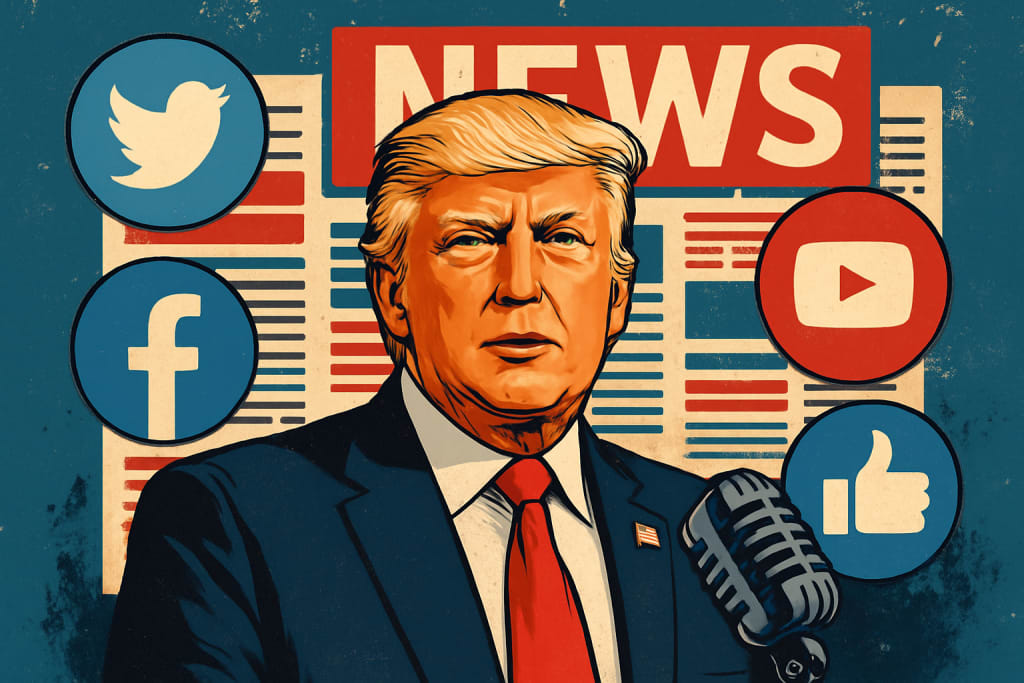
Whether you admire him or detest him, one fact remains unchallenged: Donald J. Trump is a media genius. While other politicians rehearse speeches and hire publicists, Trump weaponizes the media itself. He doesn’t just interact with the press—he provokes, manipulates, and dominates it.
Over the years, Trump has mastered a handful of controversial yet brilliantly effective media tactics that turned him from a reality TV host into one of the most influential political figures of the 21st century. Here are five of his most impactful strategies—and why they worked.
1. 🗞️ Outrage Marketing: The Media Magnet Effect
From calling Mexicans "rapists" in his 2015 campaign launch to telling the Proud Boys to “stand back and stand by,” Trump has repeatedly said the kind of things most politicians wouldn’t dare whisper. But there’s a method behind the madness.
These shocking soundbites aren’t accidents—they're part of a deliberate strategy: dominate the news cycle by creating outrage. When Trump says something controversial, media outlets can’t resist covering it, critics can’t resist reacting to it, and supporters can’t resist sharing it.
It’s the perfect formula:
→ Say something divisive
→ Get 24/7 coverage
→ Play the victim card (“Fake News!”)
→ Fundraise off the backlash
Outrage = Attention. And in Trump’s world, attention is currency.
2. 📺 Turning Politics into Reality TV
Remember “The Apprentice”? Trump wasn’t just the host—he was the brand. He perfected the art of drama, suspense, elimination, and spectacle. And when he ran for office, he didn’t leave that showbiz mindset behind.
His rallies? Stadium-sized productions with music, chanting crowds, and camera-ready moments. His debates? Combative, emotional, unpredictable—everything mainstream media loves. His tweets? Short, shocking, and quotable.
Trump knew that modern politics isn’t just about policy—it’s about entertainment. He turned campaigns into seasons of a hit show, with himself as the star. Even his enemies couldn’t stop watching.
The result? Massive ratings for networks. Relentless media coverage. And a presidency that often felt like a nonstop episode of political reality television.
3. 🎤 Attacking the Media While Using It
The paradox is that while Trump frequently denigrates the media, describing them as "the enemy of the people," he relies on them more than any other politician in recent memory. How does that work?
Simple: It’s strategic antagonism.
By accusing outlets like CNN or The New York Times of bias, Trump:
Fires up his base
Discredits negative stories
Turns critical journalism into "proof" of media conspiracy
Encourages supporters to rely only on pro-Trump sources
Meanwhile, those very media outlets can’t ignore him—because he brings ratings.
It’s a win-win (for Trump). He controls the narrative while making journalists look like part of the opposition. That fuels his underdog brand, even when he holds the highest office in the land.
4. 💻 Direct-to-Base Communication
Trump revolutionized how politicians talk to voters. Before him, leaders relied on press briefings and carefully crafted speeches. Trump? He hit “send.”
With Twitter (and later, Truth Social), he bypassed traditional media entirely. Every thought, insult, policy tease, or capital-letter rant went straight from his thumbs to tens of millions of followers—and then to the news cycle.
This approach gave him:
Total control over messaging
No media filter
Instant reaction and testing ground for slogans or positions
A feeling of raw “authenticity” that traditional politicians lacked
Even after being banned from major platforms in 2021, Trump’s direct-to-base model continued. His email newsletters, SMS blasts, and Truth Social posts keep his base energized and informed—on his terms.
No filters. No fact-checks. Just the message, uncut.
5. 🧠 Branding Politics Like a Business
Trump doesn’t see himself as a politician. He sees himself as a brand.
From “Make America Great Again” hats to the gold-lettered Trump Tower, everything he touches becomes part of the brand experience. And media coverage—positive or negative—just reinforces that identity.
MAGA isn’t just a slogan; it’s a movement. His rallies feel like brand conventions. His merchandise line brings in millions. And his political stances often resemble marketing campaigns: bold, simplified, and emotionally charged.
By branding his politics, Trump created loyal consumers—not just voters. They don’t just support him—they wear him, share him, quote him, and defend him as part of their identity.
The media? They’re part of the ecosystem, whether they like it or not.
Final Thoughts: The Trump Media Blueprint
Many critics scoffed at Trump’s media style. It was crude, chaotic, and unpresidential, according to them. And yet—it worked.
In the age of algorithms, soundbites, and TikTok attention spans, Trump figured out what modern media rewards: conflict, spectacle, emotion, and narrative dominance.
The uncomfortable truth is that the media not only covered Trump but also contributed to his creation. He used their rules against them. And now, every political hopeful—from the far-right to progressive firebrands—is borrowing pages from his playbook.
About the Creator
The Forsyth House Fire
Since 1851, Forsyth House has stood on the corner of Union Street and Gordon Street in the heart of Glasgow. Its iconic, or was... because on Sunday 8th of March, 2026, a fire broke out in a small, seemingly un-named shop in the building and tore all that history down. As I write, the rubble is still unsettled and the street is still blocked off. Central Station is quiet on the upper level, and around 30 small businesses have quite literally gone up in smoke.
By S. A. Crawford3 days ago in The Swamp


Comments
There are no comments for this story
Be the first to respond and start the conversation.