
ZK-Rollup Implementation on Ethereum: Best Practices for Layer-2 Solutions
Discover how ZK-Rollups enhance Ethereum scalability with faster transactions, lower fees, and robust security. Learn best practices for implementing ZK rollup Layer 2 scaling solutions to power efficient and decentralized applications.


Ethereum has transformed the blockchain ecosystem, powering a wide range of decentralized applications and financial services. However, its rapid growth has introduced significant scalability challenges, including network congestion, high transaction fees, and slower transaction times. Layer-2 solutions have emerged as a practical approach to these problems, enabling faster, more cost-efficient transactions while maintaining Ethereum’s security. Among them, ZK-Rollups have gained prominence due to their ability to bundle transactions off-chain while using zero-knowledge proofs to maintain trustlessness. This blog explores actionable strategies for deploying ZK-Rollups efficiently, ensuring developers can leverage their full potential.
What Are ZK-Rollups and Their Role in Ethereum
ZK-Rollups are among the most effective solutions for addressing Ethereum’s scalability challenges, offering faster transactions and lower fees without compromising security. They work by bundling multiple off-chain transactions into a single batch and submitting a cryptographic proof to the Ethereum mainnet, ensuring trustless validation. At the core, ZK rollup Layer 2 scaling solutions enable developers to maintain high throughput while reducing network congestion and gas costs. Their ability to verify transactions almost instantly makes them ideal for DeFi applications, NFT platforms, and gaming ecosystems, allowing Ethereum to support complex, high-volume operations efficiently.
- Off-Chain Transaction Bundling: ZK-Rollups aggregate multiple transactions into a single batch, reducing on-chain congestion and lowering gas fees.
- Zero-Knowledge Proofs: Each batch includes a cryptographic proof that confirms the validity of all bundled transactions without revealing private data.
- Reduced Gas Costs: By storing only proofs and essential data on-chain, ZK-Rollups significantly lower transaction fees compared to direct on-chain execution.
- Maintaining Decentralization: ZK-Rollups operate in a trustless manner, preserving Ethereum’s decentralized architecture while enabling higher throughput.
Layer-2 Scaling Solutions Compared: Why ZK-Rollups Lead
Layer-2 solutions have become vital for addressing Ethereum’s scalability challenges, but not all options offer the same level of efficiency and security. Optimistic Rollups, sidechains, and state channels each provide varying advantages, yet ZK-Rollups consistently outperform in terms of speed, security, and gas efficiency. By leveraging zero-knowledge proofs, ZK-Rollups can confirm transactions almost instantly without relying on lengthy challenge periods. This approach ensures higher throughput and lower costs while preserving Ethereum’s trustless environment. Understanding why ZK-Rollups lead the Layer-2 landscape is essential for developers seeking optimal solutions for high-volume, complex decentralized applications.
- Faster Finality: Unlike Optimistic Rollups, which rely on challenge periods to detect fraud, ZK-Rollups offer near-instant transaction finality through cryptographic proofs.
- Enhanced Security: Fraud proofs are not needed with ZK-Rollups, reducing the potential for attacks and disputes.
- Lower On-Chain Storage: Only the proofs and state roots are stored on Ethereum, freeing up valuable block space and reducing costs.
- Compatibility with DeFi and dApps: ZK-Rollups support complex smart contracts, allowing developers to deploy DeFi protocols and gaming applications without performance trade-offs.
Designing an Efficient ZK-Rollup Architecture
Building an efficient ZK-Rollup requires careful architectural planning to balance scalability, modularity, and maintainability. A well-designed architecture ensures the system can handle increasing transaction volumes while minimizing computational overhead. Key considerations include effective state management, modular separation of execution and proof-generation components, and optimal batching strategies for throughput and proof calculation. Additionally, the design of Ethereum bridges must guarantee reliable communication and seamless interoperability. By prioritizing these design principles, developers can implement ZK-Rollups that are resilient, flexible, and capable of supporting complex applications on Ethereum without sacrificing speed or security.
- State Management Using Merkle Trees: Merkle trees enable efficient storage and verification of user balances and transactions, reducing computational overhead.
- Separation of Concerns: Splitting execution, proof generation, and storage components helps maintain modularity and simplifies debugging and upgrades.
- Batching Strategies: Optimizing batch sizes is crucial to balance throughput with the time required to generate zero-knowledge proofs.
- Ethereum Bridge Design: The bridge connecting the rollup to the mainnet should ensure reliable and secure communication to maintain state consistency and prevent data loss.
Ensuring Security in ZK-Rollup Implementations
Security is a foundational element of any ZK-Rollup deployment, as vulnerabilities could compromise user funds, data integrity, and platform reputation. Implementing multiple layers of security, from smart contract audits to formal verification, ensures robust protection. Additionally, data availability checks prevent the risk of withheld or lost off-chain data. Emergency withdrawal mechanisms provide users with a safety net in case of unexpected failures. A strong security framework not only safeguards assets but also reinforces trust in the Layer-2 solution, making it a critical consideration for developers deploying ZK-Rollups in production environments.
- Proof Verification Protocols: Zero-knowledge proofs must be rigorously validated to ensure that all transactions in a batch are legitimate.
- Data Availability Checks: Off-chain data must always be accessible; mechanisms should be in place to prevent data withholding or loss.
- Smart Contract Audits and Formal Verification: Third-party audits and formal verification reduce the risk of bugs and vulnerabilities in the rollup’s smart contracts.
- Emergency Mechanisms: Implementing secure withdrawal options allows users to access funds in case of unexpected anomalies or system failures.
Optimizing Transaction Performance
Optimizing transaction performance is vital to maximizing the benefits of ZK-Rollups. High throughput, low latency, and efficient proof generation directly impact user experience and system reliability. Developers must monitor performance metrics in real-time, optimize zero-knowledge algorithms, and implement dynamic batching to adapt to varying network loads. Minimizing latency between off-chain computation and on-chain proof submission is essential for maintaining speed and responsiveness. By focusing on these optimizations, ZK-Rollups can deliver the fast, scalable, and cost-effective transaction processing that modern dApps and DeFi applications require.
- Real-Time Performance Monitoring: Continuously track proof generation time, transaction throughput, and latency to identify bottlenecks.
- Algorithm Optimization: Efficient zero-knowledge proof algorithms reduce computational overhead and speed up validation.
- Dynamic Batching: Adjust batch sizes in real time based on network conditions to maintain optimal performance.
- Reducing Latency: Minimize delays between off-chain processing and on-chain proof submission to ensure faster user experiences.
User Experience Best Practices
User experience is a key concern while implementing Layer-2 solutions. A technically efficient rollup is insufficient if people struggle to interact with the system. Transparent fee structures, seamless wallet integration, fast withdrawal processes, and educational resources contribute to a smooth user journey. Educating users on the advantages of ZK-Rollups and Layer-2 mechanics builds trust and engagement, decreasing friction and increasing happiness.. By prioritizing UX alongside technical efficiency, developers can ensure broader adoption and long-term success for their ZK-Rollup implementations.
- Transparent Fee Structures: Clearly communicate transaction costs to build trust and reduce confusion for users.
- Seamless Wallet Integration: Support popular wallets and exchanges to allow easy access to the rollup.
- Fast Withdrawal Processes: Ensure users can move funds back to the Ethereum mainnet without long delays.
- Educational Resources: Provide guides, tutorials, and FAQs to help users understand how ZK-Rollups and Layer-2 scaling work.
Monitoring and Analytics for Continuous Improvement
Ongoing monitoring and analytics are crucial for maintaining a high-performing ZK-Rollup. Collecting and analyzing data on transaction throughput, latency, and proof generation times enables developers to identify inefficiencies and optimize system performance. User behavior insights help improve interface design and engagement. Error detection systems ensure anomalies are addressed promptly, while modular protocol upgrades allow iterative enhancements without disrupting operations. By leveraging analytics for continuous improvement, developers can maintain robust, secure, and efficient Layer-2 solutions that scale alongside Ethereum’s evolving ecosystem.
- Transaction Analytics: Collect data on throughput, proof generation, and confirmation times to identify areas for improvement.
- User Behavior Insights: Understand user interactions to optimize usability and interface design.
- Protocol Upgrades: A modular architecture allows upgrades without disrupting the entire system.
- Error and Anomaly Detection: Detect unusual behavior or potential attacks quickly to maintain system integrity.
Deployment Best Practices for ZK-Rollups
Deployment is the final and most critical step in ZK-Rollup implementation. Testnet deployments help validate functionality and uncover issues before mainnet launch. Gradual rollouts reduce risk and enable iterative feedback. Seamless integration with existing dApps and platforms ensures adoption and usability. Post-deployment monitoring of system health, user activity, and performance metrics allows developers to quickly identify problems and implement improvements. Following these deployment best practices ensures that ZK-Rollups are reliable, scalable, and user-friendly, providing tangible benefits to Ethereum’s growing ecosystem.
- TestNet Deployments First: test functionality and performance in a controlled environment prior to the mainnet deployment.
- Gradual Rollouts: Deploy in stages to gather feedback, reduce risks, and address unforeseen issues.
- Integration with Existing dApps: Ensure seamless onboarding for users and developers from existing platforms.
- Continuous Monitoring Post-Deployment: Track system health, user adoption, and performance metrics to make necessary improvements.
Conclusion
ZK-Rollups are revolutionizing Ethereum by offering scalable, cost-efficient, and secure Layer-2 solutions. By following best practices in architecture, security, performance, user experience, analytics, and deployment, developers can implement high-performing ZK-Rollups that meet the demands of modern decentralized applications. Carefully planned and optimized ZK rollup Layer 2 scaling solutions enable Ethereum to handle more transactions, reduce fees, and improve usability, unlocking the network’s full potential for developers and users alike.
About the Creator
Alexei
A blockchain token development specialist skilled in Solidity and Rust, building secure, compliant, and scalable digital assets, with strong experience in smart contracts, security audits, and DApp integration.
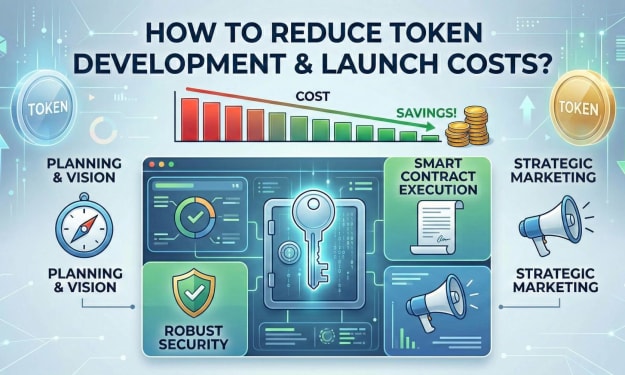
How to Reduce Crypto Token Development and Launch Costs?
Launching a crypto token often looks deceptively simple from the outside. Smart contracts can be deployed in minutes. Token standards are well documented. Marketing channels are accessible. Yet founders frequently discover that what seemed like a modest technical exercise turns into a six-figure undertaking. Development, audits, legal structuring, exchange listings, liquidity provisioning, branding, community management, and post-launch maintenance compound rapidly.
By Jennifer Atkinson3 days ago in The Chain
How Stablecoin Issuers Make Money: 12 Proven Revenue Models
Stablecoins have become a cornerstone of the digital asset ecosystem, offering price stability in an otherwise volatile market. As demand surges—from retail traders hedging risk to large institutions conducting cross-border settlements—the question arises: How Stablecoin Issuers Make Money. Unlike pure speculative tokens, stablecoins must maintain a peg to fiat or another asset, which creates unique revenue opportunities. In this post, we unpack each model, illustrate with case studies, and outline strategic considerations for issuers aiming for both profitability and trust.
By Siddarth D6 days ago in The Chain


Comments
There are no comments for this story
Be the first to respond and start the conversation.