
Understanding ERC Token Standards: A Comprehensive Guide
An Overview of ERC Token Standards on the Ethereum Blockchain

In blockchain technology, Ethereum is the most important blockchain network due to its reputation and reliability. If you want to perform any crypto-related work, you first need crypto tokens. This blockchain has multiple ERC standards for all types of crypto token creation. The ERC token standards play a vital role in improving the usability of Ethereum-based tokens. So it is more advantageous for startups or entrepreneurs looking to level up their crypto business with renowned Crypto token development services. These ERC standards have many benefits including interoperability, simplified development, increased liquidity, compliance, and security, etc.
In this article, I will explain the ERC standards in detail so you can clearly understand their various types of token standards and their impact.
Now, let us start …
What is an ERC Token?
ERC stands for “Ethereum Request for Comment” and refers to the technical standards used for token creation on the Ethereum blockchain.These ERC Token standards hold guidelines for developing smart contracts and dApps. It aids in creating, managing, and exchanging tokens on the Ethereum blockchain. These rules cover many aspects, such as token ownership, token transfer function, and smart contract security.
In the crypto market, there are various ERC standards, including ERC-20, ERC-721, ERC-777, ERC1400, ERC-1155, etc., in the Ethereum network to help with token development. Among them, each one has a specific set of functions and features.
In the Ethereum blockchain there are standards available to create fungible, non-fungible, and semi-fungible tokens.
Types of ERC Tokens
As mentioned above, there are several ERC token standards, each with its own unique features and functions. Let's see the list of ERC token standards on the Ethereum blockchain.They are:
ERC-20
ERC20 token is the most common standard for fungible tokens, ensuring uniformity in token transactions.This token standard helps the user in the transformation of the token from one account to another. It also allows the user to check the current token balance and the total supply of tokens.
The fungible tokens which have been created through ethereum must follow these token standards. Most startups and entrepreneurs looking to start a crypto business choose the ERC20 token standard to raise funds for their venture.If you are interested in creating an ERC20 token you should approach a reputable Ethereum token development company in the crypto ecosystem for optimal results.
Examples: Ox, Shiba INU, Tether and more.
ERC-721
Another popular token standard is ERC-721. It is not like ERC-20, it is a standard for NFTs. With these crypto standards, the non-fungible tokens are regulated, where rare items, and artwork are traded. It has a unique value and specification for each item.
One of the most popular NFT games is cryptokitties where virtual cats are sold and bought. Other popular NFTs which use ERC-721 standard tokens are Cryptodoggies, my crypto, and ethermon.
ERC-1155
Ethereum’s ERC-1155 token standard supports both the ERC-20 and ERC-721 token standards. That means, it supports both fungible and non-fungible tokens additionally also supports semi-fungible tokens. These ERC-1155 are widely used in NFT games. As here, ERC-1155 will be supporting both these fungible and non-fungible tokens.
Another feature of ERC-1155 is that it is more secure to transfer. If the token holder sends the tokens to the wrong address, they can get back or reclaimed.
ERC-1400 and ERC-1404
ERC-1400 and ERC-1404 token standards have been specially designed for security tokens. As they are used to transfer any kind of real asset on the blockchain. Both ERC-1400 and ERC-1404 represent the security token specifications.
How ERC Tokens Work?
ERC tokens operate through smart contracts on the Ethereum blockchain, ensuring automated, secure, and transparent transactions. The Ethereum Virtual Machine (EVM) executes these contracts, ensuring compliance with predefined token standards.
Benefits of ERC Tokens
Interoperability: ERC tokens integrate seamlessly with Ethereum-based wallets, exchanges, and dApps.
Security & Decentralization: Transactions are immutable and secured by Ethereum’s blockchain.
Developer-Friendly: Tools like OpenZeppelin simplify smart contract creation and deployment.
Use Cases of ERC Tokens:
Cryptocurrencies & Stablecoins: Many tokens like USDT and DAI are ERC-20 based.
NFTs & Gaming Assets: ERC-721 and ERC-1155 tokens power digital collectibles and in-game assets.
DeFi Applications: ERC tokens are used in lending, staking, and yield farming protocols.
Tokenized Assets & Fundraising: ICOs, IDOs, and tokenized real-world assets utilize ERC standards.
If you are interested in Ethereum token development these ERC token standards will definitely help you gain comprehensive insights for your business. With this blog, you might have gained enough insights into the ERC standards. As a startup, you can choose from fungible, non fungible, and semi-fungible Ethereum token standards that best suit your business requirements. Partner with Ethereum Token Development Services for premium features.
About the Creator
Keep reading
More stories from Raquel Valentina and writers in The Chain and other communities.
Top 5 Benefits of Using a Binance Clone Script in 2025
The cryptocurrency trading market is expanding rapidly, and 2025 is shaping up to be a landmark year for crypto exchanges. With institutional adoption rising and new traders entering the space daily, launching your own crypto exchange can be a highly lucrative opportunity.
By Raquel Valentina6 months ago in The Chain
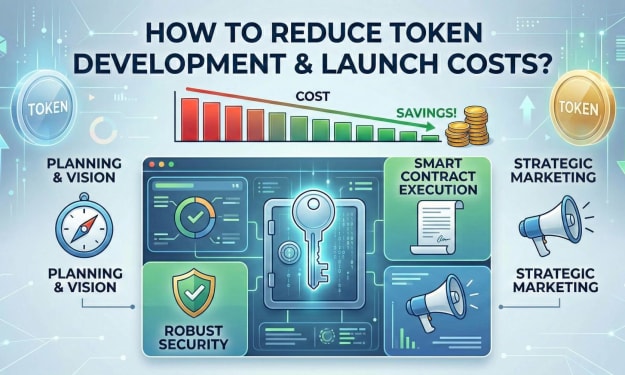
How to Reduce Crypto Token Development and Launch Costs?
Launching a crypto token often looks deceptively simple from the outside. Smart contracts can be deployed in minutes. Token standards are well documented. Marketing channels are accessible. Yet founders frequently discover that what seemed like a modest technical exercise turns into a six-figure undertaking. Development, audits, legal structuring, exchange listings, liquidity provisioning, branding, community management, and post-launch maintenance compound rapidly.
By Jennifer Atkinson5 days ago in The Chain
Crypto Coin: Architecture, Utility Models, and Market Dynamics Explained
The term Crypto coin refers to a native digital asset that operates on its own blockchain infrastructure, functioning as a medium of exchange, store of value, and programmable financial instrument. Unlike tokens that are deployed on existing chains, a Crypto coin underpins its network’s consensus, incentivization, and transaction validation layers. Understanding how a Crypto coin operates requires a multi-dimensional perspective that includes cryptographic security, economic design, governance structures, and regulatory implications.
By Siddarth D4 days ago in The Chain
A Historic Declaration
We the People of the Husbands of the United States of America, in Order to form a more perfect Union, and I mean you...with me...establish Justice, insure domestic Tranquility, provide for the common defence, promote the general Welfare, and secure the Blessings of Liberty to ourselves, after Puberty, do ordain and establish this Declaration of Co-Dependence.
By Gerard DiLeo5 days ago in Humans



Comments
There are no comments for this story
Be the first to respond and start the conversation.