
Token Development Explained: How to Build and Launch a Blockchain-Based Token
A Complete Guide to Understanding, Creating, and Launching Your Own Blockchain-Based Token, From Concept to Deployment and Beyond.

In the ever-evolving world of blockchain, token development stands at the core of many transformative projects. From decentralized finance (DeFi) platforms and NFT ecosystems to tokenized real-world assets and DAOs, blockchain-based tokens are the digital representations of value that drive innovation. Whether you're an entrepreneur looking to tokenize a new idea, or a business seeking to expand into Web3, understanding how tokens are developed and launched is essential.
This guide explores token development from the ground up, demystifying the process, technologies, and strategies involved in launching your own token.
Understanding Blockchain Tokens: The Foundation of Token Development
Before diving into development, it’s crucial to understand what blockchain-based tokens are. A token is a digital asset created on an existing blockchain platform, such as Ethereum, Binance Smart Chain, or Solana. These tokens are governed by smart contracts — self-executing code that lives on the blockchain and dictates the behavior, supply, and rules of the token.
Tokens can represent virtually anything: currency (like USDT), governance rights (like UNI), ownership of digital or physical assets (such as tokenized real estate), or access to services (such as subscription-based platforms). Depending on the purpose, tokens fall into different categories — utility tokens, security tokens, governance tokens, stablecoins, or NFTs.
Understanding the token’s purpose is the first step in development. It influences everything — from the choice of blockchain and token standards to compliance, tokenomics, and launch strategy.
Choosing the Right Blockchain for Token Development
Selecting the appropriate blockchain is one of the earliest and most important decisions in the token development journey. Each blockchain offers its own set of advantages, trade-offs, and use cases.
Ethereum remains the most popular blockchain for token development due to its widespread adoption, robust smart contract capabilities, and mature ecosystem. The ERC-20 standard is the most widely used for fungible tokens, while ERC-721 and ERC-1155 standards are commonly used for NFTs.
Binance Smart Chain (BSC) offers lower transaction fees and faster block times, making it a compelling alternative for many DeFi and gaming projects. Other emerging options include Solana, which is known for scalability and speed, and Polygon, a Layer-2 Ethereum scaling solution that combines Ethereum compatibility with low-cost transactions.
The blockchain you choose should align with your project’s technical requirements, community, security needs, and long-term vision.
Defining Your Token’s Purpose, Utility, and Tokenomics
After choosing a blockchain, the next step is defining the token’s role within your ecosystem. What is the token intended to do? Will it be used for transactions, governance, staking, rewards, or access control?
Establishing clear token utility helps drive long-term value and user engagement. A token without meaningful utility may struggle to gain adoption or investor interest.
Equally important is designing the tokenomics — the economic model that governs the token's supply, distribution, and incentives. This includes:
Total supply: How many tokens will exist?
Circulating supply: How many will be initially available?
Distribution plan: How will tokens be allocated to founders, investors, users, and reserves?
Inflation/deflation mechanisms: Will new tokens be minted over time, or will the supply decrease?
Use cases and demand drivers: What will encourage users to buy, hold, or use your token?
Poorly designed tokenomics can lead to early price crashes, lack of adoption, or regulatory scrutiny. Conversely, well-structured models can create sustainable value and network effects.
Writing the Smart Contract: Code is Law
Once the utility and tokenomics are defined, it’s time to write the smart contract — the engine that powers the token on the blockchain. The smart contract governs how tokens are created, transferred, and interacted with.
On Ethereum and compatible chains, most tokens follow the ERC-20 standard for fungibility. This includes basic functions like transfer, approve, balanceOf, and totalSupply. Developers can also include additional logic, such as minting, burning, pausing transfers, or controlling access.
Writing smart contracts typically involves languages like Solidity (for Ethereum) or Rust (for Solana). It’s essential to ensure the code is efficient, secure, and adheres to the token standards of the chosen blockchain.
Most importantly, smart contracts must be thoroughly tested. One minor vulnerability could result in the loss of funds, malicious exploits, or irreversible bugs. That’s why smart contract auditing is a critical part of the process.
Smart Contract Auditing: Ensuring Trust and Security
Smart contract audits are not just a best practice — they’re a necessity. An audit is a comprehensive review of the token’s codebase to identify vulnerabilities, logic errors, or security gaps.
Audits are typically performed by third-party firms with expertise in blockchain security. They assess for issues like reentrancy attacks, integer overflows, logic flaws, and compliance with token standards.
Once the contract passes an audit, a detailed report is published. This boosts investor and user confidence, proving that your project takes security seriously. In fact, many reputable exchanges and DeFi protocols require a completed audit before listing or integration.
Token Deployment: Launching on the Blockchain
After auditing, it’s time to deploy the smart contract to the blockchain. This is when the token becomes live and publicly accessible.
The deployment process involves using blockchain development tools like Remix, Truffle, or Hardhat to send the contract to the network. Gas fees are paid to execute the contract and make it immutable.
Post-deployment, the contract address is generated, and users can interact with the token through wallets like MetaMask or Ledger. It’s important to verify the contract on blockchain explorers (like Etherscan) and make the source code publicly visible for transparency.
If your project includes minting, distribution, or an airdrop, these can now be triggered via the smart contract.
Building Ecosystem Integrations and Utility
A token on its own has limited value — it needs to integrate with real-world or on-chain applications. That’s where ecosystem development comes into play.
You’ll need to integrate the token with your app, platform, or service. If you’re building a DeFi platform, ensure your token can be used in staking, lending, or liquidity pools. If you’re launching a DAO, connect token ownership to governance voting.
You may also want to list the token on decentralized exchanges (DEXs) like Uniswap, PancakeSwap, or Raydium. This provides liquidity and allows users to trade the token. Listing on centralized exchanges (CEXs) can be explored later, though this often requires significant legal, technical, and liquidity preparation.
Utility also comes from partnerships. Collaborating with other protocols, platforms, or projects can drive adoption, increase use cases, and build a thriving token ecosystem.
Legal and Regulatory Considerations
Token development isn’t just a technical endeavor — it also involves legal and regulatory dimensions. Depending on the nature of your token and your jurisdiction, compliance with financial regulations may be required.
Security tokens, for example, may fall under securities laws and require registration with regulatory bodies. Even utility tokens must avoid making false claims or violating anti-money laundering (AML) and know-your-customer (KYC) rules.
Consulting legal professionals experienced in crypto law is essential, especially if you're raising funds via token sales, ICOs, or private placements. A well-documented legal framework can prevent future regulatory issues and build trust among investors and users.
Marketing, Community Building, and Token Launch Strategy
Once the technical and legal groundwork is laid, it’s time to prepare for launch. But launching a token isn’t just about making it available — it’s about creating a narrative, building excitement, and establishing trust.
Community building plays a vital role in the success of your token. Use social media, Discord, Telegram, Medium, and YouTube to engage with your audience. Transparency, education, and responsiveness go a long way in attracting early supporters.
Marketing strategies might include content campaigns, influencer partnerships, AMAs, and early access incentives. Many projects conduct a pre-sale or public sale event to generate initial liquidity and raise funds.
Carefully plan your token generation event (TGE). Decide when to mint the token, how to distribute it, and how to maintain post-launch price stability. Avoid sudden dumps or whales controlling too much supply — this can damage long-term credibility.
Post-Launch Monitoring and Continuous Improvement
The token launch is not the end of the journey — it’s just the beginning. Post-launch, you’ll need to monitor performance, maintain the smart contract (if upgradable), and deliver on your roadmap.
Track on-chain metrics like transaction volume, wallet activity, and liquidity. Engage the community regularly with updates, feature releases, and governance proposals. Building and sustaining trust is an ongoing process.
You may also explore Layer-2 integrations, cross-chain bridges, staking programs, or token buyback mechanisms to increase utility and value.
Most importantly, listen to your users. Community feedback is one of the most valuable inputs for refining your token’s role, features, and future integrations.
Conclusion: Transforming Ideas into Digital Assets
Token development is both an art and a science. It combines technology, economics, legal compliance, and community strategy to transform abstract ideas into tangible, tradable digital assets. Whether you're launching a DeFi project, a governance DAO, or a tokenized asset platform, each step — from planning and coding to auditing and launching — must be approached with precision and purpose.
With the right foundation, your blockchain-based token can become more than a speculative asset — it can power ecosystems, unlock value, and redefine the future of digital ownership.
About the Creator
Keep reading
More stories from Lily Arthur and writers in The Chain and other communities.
How to Build Authentic Crypto Influencer Marketing Campaigns with Transparency
The crypto industry has grown at a breakneck pace, but not without its fair share of skepticism. With constant market volatility, scams, rug pulls, and overhyped tokens, audiences are more cautious than ever. Amid this landscape, influencer marketing has emerged as a powerful tool to reach and engage niche communities. However, if not done right, it can backfire—damaging brand credibility and alienating potential users.
By Lily Arthur7 months ago in The Chain
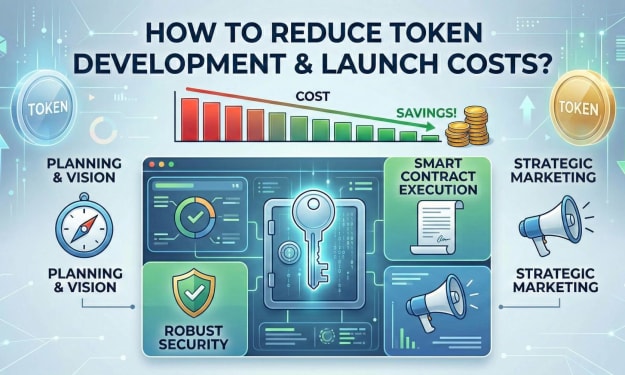
How to Reduce Crypto Token Development and Launch Costs?
Launching a crypto token often looks deceptively simple from the outside. Smart contracts can be deployed in minutes. Token standards are well documented. Marketing channels are accessible. Yet founders frequently discover that what seemed like a modest technical exercise turns into a six-figure undertaking. Development, audits, legal structuring, exchange listings, liquidity provisioning, branding, community management, and post-launch maintenance compound rapidly.
By Jennifer Atkinson2 days ago in The Chain
How Stablecoin Issuers Make Money: 12 Proven Revenue Models
Stablecoins have become a cornerstone of the digital asset ecosystem, offering price stability in an otherwise volatile market. As demand surges—from retail traders hedging risk to large institutions conducting cross-border settlements—the question arises: How Stablecoin Issuers Make Money. Unlike pure speculative tokens, stablecoins must maintain a peg to fiat or another asset, which creates unique revenue opportunities. In this post, we unpack each model, illustrate with case studies, and outline strategic considerations for issuers aiming for both profitability and trust.
By Siddarth D6 days ago in The Chain


Comments
There are no comments for this story
Be the first to respond and start the conversation.