
Today Crypto News:Squares from the Same as Yesterday
15.01.2025


1-North Korea used bogus job seekers to steal $659M in crypto heists in 2024
In a rare joint statement (PDF) on Tuesday, Japan, South Korea, and the US said North Korean-backed hackers stole at least $659 million in numerous cryptocurrency heists in 2024 and used IT staff to penetrate blockchain firms as insider threats.
The disclosure was the first to confirm North Korea's $235 million attack of India's biggest cryptocurrency exchange WazirX in July.
WazirX suspended trading and restructured after the July 2024 incident.
A $308 million robbery from Japan's DMM Bitcoin, $50 million apiece from Upbit and Radiant Capital, and $16.13 million from Rain Management were also reported.According to the statement, the Lazarus Group, a North Korean hacking group, used social engineering and cryptocurrency-stealing malware like TraderTraitor to breach exchanges and infiltrate companies by posing as job candidates.
The US, Japan, and the Republic of Korea advise private sector entities, particularly in blockchain and freelance work industries, to thoroughly review these advisories and announcements to better inform cyber threat mitigation measures and reduce the risk of inadvertently hiring DPRK IT workers.
North Korea stole $3 billion in bitcoin between 2017 and 2023 to finance its nuclear weapons development, according to U.N. estimates. Chainalysis said that North Korean hackers stole 61% of cryptocurrencies in 2024, worth $1.34 billion.
2-Gaming Problems in Prediction Markets
Outside the U.S., authorities consider prediction markets gambling. Taiwan, France, and Singapore have blocked Polymarket at the ISP level, branding it an illegal gambling enterprise. Investment instruments like prediction markets let traders bet on question outcomes.
The market discovers prices when parties and counterparties disagree on how to price the issue. Each share will be worth $1 if the event occurs and $0 otherwise. Not a guessing game. Prediction markets aren't gambling in the U.S. since they estimate outcomes using probability, not luck.
The house doesn't win or set odds. This is about market players. The Commodities Futures Trading Commission regulates prediction markets in the U.S. because it sees them as event contracts, like weather derivatives, which farmers use to hedge against crop loss by buying contracts that pay out in the event of freak weather. This field is profitable due to climate change.
3-Gaming Problems in Prediction Markets
Outside the U.S., authorities consider prediction markets gambling. Taiwan, France, and Singapore have blocked Polymarket at the ISP level, branding it an illegal gambling enterprise.Investment instruments like prediction markets let traders bet on question outcomes.
The market discovers prices when parties and counterparties disagree on how to price the issue. Each share will be worth $1 if the event occurs and $0 otherwise.Not a guessing game. Prediction markets aren't gambling in the U.S. since they estimate outcomes using probability, not luck. The house doesn't win or set odds.
This is about market players.The Commodities Futures Trading Commission regulates prediction markets in the U.S. because it sees them as event contracts, like weather derivatives, which farmers use to hedge against crop loss by buying contracts that pay out in the event of freak weather. This field is profitable due to climate change.Polymarket and Kalshi had CFTC battles. Kalshi defeated Polymarket.
Kalshi may now sell election-based event contracts, but Polymarket must restrict U.S. customers. Having Donald Trump Jnr. as an advisor helps Kalshi with regulators. Election-related event contracts were significant business in 2024.
The market's response to Donald Trump's triumph may be seen as financial tools for a post-election market. Given bitcoin's "Trump Bump," a substantial price correction may be predicted if Kamala Harris wins, therefore crypto traders may wish to hedge with prediction market bets. Some Polymarket skeptics thought the platform would fail after the election.
All indicators revealed the platform was performing well following the election: $1.6 billion in monthly activity. Shayne Coplan: He Popularized Prediction Markets Sports-themed prediction market contracts account for most of this activity.
Polymarket Analytics reports over $1.1 billion in volume bets on the NFL Super Bowl, $740 million on the Champion's League, and $700 million on the NBA Finals. Sports outcomes have little macro-level significance. The NFL Super Bowl has no financial or social repercussions, unlike an election, war, or Fortune 500 firm acquisition (or bitcoin addition).
4-New U.K. economic secretary Emma Reynolds will supervise crypto
Reynolds was appointed after Tulip Siddiq resigned in a letter to the PM. Hampstead and Highgate MP Siddiq claimed personal reasons for her withdrawal.
The new economic secretary will shape federal crypto regulation. Reynolds will manage U.K. central bank digital currency programs and digital assets.Her appointment comes as the U.K. pushes crypto regulation. This strategy has been taken by the government in recent years to become a digital assets innovation center
.Market watchdogs like the Financial Conduct Authority have been more pro-crypto in recent months, contrasting with the U.S. under departing SEC Chair Gary Gensler.Industry participants are enthusiastic about the incoming SEC leadership's impact on the U.S. crypto sector after Donald Trump's victory. On Jan. 20, Trump will be inaugurated.Crypto.news said that the SEC would abandon “regulation by enforcement” and halt non-fraud proceedings.
Reynolds' influence on U.K. crypto regulations is unknown, but the UK wants to stay competitive amid worldwide crypto growth. The EU's Markets in Crypto Assets laws took effect in December 2024, and industry leaders wanted to use MiCA's certainty to grow throughout the union. The UK's cryptocurrency and stablecoin law is scheduled to be finished in early 2025.
5-Report: South Korea to prepare second crypto regulating law by year-end
South Korean news portal EDaily claims that the Financial Services Commission has begun work on the second phase of its crypto laws to safeguard users.
FSC Vice Chairman Kim So-young said phase two is being pursued since the global crypto sector is seeing “rapid changes with mixed feelings of optimism and uncertainty.” South Korea's first crypto law, the Virtual Asset User Protection Act, took effect in July 2024.
It defines “virtual assets,” protects users, punishes unfair commercial practices, and imposes sanctions.
The new laws will apparently encompass stablecoins, crypto exchanges, and corporate entrance, although details are yet unknown. Though no deadlines have been assigned, the FSC and other government organizations expect to finish the second phase of the legislation by mid-2025.
About the Creator
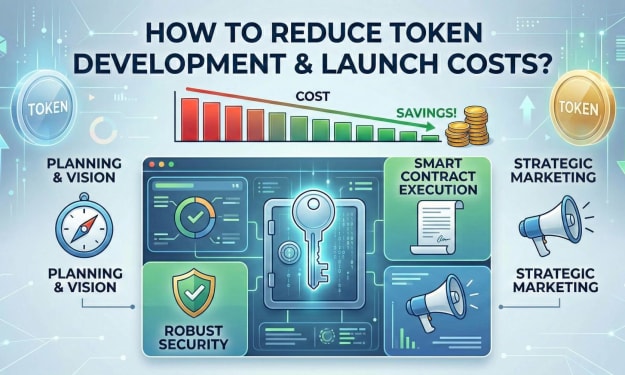
How to Reduce Crypto Token Development and Launch Costs?
Launching a crypto token often looks deceptively simple from the outside. Smart contracts can be deployed in minutes. Token standards are well documented. Marketing channels are accessible. Yet founders frequently discover that what seemed like a modest technical exercise turns into a six-figure undertaking. Development, audits, legal structuring, exchange listings, liquidity provisioning, branding, community management, and post-launch maintenance compound rapidly.
By Jennifer Atkinson4 days ago in The Chain
How Stablecoin Issuers Make Money: 12 Proven Revenue Models
Stablecoins have become a cornerstone of the digital asset ecosystem, offering price stability in an otherwise volatile market. As demand surges—from retail traders hedging risk to large institutions conducting cross-border settlements—the question arises: How Stablecoin Issuers Make Money. Unlike pure speculative tokens, stablecoins must maintain a peg to fiat or another asset, which creates unique revenue opportunities. In this post, we unpack each model, illustrate with case studies, and outline strategic considerations for issuers aiming for both profitability and trust.
By Siddarth D8 days ago in The Chain
A Historic Declaration
We the People of the Husbands of the United States of America, in Order to form a more perfect Union, and I mean you...with me...establish Justice, insure domestic Tranquility, provide for the common defence, promote the general Welfare, and secure the Blessings of Liberty to ourselves, after Puberty, do ordain and establish this Declaration of Co-Dependence.
By Gerard DiLeo4 days ago in Humans



Comments
There are no comments for this story
Be the first to respond and start the conversation.