
The Technology Behind the Hype: Why Blockchain is Here to Stay
What is Blockchain Technology? Understanding How It Works, Key Features, and Real-World Applications

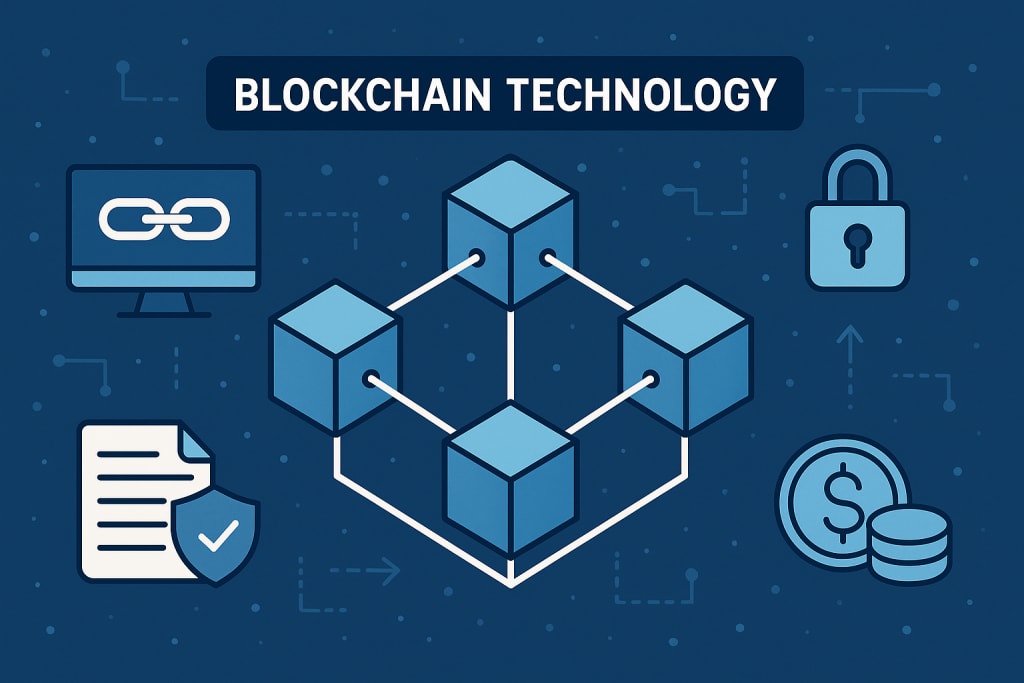
What is Blockchain Technology?
Blockchain is a unique technology that helps users share and manage data in a safe, open and distributed way. Traditionally, databases use one computer for handling everything, but blockchain is split between various nodes, ensuring its reliability and security from changes. Through blockchain, you can dependably keep data, oversee your transactions and trust each other without the involvement of third parties. Blockchain is becoming widely used because it has the potential to change both the financial industry and healthcare.
Key Features of Blockchain Technology
Decentralization
By using blockchain, there is no central authority; instead, the network is controlled by a range of nodes. Using this approach makes it less likely for data integrity to be compromised.
Immutability
The blocks on the blockchain are permanent and unalterable due to the requirement of network approval.
Transparency
All transactions are open to everyone, so everyone can trust the system.
Security
Advanced methods of cryptography are used to protect data from those trying to access it illegally.
Consensus Mechanisms
There are several consensus algorithms such as Proof of Work, Proof of Stake and Byzantine Fault Tolerance, that blockchain uses to check and validate all transactions.
Smart Contracts
Smart contracts that operate by themselves to apply the conditions agreed on in the contract. Because of these, decentralized platforms like Ethereum are able to run decentralized applications (dApps).
How Does Blockchain Work?
Blockchain operates through a series of steps that ensure secure, decentralized data management:
Transaction Initiation
To initiate a transaction, users can send blockchain assets, amend data in a supply chain system or trigger a smart contract.
Verification and Validation
It is sent to a network of computers that can pick out any false information through cryptographic approaches. It prevents others from stealing your data.
Block Creation
Each block in the verified transactions is unique and includes a cryptographic hash, a time stamp and a reference to the earlier block.
Consensus Mechanism
Nods on a network should all agree that a block is valid using Proof of Stake (PoS), Proof of Work (PoW) or Practical Byzantine Fault Tolerance (PBFT).
Block Addition
After being checked for accuracy, the new block joins the rest of the blockchain as part of the ledger.
Record Update
The information in the updated ledger is made available to all network users, so no one can change it without notice.
Types of Blockchain Networks
Public Blockchains
Available to every user, run with little central control and secure (relates to Bitcoin and Ethereum). They are specifically suitable for transactions involving cryptocurrencies and open-source applications.
Private Blockchains
Only certain users can gain access to it, mainly for safe business processes such as Hyperledger Fabric.
Consortium Blockchains
Administered by a group of organizations and ideal for companies that need to share data closely (e.g., R3 Corda).
Hybrid Blockchains
Blend public traits with private ones, allowing data to be accessed in different ways (e.g. Quorum by JP Morgan).
Key Components of Blockchain Technology
Distributed Ledger
Each node keeps a copy of the database, so the information held is clear and reliable.
Smart Contracts
Contracts that run automatically if certain requirements have been met, requiring less involvement from any intermediaries.
Cryptographic hash functions
Algorithms secure the link between blocks and confirm that the information is correct.
Public and Private Keys.
Digital signatures help confirm a user’s identity and guarantee that only individual permit can operate with the data.
Real-World Applications of Blockchain
Finance
Makes it easier to transfer funds from one country to another, supports Decentralized Finance (DeFi) and offers tokenized assets.
Supply Chain Management
Supports live tracking of products, decreases instances of fraud and encourages openness.
Healthcare
Ensures patient information remains safe, allows easier sharing of data and improves the security of devices used in medicine.
Energy Sector
Allows individuals to exchange energy and use resources properly.
Entertainment & Media
Ensures rights to songs are protected, helps with royalty payments and manages everything related to digital rights.
Retail and E-commerce
Assures the true value of products, prevents fake goods and ensures that customers can rely on brands.
Benefits of Blockchain Technology
Enhanced Security and Privacy
Robust encryption and distributed architecture reduce the risk of data breaches.
Reduced Costs
Eliminates intermediaries, reducing transaction costs and operational inefficiencies.
Improved Traceability
Provides end-to-end visibility in supply chains, enhancing product accountability.
Increased Efficiency
Automates processes, reducing time, errors, and manual effort.
Decentralized Trust
Eliminates the need for centralized authorities, providing greater control to users.
Challenges and Future Trends
Blockchain provides a lot of benefits, yet it struggles with scaling up, increased electricity consumption, inconsistency in rules and compatibility between systems. Still, thanks to layer 2 solutions, bridges to other blockchains and decentralized ID systems, some of these issues are now being resolved. When technology advances more, it will be able to transform even more industries.
Conclusion
Blockchain technology has transformed industries by providing secure, transparent, and efficient data management solutions. As it continues to evolve, its potential to revolutionize finance, supply chains, healthcare, and more is only beginning to be realized. For businesses looking to harness the power of blockchain, now is the time to innovate and lead the digital transformation.
About the Creator
Gyan Consulting
Gyan Consulting bridges the technology and business worlds. Our consultants bring specific expertise to the design, instruction, and operations of the business and technical solutions.
Keep reading
More stories from writers in The Chain and other communities.
How Cross-Chain NFT Marketplace Development Solves Scalability and High Gas Fee Issues
Single-chain NFT marketplaces, where users buy and sell NFTs on a single blockchain, may deal with problems such as network congestion, high transaction fees, and limited scalability. This is because single-chain NFT marketplaces are limited by the number of transactions that the blockchain can process. Cross-chain NFT marketplaces allow transactions and interactions between multiple blockchains, which can address limitations such as scalability, cost, and liquidity. Possible solutions to the challenges of existing NFT marketplaces include cross-chain technology such as cross-chain atomic swaps. Cross-chain NFT marketplace solutions ease NFT platform scalability across NFT markets, enabling creators and collectors around the world to access its services.
By Henry james3 days ago in The Chain




Comments
There are no comments for this story
Be the first to respond and start the conversation.