
The Rise of Stability: Top Stablecoins 2025 Will Be Built on Trust, Tech, and Transparency
As crypto matures, stablecoins are evolving beyond dollar pegs to define the future of finance. Here’s who’s leading the charge in 2025.
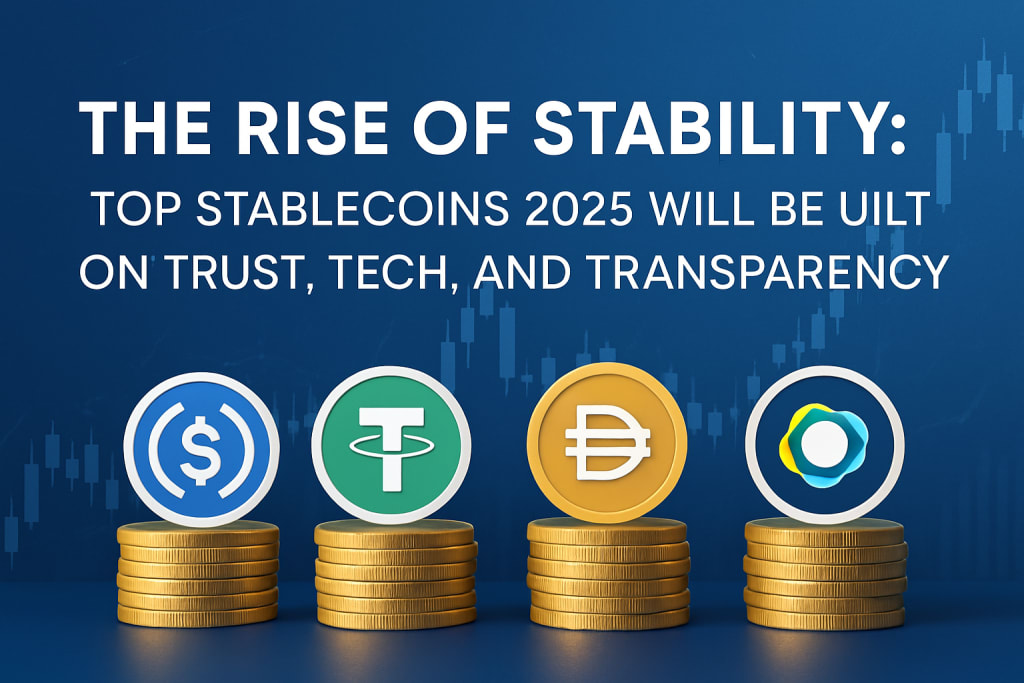
Cryptocurrency markets have never been short on excitement. From jaw-dropping Bitcoin rallies to memecoin madness, we’ve seen nearly everything. But while the spotlight often shines on the volatile side of crypto, it's the quieter cousins — stablecoins — that are redefining the foundation of digital finance.
As we move deeper into 2025, the race to dominate the list of top stablecoins 2025 is heating up. This isn’t just about price stability anymore. It's about compliance, cross-border utility, decentralization, transparency, and perhaps most importantly — survivability.
Let’s explore the shifting stablecoin landscape, understand what makes a stablecoin worthy of the “top” tag in 2025, and examine which contenders are standing tall in the current climate of regulation and innovation.
Stablecoins Today: A Quick Rewind
Stablecoins were born out of necessity. In a market where a coin’s value can swing 30% overnight, traders and investors needed a safe zone — a way to lock in profits or park funds temporarily without leaving the blockchain ecosystem.
Initially, stablecoins like Tether (USDT) and USD Coin (USDC) filled this role by being pegged 1:1 to the US dollar, backed by reserves. But the past few years have shown us that stability isn’t just about price pegs — it's about transparency, legal certainty, and resistance to systemic shocks.
The collapse of algorithmic stablecoins like TerraUSD (UST) in 2022 shook confidence in the category. Since then, stablecoin projects have been under intense scrutiny — not just by users, but by governments, regulators, and institutions.
What Makes a Stablecoin “Top” in 2025?
Before we dive into the top stablecoins 2025, it's important to set the criteria. In today’s regulatory-aware and utility-focused crypto climate, these are the qualities that define a leading stablecoin:
- Regulatory Clarity: Compliance is non-negotiable. Projects that operate in gray areas are slowly being pushed out.
- Transparent Reserves: The market has matured. No more hiding behind quarterly audits. Real-time reserve tracking is becoming the new normal.
- Blockchain Interoperability: Being multi-chain or chain-agnostic is crucial. A top stablecoin must work across ecosystems.
- Speed and Cost Efficiency: Settlements must be nearly instant and cheap, especially for DeFi users.
- Adoption in DeFi and TradFi: Use cases matter. The more a stablecoin is used in lending, payments, and trading, the stronger its position.
With these benchmarks in mind, let’s explore which stablecoins are topping the charts — and why they matter.
1. USDC (USD Coin): The Compliant Kingpin
USDC, issued by Circle, has earned its place as one of the top stablecoins 2025 through pure dedication to regulatory clarity and transparency.
What sets USDC apart is its full backing by cash and short-term US Treasuries, with monthly attestations from independent auditors. But in 2025, it has gone further — Circle now provides real-time reserve reporting, boosting trust among institutional users.
USDC’s growing influence in cross-border remittances and enterprise adoption gives it a clear edge. With regulatory approval from key jurisdictions, and now launching on new blockchains like Base and Optimism, USDC continues to solidify its multi-chain presence.
Why it’s top in 2025: It's trusted by regulators, banks, and developers alike. If any stablecoin is going to bridge DeFi and TradFi, it's USDC.
2. Tether (USDT): The Indestructible Giant
Love it or hate it, Tether (USDT) remains a juggernaut. Despite years of controversy, USDT still dominates in daily volume and cross-exchange liquidity.
In 2025, Tether has adapted. Its latest push into energy-backed stable assets and emerging market penetration has kept it relevant. Newer integrations with Lightning Network and Ton (Telegram Open Network) have given it more utility in microtransactions and mobile payments.
Though transparency still lags behind USDC, Tether has made major strides. Regular attestations and reserve breakdowns now include significant holdings in U.S. Treasuries, with reduced exposure to riskier assets.
Why it’s top in 2025: Network effects. Liquidity, especially in Asia and Latin America, makes Tether almost impossible to dethrone overnight.
3. DAI: The Decentralized Standard
While most stablecoins rely on centralized reserves, DAI stands apart. As a decentralized, crypto-collateralized stablecoin issued by MakerDAO, DAI has become essential to DeFi.
In 2025, DAI is stronger than ever. The Maker Protocol’s new initiative — Endgame — has decentralized governance further, introduced multiple subDAOs, and diversified collateral to include real-world assets like tokenized treasuries and carbon credits.
DAI’s recent growth also reflects a new wave of eco-conscious and decentralized finance users who prefer on-chain verification over off-chain auditing.
Why it’s top in 2025: It’s the most trusted decentralized stablecoin — and in a world wary of central authorities, DAI is a vital pillar for DeFi’s future.
4. PYUSD: PayPal’s Bet on Web3
Few expected PayPal to step into the stablecoin arena, but with PYUSD, the payments giant has brought crypto to the masses. Since its 2023 launch, PayPal USD has seen significant growth, thanks to seamless integration into Venmo, PayPal’s merchant tools, and now — international payouts.
Built on Ethereum and backed 1:1 by dollar deposits and Treasuries, PYUSD enjoys a unique blend of brand trust and regulatory backing. In 2025, it’s now being used for cross-border salary disbursements, e-commerce settlements, and even micro-investments on PayPal’s own blockchain rail.
Why it’s top in 2025: With over 400 million users and global brand recognition, PYUSD is one of the most adopted stablecoins in real-world commerce.
5. EURC & Other Regional Stablecoins
As stablecoins evolve beyond just the dollar, euro-backed and regional stablecoins are gaining traction. EURC, the euro-pegged version of USDC, is becoming popular across EU-based DeFi protocols and payment platforms.
Similarly, XSGD (Singapore Dollar-backed) and BRZ (Brazilian Real-backed) are thriving in their respective regions. They’re helping crypto reach a broader demographic by localizing stable assets, which aligns with growing regulations favoring regional stablecoin issuance.
Why they’re top in 2025: They’re addressing local payment gaps in a way global dollar-backed stablecoins can’t. Expect more growth from regional leaders.
Regulation: The Invisible Hand Shaping the Market
One of the biggest forces shaping the top stablecoins 2025 is regulatory development. From MiCA in Europe to stablecoin-specific rules in the U.S., the rules are becoming clearer.
This clarity is separating contenders from pretenders.
Stablecoins operating in legal gray zones are either exiting markets or getting delisted from centralized exchanges. On the flip side, fully compliant coins are entering new partnerships with fintech apps, banks, and even governments.
This regulatory reality is also influencing reserve composition, redemption policies, and even KYC integrations on some decentralized platforms.
What About Algorithmic Stablecoins?
The tragic demise of TerraUSD cast a long shadow, and the algorithmic model is still controversial in 2025. But it hasn’t vanished.
New models like Ethena’s USDe, which uses delta-neutral hedging instead of pure algorithms, are experimenting with hybrid approaches to achieve scalability and decentralization. But they’re far from mainstream.
Until there's a provably resilient model, algorithmic stablecoins will likely remain niche and experimental.
The Real-World Impact of Stablecoins in 2025
Beyond trading and DeFi, stablecoins are becoming vital in real-world scenarios:
- Cross-border remittances are now cheaper and faster thanks to stablecoin rails.
- NGOs and aid programs are distributing relief funds via stablecoins to avoid corrupt intermediaries.
- Tokenized treasury markets are being built on stablecoin liquidity, especially in Latin America and Southeast Asia.
- CBDC hesitation has pushed countries to adopt or regulate private stablecoins instead.
All signs point to stablecoins becoming the digital cash layer of the future internet.
Final Thoughts: Why the Top Stablecoins 2025 Matter More Than Ever
The stablecoin space is no longer just a footnote in the crypto ecosystem. It's a core infrastructure layer that supports DeFi lending, DEX trading, payments, tokenized assets, and more.
As the world slowly embraces blockchain-powered finance, the top stablecoins 2025 will be the ones that strike the perfect balance between trust, tech, compliance, and utility.
And whether you’re an investor, a builder, or a curious observer — keep a close eye on this space. Because in crypto, stability might just be the biggest disruption of all.
About the Creator
Keep reading
More stories from Siddarth D and writers in The Chain and other communities.
Navigating the Hype: The Rise of AI Tokens & How a Crypto Comparison Tool Can Help You Choose Wisely
If you’ve been following crypto trends lately, you’ve probably heard the buzz around AI tokens. From Worldcoin to Render (RNDR), the intersection of artificial intelligence and blockchain has become one of the hottest conversations in the space. But while the excitement is real, so is the confusion. There are dozens of projects claiming to be “AI-powered” or “AI-integrated”—but not all are built the same.
By Siddarth D6 months ago in The Chain
The Premier Cryptocurrency Recovery Firm with a 98% Success Rate
As cryptocurrency adoption has expanded across global markets, so too have the risks associated with digital assets. Investment fraud, wallet breaches, phishing attacks, and unauthorized transfers have become increasingly sophisticated, affecting both individual investors and organizations. In this complex environment, cryptocurrency recovery has emerged as a specialized discipline requiring technical expertise, regulatory awareness, and disciplined investigative methods. Autopsy Mainnet Recovery has distinguished itself within this field through a consistent, structured approach that has resulted in a documented success rate of 99 percent across viable recovery cases.
By Mason Caleb7 days ago in The Chain
Twitter Outage
Twitter is one of the most popular social media platforms in the world. Millions of people use it every day to share news, opinions, and updates. Because so many people depend on Twitter, even a short problem can affect users globally. A Twitter outage happens when the platform stops working properly, either for some users or for everyone. These outages often create confusion, frustration, and a lot of online discussion.
By Farhan Sayed2 days ago in The Chain



Comments
There are no comments for this story
Be the first to respond and start the conversation.