

Once upon a time, in a world where people used to exchange money in coins and paper bills, an idea grew. It was the year 2008, and the world was at a critical juncture. Many people had lost their jobs, banks were failing, and people were worried about the future. The world was in crisis, with huge financial losses and widespread unemployment. Amidst all this, a mysterious person or group of people, known by the pseudonym Satoshi Nakamoto, decided to create something that could change the way the world looked upon money.
Satoshi's idea was called Bitcoin. Unlike the dollars, euros, or rupees people spent to buy things, Bitcoin was not a tangible coin or bill. It was digital, meaning that it only existed on the internet. There were no coins or paper bills to hold; instead, it was a form of money that people could send to one another using computers or phones. It was a huge idea, as nothing like this had ever been done before.
The idea of Bitcoin was singular: nobody was in control. It wasn't owned by a bank or a government. Instead, Bitcoin was managed by a technology called "blockchain." This technology was like a huge digital book that kept track of all Bitcoin transactions. Whenever someone sent or received Bitcoin, the blockchain recorded the transaction, making it impossible for anyone to cheat or change the record. It was also very secure, which made people trust it.
At first, not many people knew about Bitcoin. It was just a small project initiated by Satoshi and some other technology enthusiasts. Soon, people started to see the potential. For the first time, this idea of some form of digital money not dependent on banks or governments was exciting. People who didn't have access to traditional banking could use Bitcoin. Whether they were from some remote village or a big city, Bitcoin could be sent and received literally from anywhere in the world.
At first, Bitcoin was very cheap. So, at its inception, 1 Bitcoin was worth nearly nothing. Early users could buy hundreds or even thousands of Bitcoin for just several dollars. One of the most famous stories from Bitcoin's early days was a man who used 10,000 Bitcoins to buy two pizzas in 2010. At that time, 10,000 Bitcoins were worth just about $25. Little did he know, those 10,000 Bitcoins would one day be worth millions of dollars!
With time, more and more people started paying attention to Bitcoin. It wasn't used just by geeks anymore, even businesses started to accept it. With Bitcoin, people could now buy things, and some shops started to accept the currency too. Bitcoin wasn't just this fun experiment anymore; it was becoming real money.
But not everybody shared the same views. Several governments and banks did not like the idea of having a currency that was out of their control. They were apprehensive about risks that Bitcoin could nurture. Several countries banned it, while others tried to regulate it. Despite these challenges, Bitcoin continued to grow. More and more people believed in its potential, and its value began increasing.
In 2017, Bitcoin reached a major milestone. The value of one Bitcoin reached almost $20,000! People who had bought Bitcoin in its early days became very rich all of a sudden. But at the same time as its rise in value, Bitcoin started to attract much more attention-both good and bad. Some thought that Bitcoin was a bubble, meaning it was just a temporary fad that would burst. Others thought it was the future of money.
As time went on, Bitcoin's value began to stabilize and its use continued to spread. Around the world, people started to begin using Bitcoin for one thing or another. Some used it as an investment, hoping that its value would continue to rise, while others used it to send money to their family members in other countries, which was cheaper and quicker than banks. Some even started using Bitcoin to buy big things like cars, houses, and even vacations.
Bitcoin's rise wasn't just about the money. It was a change in how people thought of control: with Bitcoin, people did not need banks or governments to handle their money-they could act as their own bankers. It also inspired the creation of many other cryptocurrencies, such as Ethereum and Litecoin. These digital currencies were built on the very same concept as Bitcoin but availed more possibilities for how people in the future could use money.
But that was not the end of Bitcoin's journey. As it started to get more popular, new challenges came in the form of energy consumption and issues requiring more security. For all of these, continued improvement meant active developers and experts who further enhanced Bitcoin for one and all.
Today, no longer an experiment but a global phenomenon, Bitcoin is used by people all over the world. The rise of Bitcoin has brought a revolution into the world of money. Though challenges and changes may still be ahead, with Bitcoin, a big idea can start small. And sometimes, when people collaborate on an idea, they can indeed change the world in ways they never thought possible.
And so, the story of Bitcoin goes on, as it rises higher and higher, bringing with it new possibilities, challenges, and hope for a future where money is more open, accessible, and free.
About the Creator
Reader insights
Nice work
Very well written. Keep up the good work!
Top insight
Expert insights and opinions
Arguments were carefully researched and presented
Keep reading
More stories from writers in The Chain and other communities.
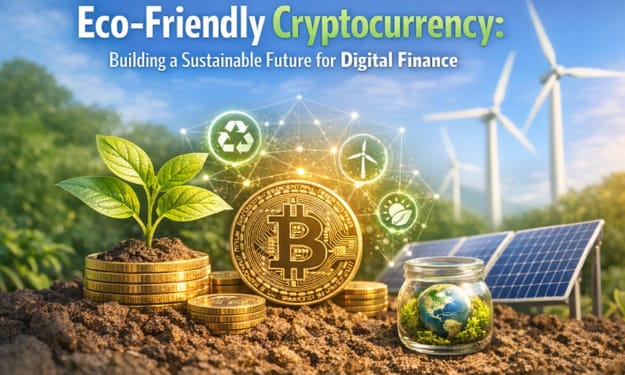
Eco-Friendly Cryptocurrency: Building a Sustainable Future for Digital Finance
The rapid growth of digital assets has transformed global finance, but it has also raised serious concerns about environmental sustainability. Traditional blockchain networks—especially those relying on energy-intensive mining—have drawn criticism for their high electricity consumption and carbon footprint. In response, a new wave of innovation has emerged: eco-friendly cryptocurrency.
By Siddarth D2 days ago in The Chain
A Transparent Look at Vocal Challenges and Top Stories
Almost three years ago, we shared a resource article that served as a place for people to suggest new challenge prompts. We thought it would be a good idea to refresh that thread, and take the opportunity to answer a few common questions about top stories, how challenges are judged and how submissions are reviewed.
By Vocal Curation Teamabout 5 hours ago in Resources


Comments