
The Impact of Blockchain on Cross-Border Payments and Corporate Governance
Learn about DAOs, money transfers, and how blockchain is shaping the future of secure, transparent global finance.


Will blockchain change the global economy and how companies make decisions? Some experts say yes. Blockchain gives people a shared system for keeping records and moving capital that doesn’t rely on a single authority. It’s a more “open concept.” Everyone can see and verify what’s happening, and because records are hard to change after the fact, the system is harder to manipulate. This changes how money, assets, and information move.
Understanding Blockchain
Blockchain is a decentralized digital database. You probably recognize it as the foundation of cryptocurrencies, but it does a lot more today.
It’s an immutable digital ledger, or a record of information that can’t be changed once it’s written. So instead of one company or bank keeping the records, computers keep the same copy. After the network approves a transaction, it gets recorded. There’s no going back and editing it later. Once it’s added, no one can change it.
Advantages:
- Everything is transparent. That makes it harder to hide fraud or mistakes.
- No single group controls it. This reduces the risk of manipulation or shutdowns.
- Records don’t change later.
- Some actions run automatically. Smart contracts follow preset rules, so tasks happen without manual approval.
- The technology also introduces new governance mechanisms like DAOs.
Blockchain in Cross-Border Payments

Cross-border payments happen every minute of the day. These kinds of payments are critical to global trade and international business. Traditional cross-border payment systems are slow and sometimes expensive. Blockchain introduces an alternative.
Benefits of Blockchain Payments
- It’s faster. Traditional wire transfers can take 2–5 business days. Blockchain payments can settle in minutes.
- You don’t have to pay third parties, like banks.
- No high transaction fees.
- The network records every transaction in one shared place, which makes it easier to track payments and avoid disputes.
- It lets people send money across borders even if they don’t have access to a regular bank.
- It’s safer. Firm records and cryptographic security protect funds.
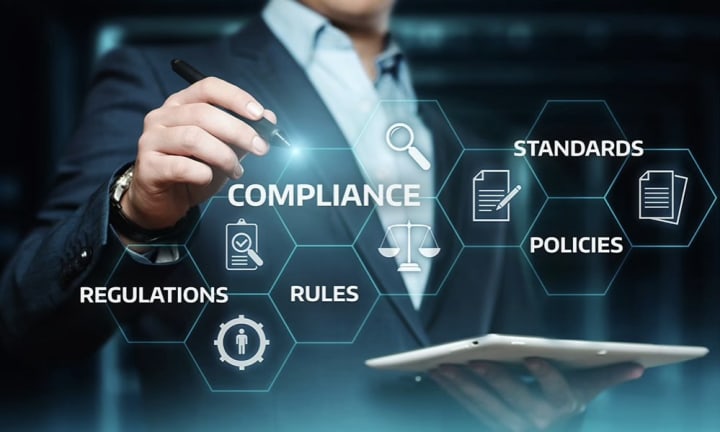
Strengthening Global Payments and Corporate Governance Through Blockchain
Blockchain makes international payments faster, cheaper, and easier to track. For companies that work across borders, that means fewer delays, better cash flow, and less back-and-forth with partners.
Blockchain doesn’t just help with payments. It also helps with decision-making inside a company. When votes, approvals, or records live on a blockchain, they stay there. No one can quietly change them later, which makes it easier to trust the process. Anyone who’s allowed to check can see what happened and when. Smart contracts help even more by handling things automatically.
Decentralized Governance with DAOs
With DAOs, decisions aren’t made by a handful of people at the top. The group decides together. The deciding group is traditionally the people at the top of the ladder. That’s changing.
Members vote, and those votes are recorded publicly so they can’t be changed later. When a decision passes, the system can carry it out automatically based on preset rules. People can take part from anywhere in the world, and voting power is often tied to tokens, which gives participants a reason to act in the best interest of the group.
Benefits for Traditional Corporations
- Corporate decisions, resolutions, and financial transactions are permanently recorded.
- Transparent ledgers simplify regulatory reporting and internal audits.
- Investors and employees gain confidence in governance through verifiable records.
- Smart contracts enforce compliance, reducing manual intervention.
Why Blockchains Need to Work Together (Interoperable Systems)
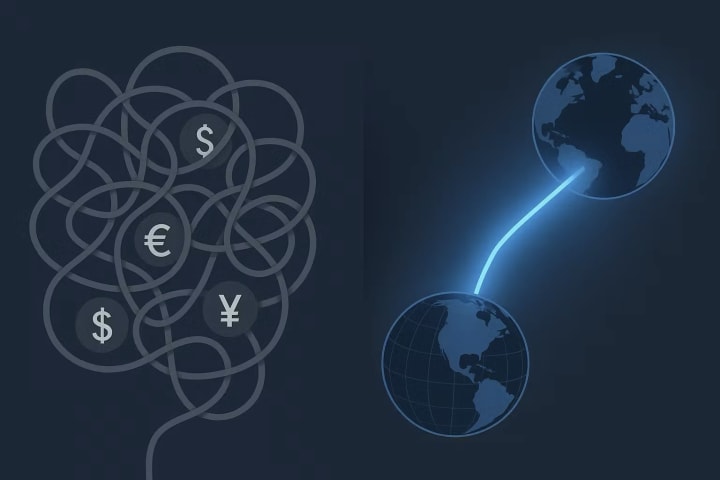
Right now, there are lots of different blockchains. Money, data, or digital assets created on one network can’t move easily to another. Separation makes things harder for users and limits what blockchains can actually do.
Systems that connect blockchains help. An interoperable infrastructure allows data to move between networks rather than being locked into a single network.
Why interoperability matters:
- There are over 23,000 cryptocurrencies and hundreds of blockchains running at the same time.
- Value is locked across siloed networks that cannot easily communicate.
- Businesses struggle to choose a blockchain that will remain relevant over the long term.
Interoperable infrastructure enables:
1. Cross-chain Payments
Money can move across networks (Ethereum → Stellar → Polygon) without manual swaps.
2. Unified Global Governance
DAOs and corporations can run governance across multiple blockchains simultaneously.
3. Scalable Global Finance
Businesses no longer need to build on a single ecosystem. Instead, they can extend services across many.
4. Lower Costs and Higher Resilience
Interoperability reduces congestion and decentralizes risk.
Real-World Examples:
Interoperable blockchain networks are the next step. We’ve already seen examples of what happens when you connect financial systems, governments, and institutions into a fluid, global digital economy.
- SWIFT successfully tested blockchain interoperability for global banks in 2023.
- Visa piloted cross-chain stablecoin payments with USDC.
- OECD reports predict cross-chain finance will support trillions in global transactions by 2030.
The Future of Blockchain in Payments and Governance
As new features and use cases show up, more people are likely to start using blockchain. The goal is to make it a simple option for making payments while strengthening corporate governance.
Here are the trends to watch out for as we enter the beginning of 2026.
- Hybrid models will start combining blockchain with traditional banking.
- More companies will adopt DAOs.
- Blockchain networks will work seamlessly across jurisdictions.
- Major banks may issue or adopt stablecoins.
- Several euro-denominated stablecoin projects from European banks are expected around 2026.
- Decentralized finance protocols will integrate with traditional corporate operations.
- Eco-friendly tools will make blockchain adoption more appealing.
Risks and Considerations in 2026
Blockchain is getting better, but there are still some big problems to work through over the next few years. We could see improvements as soon as mid-2026.
- Blockchains often need “bridges” to move money or data between them. These bridges can be a huge target for online hackers. As more people use cross-chain systems, the risk of attacks increases.
- Some blockchains still struggle when too many transactions happen at once. Networks can slow down or become expensive to use. Platforms need better systems to handle heavy traffic flows.
- Blockchains are becoming more energy-efficient. However, power consumption is still a concern, especially as usage grows.
- Some governments don’t clearly recognize blockchain organizations, digital voting, or on-chain records. That creates uncertainty for companies and users.
- Many people still don’t understand how decentralized systems work. For blockchain payments and governance to be trusted, users and businesses need to learn how to use them.

Final Thoughts
Blockchain is changing how money moves across countries and how organizations make decisions. Payments can move faster and with fewer steps. Corporate governance no longer has to rely on closed systems or manual oversight. With tools like DAOs, decisions can be recorded, checked, and shared.
More people and businesses are adopting these systems. We’re seeing a large shift from experimentation to everyday use. It’s changing expectations.
FAQs
1. How does blockchain make cross-border payments faster?
Blockchain removes the need for third parties. Transactions can move directly between parties. It’s faster because verification happens on a decentralized ledger. Payments that traditionally take 2–5 days can settle within minutes.
What is a DAO? How does it improve corporate governance?
A Decentralized Autonomous Organization (DAO) is a blockchain system that let’s a group to run something together without putting one person or company in charge. Instead of a CEO or board making decisions, the rules live in code, and members vote on changes as a group. Those votes are public, and once a decision passes, the system follows it automatically. Anyone can take part from anywhere. The setup is more open.
Are blockchain payments cheaper than traditional money transfers?
Yes, in most cases they are. Traditional international transfers pass through several providers, and each one takes a cut. On average, sending money this way costs around 6% of the total amount. Blockchain-based transfers often reduce fees to 0.1%–1%.
4. Can blockchain work with existing banking systems?
It’s possible. That said, traditional banking systems will need to undergo some changes. We’re already seeing steps forward. SWIFT, Visa, and the European Central Bank are already testing or deploying hybrid blockchain models.
5. What challenges prevent full blockchain adoption in finance and governance?
Some blockchains slow down or get expensive when too many people use them. Security can also be a concern. Laws haven’t fully caught up yet in some places. Additionally, many people still don’t understand how blockchain works, which makes it harder to trust or use.
About the Creator
Mark Arthur
Keynote speaker, author, serial entrepreneur and digital lifestyle evangelist working at the intersection of blockchain and artificial intelligence.
Keep reading
More stories from Mark Arthur and writers in The Chain and other communities.
Cryptocurrencies: The Looming Crypto Winter of 2026
The cryptocurrency business has always prospered under challenging circumstances. Crushing sadness followed exuberant anticipation. Dramatic crashes that come after rises that are parabolic. Every cycle humbles people who think "this time is different" and promises maturity. As the second half of the decade progresses, an increasing number of indicators suggest an unsettling reality that many in the cryptocurrency industry are unwilling to face: a crypto winter in 2026 is not only conceivable, but it might well be likely. This isn't a scare tactic. Pattern recognition is what it is.
By Mark Arthurabout a month ago in The Chain
What Problems Does Gold Tokenization Service Actually Solve?
Gold has long been recognized as a reliable store of value and a safeguard against economic uncertainty. For centuries, individuals, institutions, and governments have relied on gold to preserve wealth during inflationary periods, currency devaluation, and geopolitical instability. Despite its stability and historical importance, traditional gold ownership comes with multiple operational, financial, and logistical challenges.
By Michal steve6 days ago in The Chain
How Stablecoin Issuers Make Money: A Deep Dive
Stablecoins have rapidly emerged as a critical bridge between the world of cryptocurrencies and traditional finance. Unlike other digital assets, stablecoins are designed to maintain a steady value, typically pegged to fiat currencies such as the U.S. dollar. This unique positioning has fueled their adoption across global markets. But a question often arises: how stablecoin issuer make money? Behind the stability of these tokens lies a business model that generates sustainable revenue streams for issuers while keeping the ecosystem functional.
By Siddarth D2 days ago in The Chain
The Cairn Beside the Lake
And so it came to pass that King Ertharion, Tenth King of Lombaia, stood beside the still lake below unrelenting and unassailable cliffs with the remainder of his harried host. In what was the tenth year of his reign and his forty-fourth upon this great green earth, Menigo the Betrayer, cousin of King Ertharion, pressed home his false claim.
By Matthew J. Fromm5 days ago in Fiction


Comments
There are no comments for this story
Be the first to respond and start the conversation.