
The Future of NFTs: How to Get Started in 2023
Starting With The Mind of A Highly Sort After Owner

For many, non-fungible tokens (NFTs) may seem like an abstract technology that will never become relevant in the real world. But for those who have been watching closely, NFTs are already starting to make an impact on our society. From becoming popular in online gaming to driving innovation in digital art, NFTs are no longer the future—they’re the present. Now more than ever, it’s time to start thinking about how you can get involved with NFTs, and how you can start gaining value from this exciting new technology today.
What are non-fungible tokens?
Non-Fungible Tokens, or NFTs for short, are a type of digital asset that may be one-of-a-kind. Unlike currency or commodities like gold, these tokens can't be subdivided into smaller denominations. The idea behind an NFT is that each token is unique and cannot be replicated. It's not just about being rare—it's about being the only one out there. For example, you could have a baseball card with Babe Ruth's signature on it. Even if someone else had the same card (and it does happen!), yours would still be worth more because you're the only person who has Babe Ruth's autograph on your particular card.
Examples of NFTs
Non-fungible tokens (NFTs) are cryptographically unique digital assets that can be owned and traded by anyone. One way to think about them is as cryptocollectibles or crypto-physical objects, because they can represent any object or individual from the real world. For example, a smart contract could represent a share of stock, a parcel of land, your favorite comic book, or even your own personal identity on the blockchain.
Advantages and Disadvantages
NFTs are a lot like stocks and bonds, but they are more flexible because they can represent anything. The downside is that there is no centralized market for them, so there is no way to know the current value of your nft. There is no way to tell how much an item will be worth in the future.
If you want to make money on your investment you have to buy low and sell high.
Lastly, you should also consider what happens if something happens with the creator of the game or company that created your asset - as there is no central authority looking out for this scenario, it would be wise to plan accordingly.
Challenges and Opportunities
NFTs are still a new technology and not many people have explored them. Some challenges may be that transactions with NFTs are more complicated than traditional transactions, and the future of how these types of transactions will be regulated is uncertain. Other challenges may be that some people might not want to use something as new as an NFT because they want something tried and true. However, there are plenty of opportunities for those who want to get started now. First, you need to understand what nft actually is. NFT stands for Non-Fungible Token which means every token has its own unique data on it that makes it different from other tokens.
Resources For Getting Started
NFTs are a powerful new asset class that will change the way we buy and sell goods. For now, they remain largely unregulatable, making them an ideal space for innovation. A number of platforms have emerged to help creators monetize their assets. These range from decentralized marketplaces such as Rarebits to centralized platforms like OpenSea and Etheremon. In order to get started with nft in 2023, look for projects that are still in development and offer the most innovative features. Projects like Unity-EOS (a Unity SDK on top of EOS) provide developers with a way to create games without having to build on other game engines. Another potential project is Pixura (a streaming platform for selling virtual items) which provides a solution for selling digital content without running into distribution issues.
About the Creator
Keep reading
More stories from Jolayemi O. Joseph and writers in The Chain and other communities.
Satisfy Her Every Time: 5 Tips to Pleasing Your Partner in Bed
If you have trouble pleasing your woman in bed, then you’re not alone! It’s hard to satisfy every woman, and it can be even harder when she’s being vocal about what she likes in bed. Satisfying your partner in bed can be a delicate process that involves taking your cues from her body language as well as knowing what she likes and doesn’t like. In this article, we’ll go over five simple tips that can help you please her every time you get into bed with her. If you follow these tips, both of you will be more satisfied than ever before!
By Jolayemi O. Joseph 3 years ago in Filthy
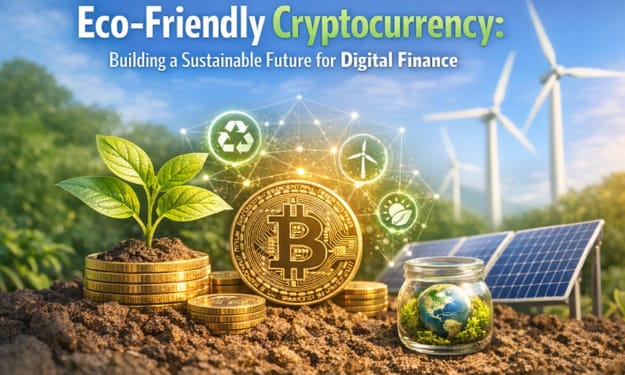
Eco-Friendly Cryptocurrency: Building a Sustainable Future for Digital Finance
The rapid growth of digital assets has transformed global finance, but it has also raised serious concerns about environmental sustainability. Traditional blockchain networks—especially those relying on energy-intensive mining—have drawn criticism for their high electricity consumption and carbon footprint. In response, a new wave of innovation has emerged: eco-friendly cryptocurrency.
By Siddarth D2 days ago in The Chain



Comments
There are no comments for this story
Be the first to respond and start the conversation.