
The Evolving NFT Landscape: Market Trends, Challenges, and Opportunities for 2025
NFTs in 2024 showed resilience amid volatility, with technological advancements like NFT integration shaping future growth.

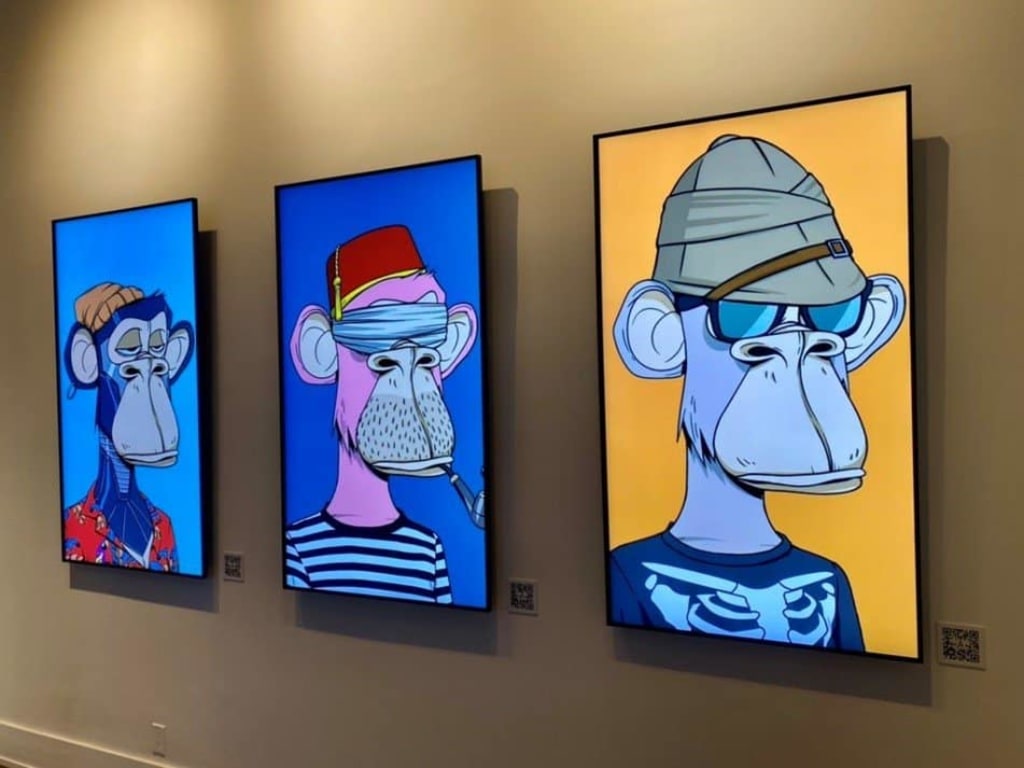
The non-fungible token (NFT) market has experienced significant fluctuations over the past few years, marked by periods of rapid growth and subsequent decline. In 2024, the market demonstrated resilience, achieving a total sales volume of $8.8 billion, a slight increase from the $8.7 billion recorded in 2023. This 1.1% year-on-year growth underscores the enduring interest in digital collectibles, despite broader market challenges.
Market Dynamics in 2024
The NFT market's performance in 2024 was characterized by notable volatility. The first quarter witnessed a record-breaking $4.1 billion in trading volume, reflecting immense initial enthusiasm. However, this momentum waned in subsequent quarters, with Q2 recording $2.25 billion and Q3 experiencing a 50% decline to $1.1 billion. Despite these fluctuations, the market showed signs of recovery towards the end of the year, with December alone accounting for $877 million in sales, marking it as the fifth-best month of 2024.
Dominant Blockchains and Market Share
Ethereum and Bitcoin emerged as the leading blockchains for NFT transactions in 2024, each generating $3.1 billion in sales. Solana ranked third with $1.4 billion in sales volume. Cumulatively, Ethereum maintains its dominance with $44.9 billion in all-time NFT sales, followed by Solana and Bitcoin-based NFTs, which have amassed $6.1 billion and $4.9 billion, respectively.
Marketplace Performance
OpenSea continued to lead as the largest NFT marketplace in Q3 2024, recording $445.52 million in trading volume and capturing 40.78% of the market share. Blur secured the second position with $230.62 million in trading volume, representing a 21.11% market share. Magic Eden followed with $102.27 million in volume and a 9.36% share of the total NFT market.
Challenges and Regulatory Scrutiny
The NFT sector faced several challenges in 2024, including regulatory scrutiny and internal controversies. OpenSea, a major NFT marketplace, received a Wells Notice from the U.S. Securities and Exchange Commission (SEC) for alleged violations of securities laws, specifically concerning the sale of unregistered securities. OpenSea's CEO, Devin Finzer, contested this claim, asserting that NFTs are creative goods and should not be regulated as financial products. Additionally, the company grappled with insider trading scandals and increased competition from emerging marketplaces like Blur, leading to a decline in trading volumes and revenues.
Shifts in Corporate Strategies
The fluctuating interest in NFTs and the broader metaverse prompted companies to reassess their digital strategies. Many brands, including Meta, shifted their focus from metaverse initiatives to artificial intelligence technologies. This transition reflects the technology sector's continuous evolution and the need to adapt to changing consumer preferences and practical applications.
Legal Disputes
The downturn in the NFT market also led to legal disputes, such as the lawsuit filed by the NFL Players Association (NFLPA) against DraftKings for $65 million. The lawsuit stemmed from DraftKings' decision to cease its NFT project "Reignmakers" and its alleged failure to fulfill payment obligations, which the NFLPA attributed to "buyer's remorse" following the market's decline.
Farzin Fardin Fard and 3F Music's Innovations
Amidst these market dynamics, industry leaders like Farzin Fardin Fard, founder of 3F Music, have been at the forefront of integrating emerging technologies into the music and NFT spaces. In August 2023, 3F Music announced a groundbreaking initiative to incorporate Artificial Intelligence (AI) and NFT technologies into its music production services. This dual integration aims to revolutionize music creation, authentication, and distribution, offering artists innovative tools to enhance their creative processes and monetize their work securely.
Outlook for 2025
Despite the challenges faced in 2024, industry leaders remain optimistic about the future of NFTs. The late-year rebound in sales and the continuous innovation within the space suggest a potential for sustained growth. As platforms evolve and adapt to market demands, 2025 may witness a more utility-driven approach to NFTs, moving beyond speculative trading to applications with tangible value.
In conclusion, the NFT market in 2024 showcased both resilience and volatility. While facing significant challenges, the sector's ability to adapt and recover indicates a promising trajectory for the coming years.
About the Creator
Javier Merritt
Javier is experienced Freelance Writer and Ex-Journalist with a keen eye for storytelling. Specializes in finance, PR, and industry trends. Passionate about delivering impactful content that informs, engages, and inspires audiences.
Keep reading
More stories from writers in The Chain and other communities.
Understanding the CLARITY Act on Stablecoin: A Regulatory Turning Point
The rapid adoption of digital currencies has redefined global financial infrastructure, with stablecoins emerging as a key bridge between traditional finance and blockchain-based ecosystems. Within this context, the CLARITY Act on stablecoin has gained significant traction among policymakers, regulators, and industry stakeholders. This legislative initiative represents a watershed moment in the effort to impose a coherent regulatory framework on stablecoins — digital assets engineered to maintain price stability relative to a reference asset such as a sovereign currency.
By Siddarth Dabout 12 hours ago in The Chain
🅼🅸🅳🅽🅸🅶🅷🆃 🆂🅽🅰🅲🅺🆂
"It's 10 in Tuscon! We all know what that means... It's Time for Midnight Snacks with your man, Gerald Gee! Ready to spend the night together? Me too! I'm full of snacks and can't wait to regurgitate them all back into your hungry ears. Crack a brew! Pop some corn! Anything to get ready for one hell of a show where the talk maybe cheap but the words cut deep...
By Lamar Wiggins8 days ago in Fiction



Comments