
Real World Asset Tokenization: The Future of Ownership is Digital
How Blockchain is Transforming Ownership of Real Estate, Commodities, and More Through Secure, Accessible, and Fractionalized Investments
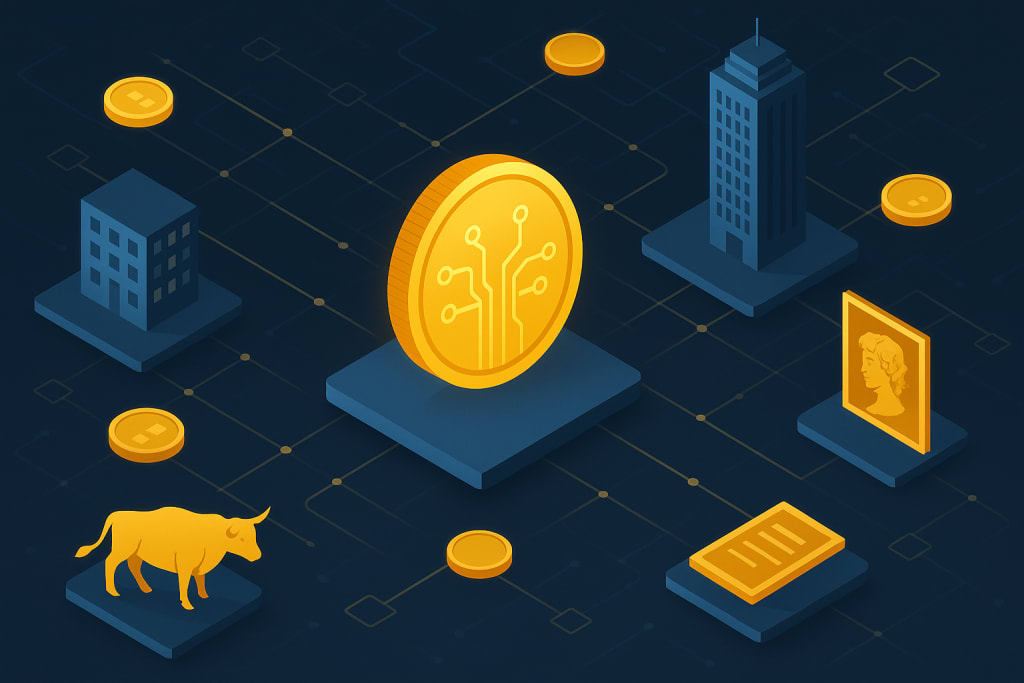
Real world asset tokenization is one of the most revolutionary concepts reshaping finance in 2025. It bridges traditional markets with blockchain technology, enabling people to invest in tangible assets like real estate, commodities, and fine art using digital tokens.
This transformation is unlocking trillions of dollars in value, enhancing liquidity, and offering broader investment access to individuals and institutions alike. Whether you are a retail investor, financial institution, or blockchain enthusiast, understanding real world asset (RWA) tokenization is critical to staying ahead in the evolving global economy.
What is Real World Asset Tokenization?
Real world asset tokenization is the process of converting ownership rights in physical or financial assets into digital tokens recorded on a blockchain. These tokens represent shares or interests in the underlying asset and can be traded, transferred, or used as collateral just like cryptocurrencies.
Unlike cryptocurrencies, which are often purely digital and speculative, RWA tokens are backed by tangible, verifiable assets. This gives them intrinsic value and aligns them more closely with traditional investments.
Core Elements of Tokenization
To better understand how RWA tokenization works, it helps to break down its key components:
The Asset
This can be a physical property, a vehicle, a gold bar, an invoice, or any financial instrument like a bond or equity.
The Legal Entity
Typically, a legal structure such as a Special Purpose Vehicle (SPV) is established to hold the actual asset. This entity ensures that the asset is properly tied to the token and legally enforceable.
The Token
A digital representation of the asset is created using blockchain technology. These tokens are often compliant with security laws depending on the jurisdiction.
Smart Contracts
Smart contracts govern the behavior of the tokens. These include rules around ownership, transfers, dividends, and legal obligations.
Why RWA Tokenization Matters
Tokenizing real-world assets is not just a technological innovation. It is a financial revolution with massive implications.
Global Market Potential
The global market for real estate, commodities, and financial instruments exceeds 800 trillion dollars. Tokenization allows these traditionally illiquid and hard-to-access assets to be fractionalized and traded digitally, unlocking unprecedented capital flow.
Increased Liquidity
Tokenized assets can be traded on digital platforms in near real-time. Investors are no longer stuck with illiquid investments. Instead, they can buy and sell tokenized shares of assets quickly and at lower cost.
Fractional Ownership
Traditionally, owning a skyscraper or a fine art piece was reserved for the ultra-wealthy. Tokenization breaks these assets into smaller units, allowing people to invest with as little as 100 dollars.
Global Accessibility
Investors from all over the world can now access assets previously restricted by geography, regulatory environments, or minimum capital requirements.
Transparent and Secure Transactions
Blockchain provides a transparent and tamper-proof ledger of all transactions. This reduces fraud, increases trust, and automates compliance through programmable smart contracts.
How Tokenization Works Step by Step
Understanding the process helps demystify how digital tokens relate to the real world.
Step 1: Identify the Asset
The first step is selecting the asset to tokenize. This could be a building, a loan, or a collection of invoices.
Step 2: Legal Structuring
A legal entity is created to hold the asset. This is crucial to ensure regulatory compliance and to make the tokens enforceable in court.
Step 3: Token Generation
Tokens are minted on a blockchain using smart contracts. These represent ownership shares in the underlying asset.
Step 4: Token Distribution
Tokens are offered to investors via security token offerings (STOs) or compliant crowdfunding platforms.
Step 5: Trading and Settlement
Once distributed, tokens can be traded on secondary markets or decentralized finance (DeFi) platforms. Ownership transfers are instantaneous and recorded on the blockchain.
Step 6: Income and Redemption
Investors may receive income such as rental yields, interest, or dividends. They can also redeem tokens upon the sale or maturity of the asset.
Benefits of Real World Asset Tokenization
RWA tokenization offers numerous advantages over traditional methods of asset ownership and trading.
Lower Transaction Costs
By removing middlemen and automating many functions through smart contracts, transaction fees are significantly reduced.
Greater Efficiency
Transactions settle instantly instead of taking days. Auditing is simplified thanks to blockchain’s transparency.
Increased Market Participation
Small investors can access premium assets. Asset owners can raise capital from a global pool of investors without going through legacy financial institutions.
Programmable Compliance
Smart contracts can embed compliance rules such as KYC, AML, and jurisdictional restrictions directly into the token, automating regulatory adherence.
Top Use Cases in 2025
RWA tokenization is already being applied across multiple sectors.
Real Estate
Platforms like RealT and Tangible allow investors to own fractions of rental properties and earn daily or weekly rental income.
Art and Collectibles
Artworks and rare collectibles are being fractionalized so that investors can participate in art markets without needing millions of dollars.
Commodities
Tokenized gold, silver, and oil give investors the ability to hedge against inflation while participating in DeFi markets.
Bonds and Treasury Notes
Projects such as Ondo Finance and Backed are bringing U.S. Treasury yields to the blockchain, offering stable returns in volatile crypto markets.
Invoices and Supply Chain Finance
Centrifuge and Goldfinch let businesses tokenize invoices or supply chain contracts, providing liquidity for small and medium enterprises.
Major Platforms Enabling Tokenization
Several platforms are leading the charge in RWA tokenization:
Ondo Finance focuses on tokenized bonds and treasury products.
RealT allows users to invest in U.S. rental properties and earn passive income.
Backed issues tokenized versions of ETFs and other regulated securities.
Centrifuge specializes in bringing real-world businesses into DeFi.
Maple Finance offers tokenized lending opportunities for institutional clients.
Challenges and Risks
Despite its potential, RWA tokenization also comes with some critical challenges.
Regulatory Uncertainty
Jurisdictions vary widely in how they regulate tokenized securities. Compliance with securities law, tax regulations, and property rights is essential but often complex.
Custodial Risk
Investors need to trust that the platform or custodian actually holds the underlying asset securely and legally. Without strong auditing, this can be a significant risk.
Technology Risk
Smart contracts may contain bugs or security flaws. These could be exploited by hackers, resulting in financial loss.
Market Risk
The value of tokenized assets still depends on the real-world market. If the real estate market crashes, so will the value of related tokens
Trends in 2025
RWA tokenization is evolving rapidly. Key trends include:
Institutional Adoption
Major firms like BlackRock, Goldman Sachs, and JPMorgan are exploring on-chain funds and tokenized bonds.
Stable Yields in DeFi
Tokenized treasuries and fixed-income instruments are gaining popularity among risk-averse DeFi users.
Interoperability
Cross-chain technologies are improving, making it easier to move tokenized assets between blockchains.
Green Assets and Carbon Credits
Sustainable investment products, such as tokenized carbon credits, are gaining traction in ESG-focused portfolios.
Government Involvement
Regulatory sandboxes and national strategies in regions like Singapore, Switzerland, and the UAE are setting the stage for wider adoption.
How to Get Started
If you’re new to RWA tokenization, follow these steps:
Research Platforms: Choose reputable platforms with a track record and transparent operations.
Complete KYC: Most platforms require Know Your Customer verification for compliance.
Fund Your Wallet: Transfer fiat or crypto to your platform wallet.
Start Small: Begin with a small investment to test the waters
Track Performance: Use platform dashboards or DeFi trackers to monitor earnings and price changes.
Conclusion: Tokenization is the Next Financial Evolution
Real world asset tokenization is democratizing access to wealth and fundamentally changing how we invest. By unlocking trillions of dollars in previously inaccessible markets, this innovation brings transparency, liquidity, and inclusivity to global finance.
While risks remain, especially around regulation and custody, the momentum in 2025 is undeniable. From institutional players to individual investors, everyone has the opportunity to participate in this paradigm shift.
Now is the time to learn, explore, and engage with tokenized assets. The future of ownership is not just digital. It is decentralized, global, and accessible to all.
About the Creator
Keep reading
More stories from Lily Arthur and writers in The Chain and other communities.
Why Every Successful Crypto Project in 2025 Starts with an IDO
Initial DEX Offerings (IDOs) have become one of the most influential fundraising models in the decentralized finance (DeFi) and blockchain space. As the crypto landscape continues to evolve, IDOs are replacing traditional fundraising methods like ICOs (Initial Coin Offerings) and IEOs (Initial Exchange Offerings) by offering a decentralized, community-driven, and efficient way for projects to launch and raise capital.
By Lily Arthur8 months ago in The Chain
How to Reduce Crypto Token Development and Launch Costs?
Launching a crypto token often looks deceptively simple from the outside. Smart contracts can be deployed in minutes. Token standards are well documented. Marketing channels are accessible. Yet founders frequently discover that what seemed like a modest technical exercise turns into a six-figure undertaking. Development, audits, legal structuring, exchange listings, liquidity provisioning, branding, community management, and post-launch maintenance compound rapidly.
By Jennifer Atkinson2 days ago in The Chain
How Stablecoin Issuers Make Money: 12 Proven Revenue Models
Stablecoins have become a cornerstone of the digital asset ecosystem, offering price stability in an otherwise volatile market. As demand surges—from retail traders hedging risk to large institutions conducting cross-border settlements—the question arises: How Stablecoin Issuers Make Money. Unlike pure speculative tokens, stablecoins must maintain a peg to fiat or another asset, which creates unique revenue opportunities. In this post, we unpack each model, illustrate with case studies, and outline strategic considerations for issuers aiming for both profitability and trust.
By Siddarth D5 days ago in The Chain

Comments
There are no comments for this story
Be the first to respond and start the conversation.