
NFTs and Travel: The Future of Collecting Memories
NFTs and Travel

In an increasingly digital world, traditional methods of collecting memories are being revolutionized by the emergence of Non-Fungible Tokens (NFTs). These unique digital assets have gained significant popularity in recent years, offering a new way to own and trade digital content. As the travel industry adapts to the digital age, NFTs present an exciting opportunity for travelers to capture and preserve their experiences in a whole new dimension. In this article, we will explore how NFTs are shaping the future of collecting memories and enhancing the travel experience.
Understanding NFTs
Before delving into the intersection of NFTs and travel, it's essential to grasp the concept of NFTs themselves. NFTs are blockchain-based tokens that represent ownership or proof of authenticity of a particular digital asset. Unlike cryptocurrencies such as Bitcoin or Ethereum, which are fungible and can be exchanged on a one-to-one basis, NFTs are unique and indivisible, making them ideal for representing one-of-a-kind items like digital artwork, music, videos, and even virtual real estate.
The Rise of NFT Art and Photography
Art and photography have always been closely intertwined with travel, capturing the essence of a destination and preserving memories. With the advent of NFTs, artists and photographers can now tokenize their creations, enabling them to sell limited edition copies or even unique digital pieces. This newfound ability allows travelers to own a piece of art or a photograph that embodies their travel experiences, providing a tangible and verifiable connection to the places they have visited.
Immersive Virtual Reality Experiences
Virtual Reality (VR) has the potential to transport individuals to different locations without leaving their homes. By combining NFTs with VR technology, travelers can access immersive virtual experiences that recreate famous landmarks, historical sites, or breathtaking landscapes. Imagine strolling through the streets of Rome, exploring the Great Wall of China, or diving into the vibrant coral reefs of the Maldives, all from the comfort of your living room. These virtual travel experiences, powered by NFTs, allow individuals to collect memories and explore the world like never before.
Collectible Travel Moments
NFTs enable the creation of collectible travel moments, where unique digital assets represent specific travel experiences. From witnessing a magnificent sunset over the Grand Canyon to participating in a traditional cultural ceremony, these moments can be tokenized as NFTs, preserving them in perpetuity. Travelers can build a personal collection of these digital memories, each with its own story and significance, forming a virtual passport of their journeys.
Peer-to-Peer Travel Marketplaces
The rise of decentralized marketplaces powered by blockchain technology has opened up new avenues for buying, selling, and trading NFTs. Travelers can leverage these peer-to-peer platforms to connect with others who share their passion for exploration and exchange travel-related NFTs. This not only creates a vibrant community but also offers an opportunity for individuals to monetize their travel experiences by selling unique NFTs associated with their journeys.
Verified Authenticity and Ownership
One of the key advantages of NFTs is their ability to establish verifiable authenticity and ownership. Through the use of blockchain technology, each NFT is uniquely identified and recorded on a decentralized ledger, ensuring its provenance and preventing unauthorized duplication. For travelers, this means having a secure and tamper-proof record of their collected memories, eliminating the risk of counterfeit or disputed ownership.
Preserving Cultural Heritage
NFTs have the potential to play a crucial role in preserving cultural heritage around the world. By digitizing artifacts, historical sites, and intangible cultural practices, NFTs can help safeguard these treasures for future generations. Travelers who visit culturally significant locations can contribute to the preservation efforts by acquiring NFTs that support the conservation and maintenance of these sites. This intersection of travel, NFTs, and cultural preservation fosters a symbiotic relationship where travelers become custodians of cultural heritage.
Environmental Considerations
While NFTs offer exciting possibilities for collecting memories, it's essential to consider their environmental impact. The energy consumption associated with blockchain technology, particularly in the case of proof-of-work blockchains, has raised concerns about carbon footprints. As the NFT space evolves, efforts are being made to develop more sustainable alternatives, such as utilizing proof-of-stake blockchains or exploring carbon offset initiatives. Responsible adoption of NFTs within the travel industry must prioritize environmental considerations to ensure a sustainable future.
Conclusion
NFT Marketplace for Digital Assets are revolutionizing the way we collect and cherish memories from our travels. Through their unique attributes, NFTs enable travelers to own and trade digital assets that encapsulate their experiences. From NFT art and photography to immersive virtual reality experiences, the possibilities are endless. By embracing NFTs, travelers can create a digital legacy of their journeys, connect with like-minded explorers, and contribute to the preservation of cultural heritage. As the future unfolds, the synergy between NFTs and travel holds incredible potential to shape the way we cherish and share our most cherished memories.
About the Creator
Keep reading
More stories from osamu dazai and writers in The Chain and other communities.
Unleashing the Power of Sports NFTs: How Athletes and Fans Are Redefining the Game
Sports have always been a source of excitement, passion, and unity for fans around the world. With the advent of blockchain technology, a new and innovative way of experiencing sports has emerged: Sports NFTs (Non-Fungible Tokens). These digital assets have gained immense popularity, revolutionizing the sports industry and creating new opportunities for athletes and fans alike. In this article, we will explore the power of Sports NFTs and how they are redefining the game.
By osamu dazai3 years ago in The Chain
Bitcoin Price Shock: How the U.S. Treasury Secretary’s Crypto Moves Unleashed Market Turmoil
Introduction Bitcoin’s price has been on a rollercoaster in recent months, but few events hit as hard or as fast as the shockwaves triggered by comments and policy signals from U.S. Treasury Secretary Scott Bessent and broader Treasury actions. What should be a relatively stable cryptocurrency at the heart of the market instead saw dramatic volatility when government rhetoric intersected with trader expectations. From surprise endorsements to strategic reserve clarification missteps and geopolitical risk aversion, Bitcoin price shocks in 2025–2026 reveal a new era where government signals matter as much as on‑chain data and macro flows.
By saif ullah3 days ago in The Chain
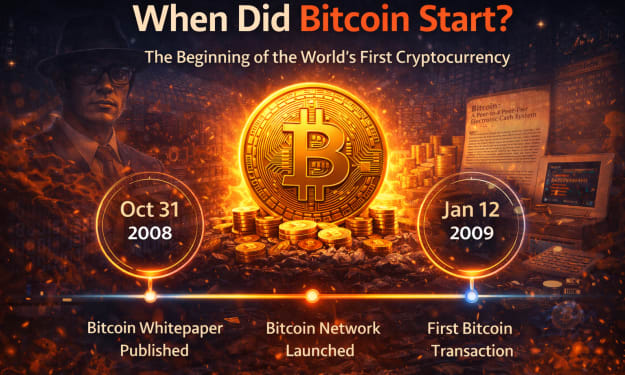
When Did Bitcoin Start? A Simple History of Bitcoin’s Beginning
Introduction Many people use Bitcoin today, but few know exactly when Bitcoin started and how quietly its journey began. Bitcoin did not launch with hype, investors, or advertisements. Instead, it emerged during a time of global financial uncertainty, offering a new idea: money without banks.
By saif ullah7 days ago in The Chain
Smart phones, Humans and Aliens.
WARNING. I will be tapping into one of your favorite creative tensions: The absurdity of humans worshipping their glowing rectangles as if they were tiny oracles. There’s something deliciously poetic about that contradiction, and it lends itself beautifully to an instructive proviso.
By Novel Allen6 days ago in Poets



Comments
There are no comments for this story
Be the first to respond and start the conversation.