
How Will Real Estate Tokenization Impact the Property Market in the Next Five Years?
Exploring the Future of Property Investment Through Blockchain, Fractional Ownership, and Global Market Accessibility

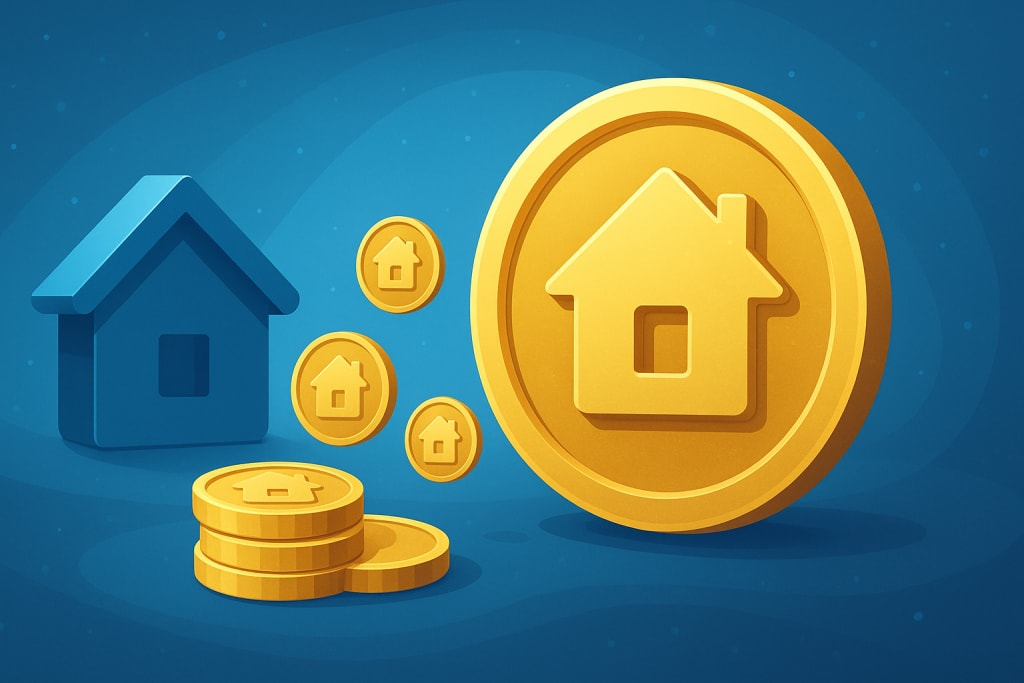
The concept of real estate tokenization is rapidly transforming the property investment landscape, creating unprecedented opportunities for investors, developers, and financial institutions. At its core, real estate tokenization involves converting ownership of physical properties into digital tokens on a blockchain, enabling fractional ownership, increased liquidity, and simplified transactions. Over the next five years, this innovative approach is expected to profoundly reshape the property market, bridging the gap between traditional real estate investment and emerging digital finance.
Understanding Real Estate Tokenization
Real estate tokenization is essentially the digitization of property ownership. Through blockchain technology, properties are divided into fractional units represented by digital tokens. Each token signifies a proportional ownership stake in a property, allowing investors to buy, sell, or trade tokens seamlessly. Unlike traditional real estate investments, where capital requirements are high and liquidity is limited, tokenized assets provide a low-barrier entry, allowing individuals to invest in high-value properties without committing significant capital.
Moreover, tokenization leverages smart contracts to automate legal agreements, rental income distribution, and property management tasks. Smart contracts are self-executing agreements coded on the blockchain, reducing dependency on intermediaries like brokers, lawyers, and banks. This automation significantly lowers transaction costs, enhances transparency, and minimizes the risks of disputes or fraudulent activities.
Increasing Accessibility and Democratizing Real Estate Investment
One of the most significant impacts of real estate tokenization in the next five years will be the democratization of property investment. Traditionally, high-value assets such as commercial buildings, luxury apartments, or prime office spaces were accessible only to institutional investors or high-net-worth individuals. Tokenization opens up these opportunities to a broader audience, allowing retail investors to participate in high-return markets with minimal capital outlay.
For instance, an investor can purchase tokens representing a small fraction of a $10 million commercial property for as little as a few hundred dollars. This accessibility encourages diversification across multiple properties, geographies, and asset classes, reducing investment risk while increasing exposure to profitable real estate markets. Over time, as awareness and adoption grow, tokenized real estate could rival traditional real estate investment trusts (REITs) in popularity, offering similar benefits with enhanced flexibility and liquidity.
Enhancing Liquidity in the Property Market
Liquidity has historically been one of the major challenges in real estate investing. Selling a property is often time-consuming, expensive, and legally complex. Real estate tokenization addresses this challenge by creating a secondary market for property tokens, allowing investors to buy or sell their stakes almost instantaneously.
Blockchain-based platforms facilitate peer-to-peer trading of property tokens, eliminating geographical and operational barriers. Investors can exit positions quickly without waiting for months to close a traditional sale, making real estate a more flexible and dynamic asset class. Increased liquidity also attracts institutional investors, who are often hesitant to invest in illiquid assets. As Real Estale tokenization platforms mature over the next five years, liquidity in the property market is expected to improve significantly, making real estate a more attractive option for both retail and professional investors.
Reducing Costs and Increasing Efficiency
Real estate transactions are notoriously expensive, involving agent commissions, legal fees, registration costs, and administrative overheads. Tokenization significantly reduces these costs by leveraging blockchain’s decentralized infrastructure. Smart contracts automate payments, ownership transfers, and compliance verification, cutting out middlemen and reducing administrative burdens.
In addition to cost reduction, tokenization enhances operational efficiency. Investors can access real-time information about property performance, rental income, and market trends through blockchain dashboards. This transparency allows for better decision-making and reduces the risk of mismanagement or fraud. Developers also benefit from faster capital raising, as tokenized offerings can reach a global pool of investors without traditional intermediaries.
Facilitating Global Investment and Cross-Border Transactions
Real estate tokenization has the potential to globalize property investment. Blockchain technology allows investors from different countries to participate in local real estate markets without facing conventional barriers such as currency conversion, cross-border taxation, and regulatory complexities.
Tokenized properties can be traded on global digital exchanges, enabling a diverse investor base and increasing demand for tokenized assets. Over the next five years, this trend could lead to a more integrated international real estate market, where investors can easily diversify across regions and asset classes. For example, an investor in Asia could purchase tokens representing a prime office building in New York or a luxury villa in Paris, creating a seamless global investment ecosystem.
Regulatory Considerations and Compliance
Despite its advantages, real estate tokenization faces regulatory challenges that will shape its adoption in the coming years. Different countries have varying laws regarding digital securities, property ownership, and investment protections. Ensuring compliance with these regulations is critical to the long-term viability of tokenized real estate.
Governments and regulatory bodies are actively exploring frameworks for digital asset offerings, often treating tokenized properties as securities. Investors will need platforms that adhere to Know Your Customer (KYC) and Anti-Money Laundering (AML) standards, while developers must ensure that token offerings comply with local securities laws. Over the next five years, increased regulatory clarity is expected to foster greater trust in tokenized real estate, encouraging institutional participation and mainstream adoption.
Transforming Property Development and Funding
Tokenization is not limited to existing properties; it also has transformative potential in property development and funding. Developers can raise capital for new projects by issuing tokens representing future ownership or revenue streams. This approach provides faster access to funding compared to traditional bank loans or private equity investments.
Investors, in turn, can participate in early-stage developments with smaller investments, sharing in profits once the project is completed or generating rental income. This model also aligns incentives between developers and investors, as both parties benefit from the success of the project. Over time, tokenization could become a standard mechanism for real estate crowdfunding, replacing traditional financing methods and increasing the efficiency of capital allocation in the property market.
Impact on Commercial Real Estate
Commercial real estate stands to gain significantly from tokenization, especially in sectors such as office buildings, retail complexes, and industrial warehouses. Large-scale commercial properties are often underutilized or difficult to trade, limiting investor participation. Tokenization allows these assets to be fractionalized, attracting a larger pool of investors and increasing liquidity.
Furthermore, commercial property owners can tokenize rental income streams, allowing investors to earn passive income without direct property management responsibilities. This could lead to a surge in commercial property investments by small and medium investors, diversifying ownership and distributing financial benefits more broadly.
The Rise of Fractional Ownership and Community-Based Investments
Fractional ownership enabled by tokenization will likely redefine property ownership patterns. Instead of a single entity owning an entire building or estate, multiple investors can collectively hold stakes, democratizing wealth generation and reducing entry barriers. This model also encourages community-based investment initiatives, where local residents or interest groups can invest collectively in residential, commercial, or mixed-use projects.
In the next five years, we can expect the growth of platforms that facilitate such collective ownership, offering investors transparency, voting rights, and a share of profits proportional to their token holdings. This shift could foster a more inclusive and equitable property market, bridging the gap between traditional institutional investors and individual retail participants.
Technological Advancements Driving Adoption
The adoption of real estate tokenization will be accelerated by advancements in blockchain technology, smart contracts, and decentralized finance (DeFi) ecosystems. Improved scalability, security, and interoperability of blockchain networks will make tokenized property transactions faster, safer, and more efficient.
Additionally, integration with DeFi platforms can enable token holders to use their property tokens as collateral for loans, participate in yield farming, or trade tokens seamlessly on decentralized exchanges. Over the next five years, such innovations are expected to create a dynamic ecosystem where tokenized real estate is not just a static asset but a versatile financial instrument contributing to broader wealth creation strategies.
Challenges and Considerations for Investors
Despite the immense potential, real estate tokenization comes with its set of challenges. Market volatility, technological risks, cybersecurity threats, and regulatory uncertainties are critical factors investors must consider. Tokens representing illiquid or poorly managed properties may lose value, and investors may face technical barriers in understanding blockchain operations.
Furthermore, the success of tokenized real estate depends on platform reliability, transparency in property valuation, and accurate legal documentation. Over the next five years, the development of standardized valuation practices, investor protection mechanisms, and robust cybersecurity protocols will be crucial to sustaining investor confidence and ensuring long-term growth of tokenized property markets.
Real-World Applications and Case Studies
Several pioneering projects have already demonstrated the effectiveness of real estate tokenization. For instance, tokenized luxury apartments in major metropolitan areas have attracted global investors, enabling fractional ownership and streamlined income distribution. Similarly, commercial properties have been successfully funded through tokenized offerings, demonstrating the viability of this model for raising capital efficiently.
As the market matures, more developers, investment funds, and property managers are likely to explore tokenization to unlock liquidity, reduce costs, and attract a broader investor base. These case studies will serve as valuable benchmarks, showcasing the potential for tokenization to reshape traditional property markets.
The Future Outlook: 2025–2030
Over the next five years, real estate tokenization is expected to grow from a niche innovation to a mainstream investment model. Key trends likely to shape this evolution include:
- Wider Retail Investor Participation: Lower entry barriers will encourage a diverse investor base, from millennials to international investors.
- Institutional Adoption: Banks, asset managers, and REITs may integrate tokenization to enhance liquidity and portfolio diversification.
- Global Real Estate Markets Integration: Cross-border token trading will foster a more interconnected international property market.
- Enhanced Regulatory Frameworks: Clearer regulations will reduce investor risk and increase market transparency.
- Technological Innovations: Blockchain, AI, and DeFi integration will enable more efficient, secure, and dynamic property investment ecosystems.
As tokenization continues to mature, it is likely to redefine the traditional property market, offering greater accessibility, liquidity, and efficiency while driving innovation in property development and investment strategies.
Conclusion
Real estate tokenization represents a paradigm shift in property investment, offering benefits that were previously unattainable through traditional models. By digitizing property ownership, enabling fractional investments, and leveraging blockchain for transparency and efficiency, tokenization has the potential to democratize access to high-value assets, enhance liquidity, and transform the way properties are bought, sold, and managed.
Over the next five years, widespread adoption of real estate tokenization is expected to create a more dynamic, inclusive, and globally connected property market. Investors will enjoy unprecedented access to diverse assets, developers will experience faster and more efficient funding mechanisms, and the overall real estate ecosystem will benefit from reduced costs, greater transparency, and enhanced operational efficiency. While challenges remain, particularly in regulatory compliance and technological adoption, the trajectory of real estate tokenization suggests a future where property investment is more accessible, flexible, and lucrative than ever before.
About the Creator
Gabrielle
Blockchain enthusiast and NFT writer dedicated to merging technology with art on decentralized platforms, driving innovation for a creative future. Embracing the potential of digital expression.
Top 10 Blockchain Development Companies in USA in the 2026 for Enterprise Innovation
Blockchain technology has moved far beyond cryptocurrencies. By 2026, enterprises across finance, healthcare, logistics, supply chains, and digital identity are using blockchain to create transparent, secure, and automated systems. According to industry forecasts, the global blockchain market is expected to surpass $90 billion by 2030, with the United States leading enterprise adoption.
By Nia Higgins3 days ago in The Chain
Eco-Friendly Cryptocurrency: Building a Sustainable Future for Digital Finance
The rapid growth of digital assets has transformed global finance, but it has also raised serious concerns about environmental sustainability. Traditional blockchain networks—especially those relying on energy-intensive mining—have drawn criticism for their high electricity consumption and carbon footprint. In response, a new wave of innovation has emerged: eco-friendly cryptocurrency.
By Siddarth D6 days ago in The Chain


Comments
There are no comments for this story
Be the first to respond and start the conversation.