
How to Launch a Profitable Token in 2025: A Step-by-Step Business Guide
A comprehensive guide to launching a high-performing token that delivers real business value in the Web3 economy of 2025.

As we move deeper into the digital economy of 2025, tokens have become more than a niche trend—they’re now core to how businesses raise capital, build communities, and create new value streams. From startups to enterprises, launching a token is no longer just about being on the blockchain. It's about unlocking growth, generating revenue, and future-proofing business models.
But profitability doesn’t happen by accident. Creating a token that succeeds in the market involves more than just writing smart contracts and deploying them. It requires a sharp business strategy, a deep understanding of market dynamics, and a plan that aligns tokenomics with real-world outcomes.
Understanding the Business Value of Tokens in 2025
Before diving into the how, it’s important to understand the why. In 2025, tokens are no longer viewed purely as digital assets or investment vehicles. They’re now seen as economic engines that power ecosystems, enable decentralized finance, and allow for community-led growth. Whether used for governance, utility, access, or rewards, tokens are integrated into business models as tools for engagement, monetization, and scalability.
Companies now issue tokens to raise funds without traditional venture capital, to create loyalty loops with customers, and to tap into Web3-native communities. A profitable token isn’t one that merely gains value over time—it’s one that sustains its utility, supports the core business offering, and incentivizes behavior that aligns with long-term goals.
Define a Clear Use Case and Market Fit
The foundation of any successful token begins with clarity. What problem does your token solve, and for whom? Tokens that generate real value do so by serving a clear purpose within a business or ecosystem. In 2025, investors and users alike are no longer excited by generic token ideas. They expect tokens to offer functionality—whether that’s access to premium services, rewards for specific actions, or rights within a platform.
Understanding the market landscape is critical. This means identifying gaps, knowing your target audience, and aligning your token’s role with a compelling business proposition. Whether your project is in gaming, finance, real estate, or health tech, your token must enhance the user experience, not complicate it. When tokens are designed with real utility in mind, they become sticky, valuable, and scalable.
Crafting a Sustainable Token Economy
The next essential step is designing tokenomics that make sense both now and in the future. Tokenomics refers to the economic model behind your token—how it is created, distributed, and flows through the ecosystem. A profitable token requires a balance between supply and demand, inflation control, and strong incentives for stakeholders.
In 2025, token buyers are more educated and skeptical of inflationary models and poor allocation strategies. A successful token economy will include mechanisms for scarcity, such as capped supply or burn models, along with incentives for holders to contribute to the network, like staking rewards or access to governance.
Your token model should avoid quick pump-and-dump mechanics and instead focus on long-term value creation. Aligning token utility with real use cases will ensure your economy thrives even in fluctuating market conditions.
Legal Framework and Regulatory Strategy
One of the major hurdles for any token project today is regulatory compliance. Governments worldwide have ramped up scrutiny of token launches, and non-compliance can result in legal action, project shutdowns, or loss of investor trust. In 2025, launching a token means having a solid legal strategy in place from day one.
This includes classifying your token correctly—whether it’s a utility token, governance token, or a form of digital security. Each classification comes with different legal implications. Consulting with legal experts who specialize in crypto and blockchain law is essential. You’ll need to consider KYC/AML procedures, jurisdictional constraints, and international token sale laws.
By taking regulation seriously early in the process, you protect your business, reassure investors, and pave the way for listing on reputable exchanges.
Building the Right Tech Infrastructure
While this guide focuses on business strategy, the underlying technology cannot be ignored. You need a robust, secure, and scalable platform to support your token’s functionality. This includes selecting the right blockchain network, integrating wallets, smart contract deployment, and ensuring user security.
In 2025, Ethereum remains dominant, but other chains like Solana, Polygon, and Avalanche have matured, offering faster transactions and lower costs. The key is to match the technical needs of your project with the most compatible blockchain.
Security is also non-negotiable. Smart contract audits, bug bounties, and continuous monitoring are critical to avoid exploits and maintain user trust. A single vulnerability can derail an otherwise promising token project.
Strategic Token Launch and Distribution
Once your token is built and legally compliant, it’s time to bring it to market. But how you launch matters just as much as what you’re launching. Token launches today must be strategic, well-coordinated, and transparent.
There are several methods for distributing tokens—initial coin offerings (ICOs), initial DEX offerings (IDOs), token airdrops, and launchpads. The method you choose will depend on your business goals, funding needs, and audience. Airdrops may help build community, while IDOs can raise capital quickly.
Whatever route you choose, be clear about token allocation. How much is going to the team, to investors, to users, and to reserves? Transparency here builds credibility. Timing also matters. Launching during strong market sentiment can drastically improve adoption and valuation, while poor timing can limit reach.
Community Building and Marketing Execution
A profitable token is rarely the result of a technical product alone. The real traction often comes from a vibrant, engaged community that believes in your mission. Community-driven growth is a hallmark of successful tokens in 2025.
Building a community takes time, authenticity, and strategic content. You need to be active on platforms like X (formerly Twitter), Telegram, Discord, and Reddit. Educate your audience, host AMAs, collaborate with influencers, and engage with early adopters. Transparency, responsiveness, and shared values matter more than ever.
Your marketing strategy should span both Web3-native and traditional channels. Educate users not just about your token, but about the bigger mission. Create narratives that inspire trust and loyalty. The best tokens don’t just sell—they tell a story that people want to be part of.
Long-Term Growth and Utility Expansion
Launching your token is just the beginning. The real profitability lies in your ability to grow the ecosystem, expand use cases, and evolve with the market. This requires a roadmap that outlines upcoming features, integrations, partnerships, and updates.
Successful tokens in 2025 constantly find new ways to deliver value—whether by enabling DAO governance, partnering with other platforms, or offering real-world utility. Think of your token as a product that needs to adapt, be maintained, and continuously improved.
Ongoing engagement with your community, coupled with transparent metrics and KPIs, will ensure your token remains relevant and valuable over time. Regular updates and meaningful innovation help prevent stagnation and decline.
Real-World Monetization Paths
Profitability depends not just on token price but on real revenue generation. This is where many projects falter—they rely solely on speculative gains rather than creating revenue streams.
Your token model should include monetization paths like transaction fees, premium service access, platform commissions, or even integration into loyalty programs. When your token becomes a part of your core business engine—rather than a side project—it generates real, sustainable income.
In 2025, the most successful projects are those that marry token mechanics with traditional business principles. Clear revenue logic, measurable KPIs, and well-designed incentives are what separate the profitable from the forgettable.
Conclusion: Think Beyond the Hype
Launching a token in 2025 is no longer a novelty—it’s a serious business move. The market has matured, the audience is savvier, and the competition is fierce. To stand out, your token must be more than just technically sound; it must be strategically grounded, user-centric, and financially sustainable.
By following a well-defined roadmap—from concept to community—you’re not just launching a token, you’re launching a business model that can scale. And in the evolving world of Web3, that’s where real profit lies
About the Creator
Keep reading
More stories from Lily Arthur and writers in The Chain and other communities.
Cryptocurrency Development: How to Launch Your Own Digital Currency
Cryptocurrency isn’t just a buzzword—it’s transforming how businesses think about money, ownership, and innovation. As more organizations explore digital transformation, many are asking: should we create our own cryptocurrency—or perhaps a token—to modernize our offerings and engage our audience?
By Lily Arthur6 months ago in The Chain
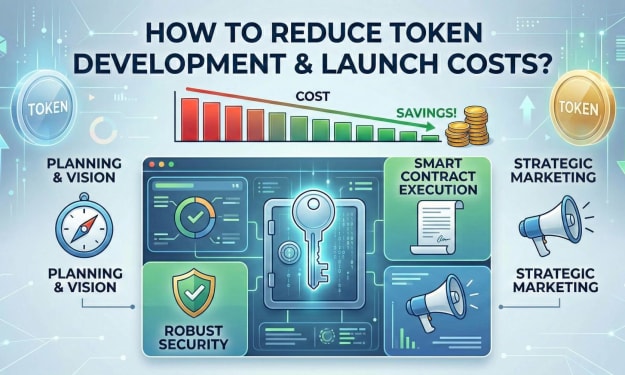
How to Reduce Crypto Token Development and Launch Costs?
Launching a crypto token often looks deceptively simple from the outside. Smart contracts can be deployed in minutes. Token standards are well documented. Marketing channels are accessible. Yet founders frequently discover that what seemed like a modest technical exercise turns into a six-figure undertaking. Development, audits, legal structuring, exchange listings, liquidity provisioning, branding, community management, and post-launch maintenance compound rapidly.
By Jennifer Atkinson2 days ago in The Chain
How Stablecoin Issuers Make Money: 12 Proven Revenue Models
Stablecoins have become a cornerstone of the digital asset ecosystem, offering price stability in an otherwise volatile market. As demand surges—from retail traders hedging risk to large institutions conducting cross-border settlements—the question arises: How Stablecoin Issuers Make Money. Unlike pure speculative tokens, stablecoins must maintain a peg to fiat or another asset, which creates unique revenue opportunities. In this post, we unpack each model, illustrate with case studies, and outline strategic considerations for issuers aiming for both profitability and trust.
By Siddarth D5 days ago in The Chain


Comments
There are no comments for this story
Be the first to respond and start the conversation.