
How to Invest in Bitcoin: A Beginner’s Guide
Key Takeaways What is Bitcoin? | What do you need to invest in Bitcoin? | How to invest in Bitcoin in 5 steps | Is Bitcoin a good investment? | Different ways to invest in Bitcoin

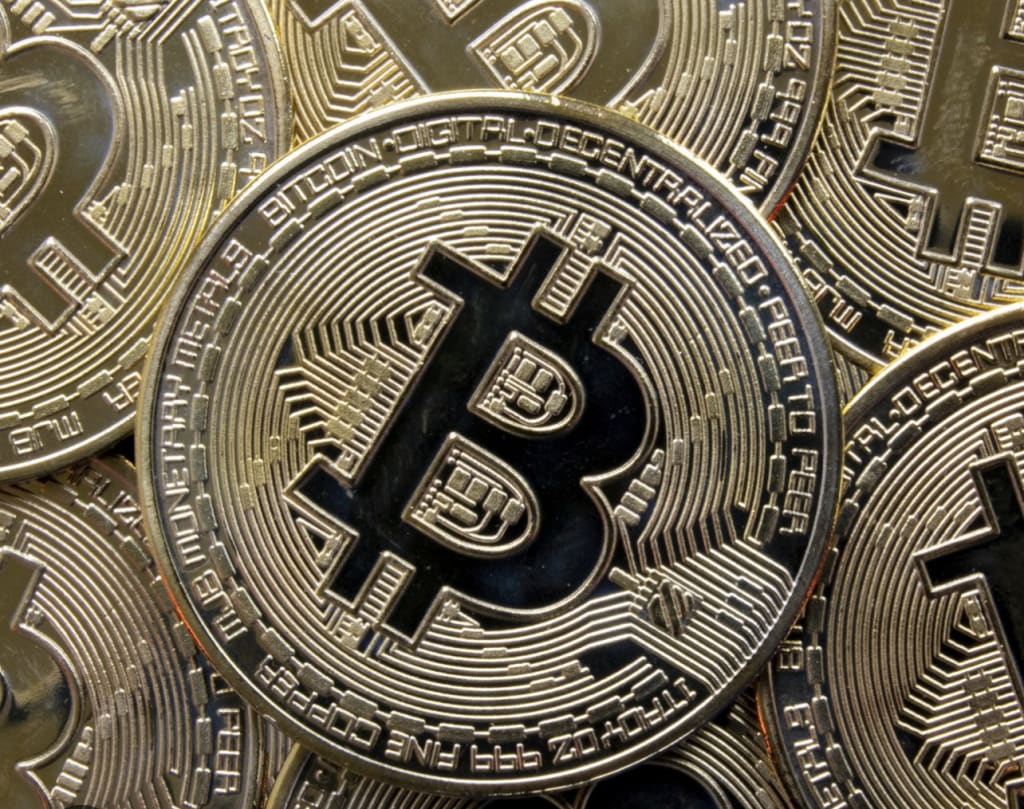
Over the last several years, Bitcoin has become increasingly popular amongst today’s investors. During that same time, there’s been a lot of debate about Bitcoin and other cryptocurrencies—Its proponents argue that it’s the future of currency and investing, while its detractors argue that it’s a risky investment option that may not generate big returns.
To better understand its true value in the marketplace, we must look to its latest movements. Most recently, Bitcoin’s valuation has increased more than 763% in just one year, easily outpacing traditional gains in the stock market. More people are buying into Bitcoin becoming a decentralized, global currency. One tailwind, in particular, is the acceptance of Bitcoin by several high-profile individuals and businesses.
Elon Musk, the mind behind both Tesla and SpaceX, recently announced his automotive empire would not only purchase $1.5 billion in Bitcoin, but it also intends to accept the cryptocurrency as payment in the future. Several popular FinTech (financial technology) companies like Square and PayPal also announced their intentions to support cryptocurrencies moving forward. Despite all of that, however, the most important development for Bitcoin maybe the recent IPO (initial public offering) of Coinbase Global, Inc. (NASDAQ: COIN), today’s leading cryptocurrency exchange platform.
There’s no doubt about it: momentum in Bitcoin is certainly building. Recent developments have contributed to Bitcoin’s meteoric rise in value, and proponents of the asset are convinced this is just the beginning.
So, what exactly is Bitcoin, and how can you determine whether it’s the right investment for you? Read our beginner’s guide on how to invest in Bitcoin.
What is Bitcoin?
Bitcoin was created by a programmer or group of programmers using the name “Satoshi Nakamoto.” But the real creator(s) of Bitcoin is still unknown to the public.
Bitcoin is one of the most widely used types of cryptocurrency. Virtual “coins” or “tokens” are used in a cryptocurrency system instead of physical cash. Coins have no intrinsic value, and they aren’t backed up by gold or silver.
Bitcoin was created to solve a couple of big cryptocurrency flaws. First, it was designed to prevent crypto coins from being fraudulently duplicated. Think about how easy it is to make copies of your computer’s data—documents, photos, files, etc. Cryptocurrency wouldn’t be possible if anybody could duplicate a coin and create an unlimited amount of currency for oneself. You can’t just make copies of a $20 bill, right? Likewise, there’s a need to prevent people from reproducing crypto coins.
How Does Bitcoin Work?
Bitcoin uses a digital technology called “blockchain,” an advanced coding mechanism that disperses a single code over thousands of different computers. For example, let’s say that your coin is built from the code “XDA146DDS.” Blockchain segments the code into smaller pieces and stores the pieces of code across many computers. If a hacker wanted to access the code, they’d have to hack various computers to access the entire code.
Blockchain also employs a “public ledger,” which uses thousands of computers (referred to as “nodes”) to keep track of coins and their owners. If a coin’s data is changed, the nodes will cross-reference their records to verify whether the change is accurate and that the coin’s owner initiated it.
Any time money goes from one Bitcoin wallet to another, it’s logged. Bitcoin wallets store a private key or seed, which is encrypted. This data is used to sign transactions, proving their origin mathematically. The signature also prevents anyone from changing the transaction once it is given. All transactions are broadcast to the network, and within 10–20 minutes, “mining” begins to confirm them.
According to Bitcoin.org, mining assures a chronological chain, network neutrality, and allows several computers to agree on the system state. To be confirmed, transactions must be encapsulated in a cryptographic block.
Changing previous blocks invalidates all succeeding blocks, hence earlier blocks cannot be changed. Mining also creates a competitive lottery, prohibiting anybody from adding new blocks to the network sequentially. As a result, no group or individual controls the blockchain.
What is Bitcoin used for?
Once you purchase coins, you can use them in online transactions wherever they’re accepted. Remember, when you make a transaction with a coin, there’s no actual money being pulled from your bank account. Money only leaves your bank account when you purchase the coin itself—not when you make purchases with a coin.
Like cash currency, the value of a coin may fluctuate. That’s why some investors are getting excited about Bitcoin and other types of cryptocurrency. Investors speculate that Bitcoin’s value may rise significantly if there’s a surge in the market. I’ll explain the arguments for and against cryptocurrency investment later on.
For now, investors should pay special consideration to the rate by which Bitcoin and other relevant cryptocurrencies are being adopted. Not unlike traditional equities, Bitcoin increases in value when more people are interested, and more people are interested in buying Bitcoin today than ever before. Whether it is pure conviction or an inherent fear of missing out on what many predict to be the greatest transfer of wealth in American history, trading volume continues to increase exponentially. For the better part of a year, in fact, Bitcoin trading volume has steadily increased. As a result, Bitcoin is regularly testing new highs.
What Do You Need to Invest in Bitcoin?
You don’t need very much to invest in Bitcoin! You only need the following:
Personal identification documents
Bank account information
A secure internet connection
Keep in mind—if you’re going to be purchasing coins through a stockbroker, you may not need to supply your personal information or financial information because your stockbroker will likely have all that on record.
How to Invest in Bitcoin in 5 Steps
Are you ready to dive into cryptocurrency? You’re in luck, as buying Bitcoin is simpler than you might think. Here’s how to invest in Bitcoin, in 5 easy steps:
Join a Bitcoin Exchange
Get a Bitcoin Wallet
Connect Your Wallet to a Bank Account
Place Your Bitcoin Order
Manage Your Bitcoin Investments
1. Join a Bitcoin Exchange
First, you’ll need to determine where you want to make a Bitcoin purchase. Most Bitcoin investors use cryptocurrency exchanges. There’s no official “Bitcoin” company because it’s an open-source technology, but there are several different exchanges that facilitate Bitcoin transactions. These exchanges are the middlemen of cryptocurrency investing, like a stock brokerage.
If you decide to purchase from an exchange, you’ll have to decide which exchange you want to buy from. Here are a few of the most popular options:
Coinbase: A very popular crypto exchange that insures losses in the event of a security breach or fraudulent transfers
Binance: Founded in 2017, Binance is a crypto exchange with a strong focus on altcoins
Kraken: This San Francisco-based exchange allows you to invest in Bitcoin using various currencies from around the world
Gemini: Launched in 2015 by Cameron and Tyler Winklevoss, Gemini offers services for casual and veteran Bitcoin investors with different user interfaces and fee structures for both
Bitfinex : The longest-running cryptocurrency exchange that’s optimized for advanced traders and lenders (unfortunately, Bitfinex doesn’t currently accept US customers)
As you might have guessed, choosing a Bitcoin exchange is becoming more difficult for investors as more options begin to popularize. Find everything you need to know about Binance vs. Coinbase and start investing, today.
2. Get a Bitcoin Wallet
When you purchase a coin, it’s stored in a “wallet,” which is where all your cryptocurrency is stored. There are two types of wallets you can get: a “hot wallet” or a “cold wallet.”
A hot wallet is a wallet that’s operated by either your cryptocurrency exchange or by a provider. Some exchanges will automatically provide you with a hot wallet when you open your account. In any case, hot wallets are convenient because you’ll be able to access your coins through the internet or a software program.
Some notable hot wallets are:
Electrum: Software that enables you to store your coins on your computer
Mycelium: A mobile-only app for Android and iPhone users
However, hot wallets are not the most secure form of coin storage. If the hot wallet provider is hacked, then your coin information may be at risk.
A cold wallet is the safest storage method for your coins. A cold wallet is an actual piece of hardware that stores your coins, usually, a portable device that’s similar to a flash drive. Most cold wallets cost between $60 to $100. Some popular cold wallets are:
Trezor
Ledger Nano
If you’re only going to purchase small amounts of coin, then you might be fine using a hot wallet with an insured crypto exchange. But if you’re going to be trading large amounts of coin, then a cold wallet would be well worth your investment.
Need help deciding which wallet is right for you? Take a look at our picks of the best bitcoin wallets.
3. Connect Your Wallet to a Bank Account
When you’ve obtained your wallet, you’ll need to link it to your bank account. This enables you to purchase coins and sell coins. Alternatively, your bank account may be linked to your cryptocurrency exchange account.
4. Place Your Bitcoin Order
Now you’re ready to purchase Bitcoin. Your cryptocurrency exchange will have everything you need to buy. The big question is, how much Bitcoin should you purchase?
Some coins cost thousands of dollars, but exchanges often allow you to buy fractions of a single coin—your initial investment could be as low as $25.
Investing in Bitcoin is very risky, and it’s important that you carefully determine your risk tolerance and review your investment strategy before you purchase any Bitcoin. We’ll go over this in the next section.
5. Manage Your Bitcoin Investments
After you’ve purchased bitcoin, you can:
Use your coins to make online transactions
Hold your coins for a long period in the hopes it’ll appreciate in value
Perform day trading with your coins—that is, buying and selling coins with other Bitcoin owners, which can be facilitated on the cryptocurrency exchange
Your cryptocurrency exchange will provide you with everything you need to buy and sell coins.
About the Creator
Bloom
🌸BLOOMING OUR DIVINE ENERGY🌸
American Bitcoin Stock: How Investors Gain Exposure to Bitcoin
Introduction American Bitcoin stock is a popular search term among investors who want exposure to Bitcoin without directly owning cryptocurrency. While there is no single stock officially named “American Bitcoin,” the phrase usually refers to U.S.-listed companies whose business models are closely tied to Bitcoin.
By saif ullah6 days ago in The Chain
Cryptocurrencies: The Looming Crypto Winter of 2026
The cryptocurrency business has always prospered under challenging circumstances. Crushing sadness followed exuberant anticipation. Dramatic crashes that come after rises that are parabolic. Every cycle humbles people who think "this time is different" and promises maturity. As the second half of the decade progresses, an increasing number of indicators suggest an unsettling reality that many in the cryptocurrency industry are unwilling to face: a crypto winter in 2026 is not only conceivable, but it might well be likely. This isn't a scare tactic. Pattern recognition is what it is.
By Mark Arthurabout 2 hours ago in The Chain


Comments
There are no comments for this story
Be the first to respond and start the conversation.