
How Exchange Listings Impact Token Price, Trust, and Trading Volume
Unlocking Market Momentum: Why Getting Listed on Top Crypto Exchanges Can Make or Break Your Token’s Success

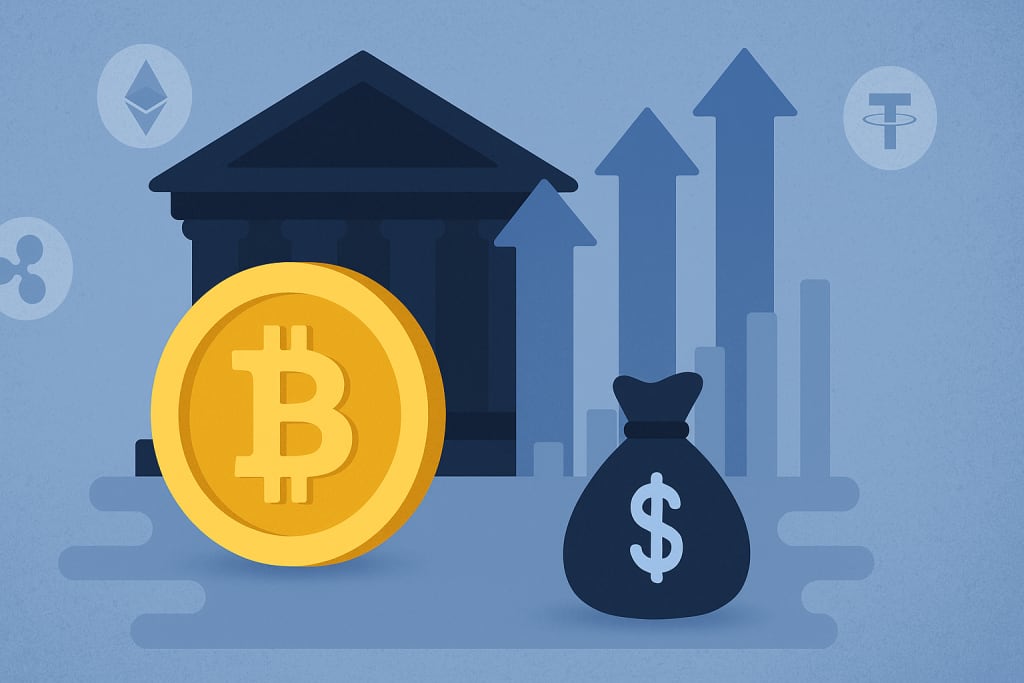
In the fast-moving world of cryptocurrency, getting a token listed on a major exchange represents a pivotal milestone. For many blockchain projects, an exchange listing is not merely a status symbol — it can be a decisive factor that defines the project’s market reach, credibility, liquidity, and long-term success. Whether on centralized exchanges (CEXs) or decentralized exchanges (DEXs), listings dramatically impact token visibility, investor interest, and price action. As the crypto ecosystem matures in 2025, the dynamics of exchange listings are playing an even more pronounced role in shaping market behavior and project valuation. This blog explores how token listings influence price movements, build investor trust, and boost trading volume — and why strategic planning around listings is more essential than ever before.
The Role of Exchange Listings in the Crypto Lifecycle
From the early fundraising stages to full-scale launch, the goal of many Web3 startups is to reach the point where their token is publicly tradable. A token’s journey often begins with a private sale or a token generation event (TGE), followed by community growth and smart contract audits. But without a public listing on a widely-used exchange, the token remains inaccessible to the broader market. An exchange listing is the bridge between the project team and a global investor base. It introduces price discovery, unlocks liquidity, and provides the infrastructure for organic trading. In 2025, listing on top-tier exchanges like Binance, Coinbase, OKX, or Kraken still remains the gold standard, though DEXs like Uniswap, PancakeSwap, and Jupiter are playing an increasingly critical role in the early stages of token market access.
Price Discovery and the Volatility Factor
One of the most immediate impacts of a token exchange listing is price volatility. Prior to listing, token prices may be stable within controlled OTC trades or private allocations. However, once listed, open market dynamics take over. Supply and demand begin to dictate the price in real time. For many projects, the first few days after a listing can see dramatic price surges as traders speculate and new investors rush in. This excitement is often fueled by anticipation, low initial float, and aggressive marketing. In some cases, prices may jump several hundred percent within hours, only to retrace sharply as early holders take profits.
Exchange listings act as the catalyst for real price discovery. They expose the token to a large and diverse trading population, allowing markets to assess its true value based on liquidity, trading volume, tokenomics, and narrative. The listing price becomes an anchor point from which traders, analysts, and institutions derive their technical and fundamental assumptions. This visibility often brings the token into the spotlight on price tracking platforms such as CoinGecko or CoinMarketCap, further amplifying reach and speculation.
Building Trust Through Reputable Listings
Trust is one of the most valuable commodities in the crypto space, and a listing on a reputable exchange acts as a strong signal of legitimacy. Top-tier exchanges conduct extensive due diligence before listing a token. They evaluate the project's codebase, tokenomics, security practices, community engagement, compliance measures, and team background. Getting listed on platforms like Binance, Kraken, or Coinbase is effectively an endorsement that the project has passed multiple layers of scrutiny.
For investors, this trust factor is crucial. In a space fraught with rug pulls, exit scams, and vaporware tokens, the backing of a credible exchange serves as a de-risking filter. It creates a psychological layer of safety that encourages more conservative retail and institutional capital to enter the market. Institutional investors, in particular, are more likely to participate in projects that have been vetted by leading exchanges, as this reduces operational and regulatory risks.
This sense of trust also influences the behavior of long-term holders. Projects with high-integrity listings often see stronger HODLer communities, lower churn rates, and higher participation in governance or staking mechanisms. In turn, this strengthens the entire token ecosystem, from its perceived legitimacy to its real-world utility and use case adoption.
The Liquidity Engine: Trading Volume and Market Access
Liquidity is the lifeblood of any traded asset, and an exchange listing is the main engine that drives token liquidity. By enabling 24/7 global access, listings ensure that tokens can be easily bought and sold at market prices. Increased trading volume means tighter bid-ask spreads, lower slippage, and more accurate price reflections. This is essential for everything from attracting market makers to integrating the token into DeFi platforms and cross-chain bridges.
The more liquidity a token has, the more viable it becomes for use in lending protocols, liquidity pools, and derivatives markets. It also affects the token’s eligibility for inclusion in indexes, ETFs, and institutional custody solutions. Projects that list on multiple exchanges often benefit from liquidity fragmentation, which allows them to tap into varied user bases across different geographies, especially in jurisdictions where access to certain platforms may be restricted.
Moreover, liquidity attracts liquidity. When a token gains traction and begins to exhibit sustainable volume across multiple trading pairs, it draws the attention of arbitrage traders, DeFi aggregators, and high-frequency trading algorithms. This organic growth loop can dramatically improve the depth of market and reduce volatility over time, creating a stable trading environment that supports long-term token health.
Exchange Listings as a Marketing Catalyst
Beyond technical and financial metrics, exchange listings play a crucial role in marketing. A well-executed listing can serve as the focal point of a broader campaign involving influencer partnerships, paid media, community AMAs, airdrops, and press releases. Exchanges themselves often participate in the marketing process, promoting new listings through newsletters, homepage features, and social media posts.
In 2025, many exchanges offer Launchpad or Launchpool programs that go beyond simple listing mechanics. These initiatives provide liquidity mining incentives, staking rewards, and trading competitions — all of which help bootstrap the token’s early momentum. A high-profile listing on a major exchange not only puts the project in front of millions of users but also elevates its perceived prestige. This impact is especially strong for projects that launch through an IEO (Initial Exchange Offering), where the exchange is directly involved in vetting and fundraising.
The listing announcement phase often generates more excitement than the listing itself. The anticipation builds up community engagement and provides content for influencers and media partners to amplify. Timing listings to coincide with broader roadmap achievements, such as mainnet launches or key partnerships, can magnify the effect and lead to exponential brand growth in the early days.
How Listings Influence Tokenomics and Circulation
Exchange listings can also affect the underlying tokenomics of a project, particularly in relation to circulating supply and unlock schedules. Before listing, many projects maintain a tightly controlled supply environment. Once a listing goes live, market pressure mounts to release more tokens into circulation, especially if demand is high. This can accelerate unlock schedules, affect vesting policies, or trigger early community incentives.
Projects must strike a careful balance between satisfying demand and maintaining scarcity. Excessive unlocks may lead to inflationary pressures, while overly restricted supply may cause price spikes that hurt long-term stability. Exchanges often ask for listing-related liquidity commitments, which may include token pair listings with native assets like ETH, USDT, or BNB. These decisions should be taken with a strategic understanding of how market structure will evolve over the first 3–6 months post-listing.
Additionally, token burn events or deflationary mechanisms can be timed around listings to increase investor confidence. A project that demonstrates proactive supply management tends to inspire greater trust among sophisticated traders, especially those attuned to the dynamics of token valuation and scarcity.
Regulatory Exposure and Compliance Implications
With growing scrutiny from global regulators, listings on compliant exchanges can also trigger legal and operational consequences. Projects listed on U.S.-based or EU-regulated exchanges must ensure that their tokens do not qualify as securities, and that they meet standards around KYC/AML compliance, data privacy, and consumer protection.
While this regulatory exposure may seem daunting, it also offers a layer of long-term credibility. Projects that manage to secure listings under strict jurisdictions are better positioned to attract venture funding, institutional interest, and government partnerships. Moreover, being proactive on compliance helps future-proof the token against de-listing risks that may arise if legal standards shift.
In many jurisdictions, a listing can even be interpreted as a taxable event or a change in legal status for the project’s DAO. This is why legal preparation is just as important as technical preparation when planning for an exchange listing.
The Compounding Effect of Multiple Listings
Most successful tokens in 2025 are not listed on a single platform, but across a suite of centralized and decentralized exchanges. Each additional listing compounds exposure, drives up liquidity, and opens the door to new user segments. Projects that diversify their listing strategy — such as pairing Tier 1 CEXs with high-volume DEXs, regional exchanges, and Layer-2-specific platforms — see better long-term performance and wider adoption.
Cross-listing also enables price arbitrage opportunities, attracting professional traders who stabilize the market through volume. It increases the token’s resilience against single-point failures, such as delisting, security breaches, or volume drops on one platform. A strong multi-exchange presence also makes it easier for wallets, portfolio trackers, and DeFi dashboards to integrate the token — further embedding it into the Web3 infrastructure.
However, projects must coordinate multi-listing strategies carefully, ensuring liquidity is not too diluted and that announcements are timed to maintain narrative momentum. Partnering with experienced listing advisors or token launchpads can help align these moving parts for maximum market impact.
Conclusion
An exchange listing is far more than a ceremonial event — it’s a strategic inflection point that can transform a crypto token’s trajectory. From initiating price discovery and catalyzing trust, to unlocking liquidity and sparking community engagement, listings have a multifaceted impact that shapes a project’s short-term market performance and long-term credibility. As the crypto landscape becomes more sophisticated in 2025, projects must approach exchange listings with deliberate planning, rigorous compliance, and a well-orchestrated marketing strategy.
About the Creator
Gabrielle
Blockchain enthusiast and NFT writer dedicated to merging technology with art on decentralized platforms, driving innovation for a creative future. Embracing the potential of digital expression.
Top 10 Blockchain Development Companies in USA in the 2026 for Enterprise Innovation
Blockchain technology has moved far beyond cryptocurrencies. By 2026, enterprises across finance, healthcare, logistics, supply chains, and digital identity are using blockchain to create transparent, secure, and automated systems. According to industry forecasts, the global blockchain market is expected to surpass $90 billion by 2030, with the United States leading enterprise adoption.
By Nia Higgins2 days ago in The Chain
Eco-Friendly Cryptocurrency: Building a Sustainable Future for Digital Finance
The rapid growth of digital assets has transformed global finance, but it has also raised serious concerns about environmental sustainability. Traditional blockchain networks—especially those relying on energy-intensive mining—have drawn criticism for their high electricity consumption and carbon footprint. In response, a new wave of innovation has emerged: eco-friendly cryptocurrency.
By Siddarth D5 days ago in The Chain



Comments
There are no comments for this story
Be the first to respond and start the conversation.