
How Does MPC Wallet as a Service Work?
MPC Wallet as a Service
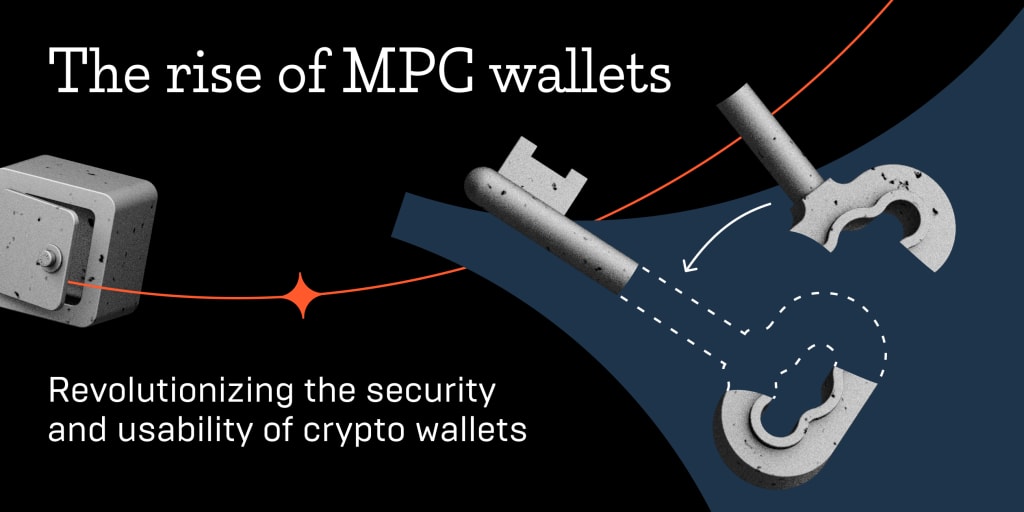
MPC Wallet as a Service works by leveraging cryptographic techniques to split a private key into multiple shares. These shares are distributed across various entities, such as servers, cloud platforms, or even different departments within an organization. When a transaction needs to be signed, these parties work together to compute the signature without ever reconstructing the full private key in one place. This distributed approach makes it difficult for malicious actors to compromise the wallet, as they would need to breach multiple parties to gain access to the entire key. Providers of MPC Wallet as a Service handle the entire process, from key generation to transaction signing, offering businesses a secure and scalable solution for managing crypto assets.
Benefits of Using MPC Wallet as a Service
Enhanced Security: The most significant benefit of MPC wallets is their ability to protect private keys through decentralization. By splitting the key into shares, no single entity holds complete control, reducing the risk of hacks or internal fraud.
Reduced Single Point of Failure: Traditional wallets that rely on a single private key are vulnerable to loss or theft. With MPC, even if one party's share is compromised, the full key remains inaccessible, providing an extra layer of security.
Scalability for Enterprises: MPC Wallet as a Service offers scalability, allowing businesses to manage multiple wallets and crypto assets without handling the complexities of private key management. This makes it a preferred solution for enterprises that deal with high volumes of digital assets.
Compliance and Regulation: Many service providers offering MPC Wallet as a Service ensure compliance with evolving crypto regulations. This is particularly beneficial for financial institutions that need to meet regulatory standards while offering crypto services to their clients.
Use Cases of MPC Wallet as a Service
Institutional Investors: Financial institutions and investment firms that manage large portfolios of crypto assets can use MPC Wallet as a Service to enhance security and maintain control over their investments without worrying about key management.
Crypto Exchanges: Exchanges can integrate MPC wallets to ensure that users' funds are protected from breaches. By distributing key management responsibilities, they can mitigate the risk of hacks and secure their cold and hot wallet storage.
Decentralized Finance (DeFi): In DeFi applications, MPC Wallet as a Service provides a secure way for users to manage their wallets while interacting with smart contracts and decentralized exchanges. This technology ensures that the user's private key never has to be fully exposed, even during complex transactions.
Enterprise Blockchain Solutions: Large corporations developing blockchain solutions can utilize MPC Wallet as a Service to manage their assets securely. Whether they're using digital tokens for supply chain management or as part of a loyalty program, MPC ensures that the tokens are well-protected.
How MPC Wallet as a Service is Transforming the Crypto Industry
MPC Wallet as a Service is transforming the way digital assets are stored and managed. It reduces the reliance on hardware wallets, which can be lost or stolen, and provides an alternative to traditional multi-signature solutions, which require multiple approvals but can be cumbersome. As the crypto industry matures, businesses and individuals are seeking more secure, efficient ways to protect their assets. By using MPC technology, wallet providers are addressing the growing concerns around security and making it easier for institutions to adopt cryptocurrency. Moreover, MPC Wallet as a Service is poised to become a cornerstone in the development of decentralized finance and enterprise blockchain applications, further driving the growth of the crypto ecosystem.
Future Trends in MPC Wallet as a Service
As the adoption of cryptocurrency continues to grow, so will the demand for MPC Wallet as a Service. Some trends to look out for include:
Integration with Traditional Finance: As more banks and financial institutions enter the crypto space, MPC wallets will become an essential part of their infrastructure, ensuring secure and compliant management of crypto assets.
Advances in Cryptography: As cryptographic methods evolve, so too will MPC technology, offering even more efficient and secure ways to manage digital wallets. Innovations like zero-knowledge proofs may further enhance the capabilities of MPC Wallet as a Service.
Wider Adoption in Consumer Markets: Currently popular with enterprises, MPC Wallet as a Service could soon reach the consumer market, making secure, keyless wallets accessible to everyday crypto users through mobile apps and other platforms.
Conclusion
MPC Wallet as a Service offers a powerful and secure solution for businesses and individuals looking to protect their cryptocurrency assets. By distributing key management responsibilities and leveraging advanced cryptographic techniques, it significantly reduces the risk of breaches and enhances overall security. As the crypto industry continues to evolve, MPC technology will likely play a pivotal role in ensuring the secure, scalable growth of digital assets.
About the Creator
Silence, Patterns, and Power: How Tom Bower Changed the Royal Conversation
For months, the royal conversation rippled with speculation. Claims multiplied, narratives twisted, and every whisper seemed to point back to the same names. But one man whose voice normally thundered across royal reporting said nothing—Tom Bower. Known for investigative aggression and fearless conclusions, Bower’s silence didn’t just feel unusual. It felt intentional. Observers noticed. Commentators asked where he’d gone. Why wasn’t he weighing in? And then came the realization: Tom Bower doesn’t react to noise. He studies the echo. While tabloids flung accusations and social media threads tied Meghan Markle to every flare-up inside the monarchy, Bower remained quiet. That wasn’t restraint—it was strategy. Bower had no interest in arguing rumor versus fact. His method relies on something far more revealing than gossip: institutional behavior. Silence as Data Where others saw unanswered questions, Bower saw an unfolding pattern. Inside Buckingham Palace, silence isn’t absence. It is a coded response. A pause. A calculation. A decision about what is worth engaging—and what is safer to ignore. Bower wasn’t analyzing the scandal itself; he was analyzing how the palace reacted to the scandal. Which stories were swatted away within hours? Which claims lingered unchallenged for months? Which headlines forced quiet restructuring behind closed doors? To Bower, these reactions told the real story—one about stress fractures and shifting roles inside the monarchy. The Meghan Variable What emerged from his study wasn’t accusation, but recurrence. Meghan Markle wasn’t presented as the source of crises—but as the constant in the room each time turbulence hit. Not triggering explosions, but always standing close enough for the shockwaves to force recalibration. This interpretation damaged no reputations legally—but it reshaped perception. Institutions don’t need villains. They react to pressure, not personalities. And by simply existing at the center of modern royal controversy—interviews, lawsuits, streaming projects, fractured family ties—Meghan represented unpredictability. In royal systems built on predictability, unpredictability reshapes behavior. The Palace Logic Palace advisers work from a simple, centuries-old rulebook: Threats to the Crown’s function are addressed Threats to the Crown’s image are absorbed You don’t fight every rumor—especially when fighting validates the rumor. Sometimes silence is not weakness but defense. To the public, silence feels mysterious. To the institution, silence is strategy. Harry’s Blind Spot Prince Harry’s story complicates this further. For him, silence meant abandonment. Lack of response confirmed neglect rather than restraint. Harry believed discussion was the solution, that acknowledgment could heal wounds. But the monarchy is not designed for emotional transparency. It is designed to outlast individuals, moods, and moments. And so, what looked like indifference to Harry was—according to Bower—calculated caution. When Bower Finally Spoke By the time Tom Bower broke silence, the ground had already shifted. Public trust in royal messaging had cracked. Media fatigue had set in. Sympathy moved from one side to another, then back again. Bower offered no new allegations. He offered explanation. He spoke about patterns—how silence itself becomes a reaction, how institutions prioritize stability over fairness, and how recurring storms force systems to distance rather than confront. His words reframed everything. Suddenly, the debate wasn’t: “Is this rumor true?” The question became: “Why does the palace treat this rumor differently?” That reframing turned speculation into a study of power. The Impact of Insight From the palace’s viewpoint, Bower’s words required no response—and they gave none. Engagement would elevate. Silence would deflate. For Meghan and Harry, the shift was subtle but significant. It challenged the narrative that ignoring them meant irrelevance or denial. Instead, it suggested strategic containment. The media world, weary of royal upheaval, reacted differently. Producers didn’t panic—they paused. Not because Bower exposed wrongdoing, but because he illuminated the operating system behind the monarchy’s reactions. And once a system is visible, it is harder to ignore. The Conversation Evolves Tom Bower didn’t break silence to drop bombs. He broke silence to show how bombs are diffused—even when no explosion is heard. His intervention changed nothing on paper: No policies, no statements, no public apologies. Yet it changed everything in perception. He taught audiences to stop listening only to what is said—and start studying what is left unsaid. And in the end, that insight may be more disruptive than any accusation. Because once silence stops looking accidental and starts looking deliberate, distance becomes clarity— and the story begins to write itself.
By Behind the Curtain5 days ago in The Chain
Bitcoin Holders Capitulation: What It Means and Why It Matters
Bitcoin holders capitulation is a term often used during sharp market downturns. It describes a phase where investors, overwhelmed by fear, sell their Bitcoin at a loss just to exit the market. This moment is emotionally driven, not strategic, and it usually happens after long periods of declining prices.
By saif ullah3 days ago in The Chain




Comments
There are no comments for this story
Be the first to respond and start the conversation.