
How Are IDOs Reshaping Fundraising and Community Growth in the Crypto Ecosystem?
Exploring how Initial DEX Offerings are transforming token launches, investor participation, and the way communities drive long-term crypto project success.

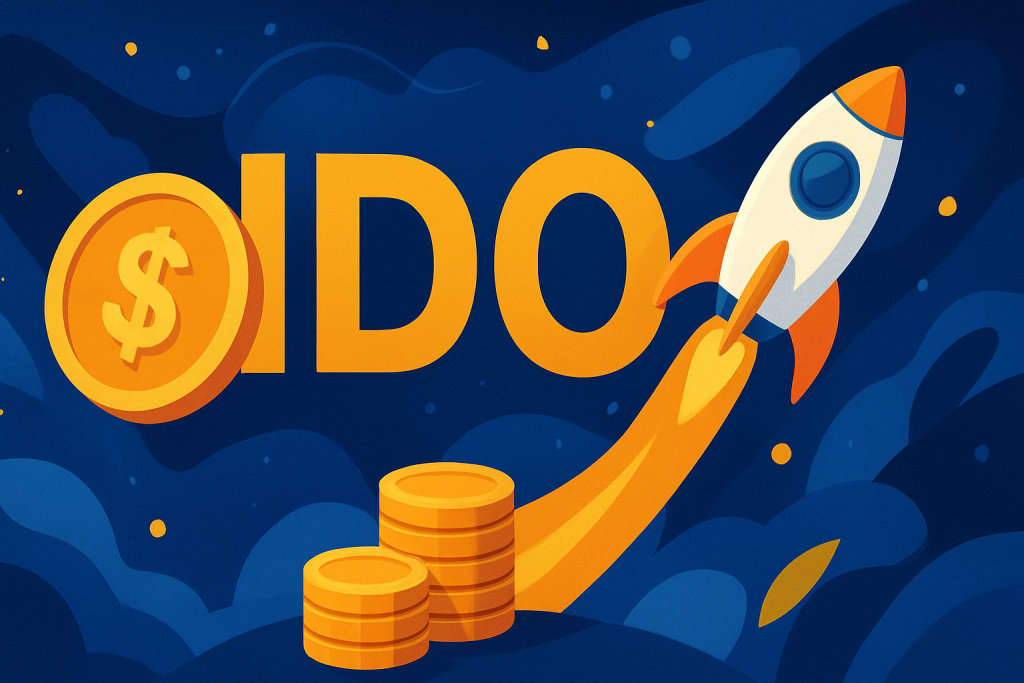
The world of crypto fundraising has experienced several waves of innovation in the last decade, each one leaving a lasting mark on how projects source capital, build trust, and scale their ecosystems. From the explosive Initial Coin Offering (ICO) boom of 2017 to the rise of Initial Exchange Offerings (IEOs) in 2019, every iteration of token launches has attempted to solve problems around accessibility, transparency, and community alignment. Yet both ICOs and IEOs faced challenges—ICOs were plagued by scams, regulatory crackdowns, and weak investor protections, while IEOs centralized power in the hands of exchanges, often excluding smaller retail participants.
In this context, Initial DEX Offerings (IDOs) have emerged as a more decentralized, transparent, and community-driven model. By leveraging decentralized exchanges and automated liquidity pools, IDOs are reshaping the way crypto projects raise funds, distribute tokens, and cultivate loyal communities. They are not just another fundraising mechanism—they represent a structural rethinking of how capital formation and community growth can happen in Web3.
From Closed-Room Fundraising to Open, Permissionless Liquidity
Traditional venture capital and even the ICO model often concentrated early access in the hands of insiders. Tokens were distributed through private sales or presales with preferential pricing, leaving the broader retail audience to buy at inflated prices once tokens hit exchanges. IDOs turn this model on its head by making decentralized exchanges (DEXs) the venue for token distribution. Instead of waiting for centralized exchanges to list tokens, projects create liquidity pools on platforms like Uniswap, PancakeSwap, or Balancer. Here, price discovery happens in real time, governed by transparent algorithms rather than opaque negotiations.
For example, when a project launches an IDO Development through a Balancer Liquidity Bootstrapping Pool, early participants can buy tokens as prices adjust dynamically based on supply and demand. This creates a fairer, more transparent process that allows small investors to compete with larger players. The permissionless nature of DEXs also means that anyone with a wallet can participate, breaking down geographic and institutional barriers. In this way, IDOs are decentralizing fundraising, aligning it more closely with the open ethos of blockchain itself.
Liquidity Bootstrapping as a Growth Primitive
Liquidity is the lifeblood of any token ecosystem. Without enough liquidity, tokens suffer from slippage, volatility, and limited usability in DeFi applications. Historically, liquidity provision was an afterthought. Projects relied on centralized exchanges or market makers to ensure trading depth, often with mixed results. IDOs have transformed liquidity provision into a core strategy from day one.
When a token launches via an IDO, liquidity pools are seeded immediately, often with community participation. Some projects even design incentives that reward liquidity providers with additional tokens, creating early buy-in from the community. This ensures that tokens are not just speculative assets but functional units of exchange with reliable trading depth. By embedding liquidity bootstrapping into their fundraising, projects are able to hit the ground running, with both capital and active markets secured from launch. For communities, this means lower entry costs, fairer pricing, and the confidence that they can exit or increase positions without facing liquidity traps.
Democratizing Access Without Sacrificing Rigor
One of the most appealing aspects of IDOs is their ability to democratize access. Anyone with an internet connection and a crypto wallet can participate, often with small ticket sizes that lower barriers for everyday investors. This inclusivity contrasts with the exclusivity of private sales, where high minimum allocations often left retail participants sidelined.
However, democratization in IDOs does not mean a lack of standards. Reputable launchpads like Polkastarter, DAO Maker, and Solstarter enforce strict vetting processes before allowing projects to list. These processes include smart contract audits, tokenomics reviews, compliance checks, and evaluations of team credibility. By combining openness with structured due diligence, IDOs create a balance between inclusivity and professionalism. This dual approach has raised the bar for token launches, improving investor confidence while still preserving decentralized accessibility.
The Discipline of Token Design in IDOs
Tokenomics—the science of designing token supply, distribution, and utility—has become more sophisticated in the IDO era. Because IDOs are conducted transparently and involve immediate community participation, poorly designed tokenomics are quickly exposed. Projects that launch with overly aggressive unlock schedules, unclear use cases, or inflationary models often see their tokens dumped within hours of launch. Conversely, projects with thoughtful distribution models, real-world utility, and aligned incentives tend to retain value and grow their communities sustainably.
Consider protocols like Immutable X or Radicle, which structured their tokenomics to incentivize long-term staking, governance participation, and real-world use. Their IDO models provided clarity on vesting schedules and transparent allocations, giving participants confidence that the project was built for longevity. In this way, IDOs serve as a natural filter, rewarding projects that design tokens to reflect genuine utility rather than short-term speculation.
Hyper-Accessible Participation and the Global Investor Base
One of the most transformative aspects of IDOs is the way they expand the investor base. Unlike IEOs, which were tied to specific exchanges and often excluded entire jurisdictions, IDOs are global by design. They run on decentralized exchanges accessible from anywhere, opening the door for participation from a diverse and borderless audience.
This inclusivity has major implications for community growth. A token launched through an IDO doesn’t just attract capital—it attracts a global network of advocates, translators, builders, and users. Projects that embrace this diversity often release multilingual content, establish global community hubs, and incentivize local ambassadors to foster grassroots adoption. The result is a truly decentralized community that reflects the global nature of blockchain itself, rather than being concentrated in a single geography or investor class.
Launchpads as Curators and Growth Accelerators
While IDOs can technically be conducted independently, most projects partner with decentralized launchpads. These platforms act as curators, ensuring that only high-quality projects reach the public. But launchpads do far more than curate—they also provide critical growth infrastructure. They handle the marketing campaigns, community engagement, and distribution logistics that can make or break a token launch.
For example, Polkastarter has developed a reputation for structured IDOs that include whitelist campaigns, interactive community events, and strategic partnerships. DAO Maker goes further by offering “Strong Holder Offerings,” which reward long-term participants instead of speculative flippers. These launchpads don’t just list tokens—they shape narratives, amplify visibility, and accelerate the creation of communities. By embedding IDOs into broader growth strategies, they have transformed token launches from financial events into community-building milestones.
The Community Flywheel Effect
Perhaps the most profound impact of IDOs is how they accelerate the community flywheel. In traditional fundraising, investors were often passive stakeholders who had little direct involvement in project growth. In IDOs, token holders immediately become active participants. They provide liquidity, stake tokens, vote on governance proposals, and spread awareness in their networks. This creates a powerful feedback loop: as the community grows, the token gains liquidity and visibility, which attracts more participants, which in turn strengthens the ecosystem.
Successful projects amplify this flywheel with incentive mechanisms. They create bounty programs, contributor grants, community quests, and governance experiments that reward meaningful participation. Over time, the distinction between “investors” and “users” fades, replaced by a culture of co-ownership where every participant has both financial and reputational skin in the game. This cultural shift is one of the most important ways IDOs are reshaping the crypto landscape.
Fairer Price Discovery Through Innovation
Price discovery in token launches has always been contentious. ICOs often relied on arbitrary token prices, while IEOs set prices through exchange deals. IDOs introduce more sophisticated and transparent mechanisms. Balancer’s Liquidity Bootstrapping Pools, for instance, start with a high token price that gradually decreases, encouraging participants to wait until demand stabilizes. Other models use Dutch auctions or dynamic bonding curves that adapt prices in real time.
These innovations help reduce the dominance of bots, whales, and opportunistic actors. They give smaller investors a fairer chance to participate and ensure that token prices more accurately reflect genuine demand. While no mechanism is flawless, the willingness of IDO platforms to experiment with models has raised standards for fairness and efficiency in token distribution.
Security, Trust, and Audit Norms
The decentralized nature of IDOs introduces new risks, particularly around smart contract vulnerabilities, liquidity locks, and governance exploits. However, the ecosystem has responded by normalizing rigorous security practices. Multiple audits, bug bounty programs, and timelocks have become standard requirements for IDOs. Communities now demand transparency, and projects that skip security protocols are quickly exposed.
Trust is further reinforced by the role of decentralized governance. IDO participants often gain voting rights immediately, allowing them to oversee treasury management, token emissions, and ecosystem grants. This immediate transfer of decision-making power builds confidence that projects are accountable to their communities from day one.
Token Distribution and Long-Term Alignment
One of the chronic weaknesses of early token launches was poor distribution. Concentrated allocations to teams and insiders often led to massive dumps when vesting cliffs expired. IDOs address this problem with more balanced distribution models. They ensure that retail participants, liquidity providers, and community members receive meaningful allocations, while vesting schedules align teams and investors with long-term success.
Liquidity locks and transparent unlock schedules are now considered best practices. By publishing clear roadmaps and distribution plans, projects give communities confidence that token supply will not be manipulated. This fosters trust, stabilizes token prices, and strengthens long-term alignment between teams and their communities.
Governance and Progressive Decentralization
IDOs are not just fundraising events—they are catalysts for governance. With tokens distributed widely at launch, projects can initiate community governance almost immediately. Early proposals might cover small issues, like adjusting staking rewards, but over time, communities gain control of treasuries, protocol upgrades, and ecosystem partnerships.
This progressive decentralization is a cornerstone of Web3. It ensures that projects do not remain in the hands of founders but evolve into community-driven networks. The immediacy of governance rights in IDOs accelerates this transition, turning participants into active stakeholders who shape the project’s destiny.
Post-IDO Treasury Management and Sustainability
Raising funds through an IDO is only the beginning. Projects must demonstrate disciplined treasury management to sustain growth. The best teams allocate funds carefully across development, ecosystem incentives, marketing, and reserves. They publish treasury reports, hedge against volatility, and tie disbursements to milestones.
This transparency transforms communities into watchdogs, ensuring accountability and responsible spending. Teams that master treasury management often find it easier to attract follow-on funding, partnerships, and integrations, because they have already proven their financial prudence in the public eye.
The Cultural Shift Toward Builder-Operators
Finally, IDOs are reshaping the very identity of Web3 builders. No longer can teams operate as isolated technologists focused only on code. In the IDO era, successful founders are also community operators. They design incentive systems, run educational campaigns, and cultivate governance cultures. They understand that tokens are not just speculative assets but coordination tools that align thousands of people around a shared mission.
This shift demands new skill sets: community management, narrative design, compliance awareness, and tokenomics expertise. Teams that embrace this multidimensional role are far more likely to thrive, because they treat their communities not as customers, but as co-creators.
Conclusion:
The rise of IDOs signals more than a technical innovation in fundraising—it represents a cultural and structural transformation in how crypto projects are launched and sustained. By combining permissionless liquidity, transparent price discovery, disciplined tokenomics, and immediate governance, IDOs realign incentives between builders and communities from the very beginning. They democratize access, reward genuine contributions, and foster global, borderless participation.
While challenges remain—ranging from regulatory uncertainty to security risks—the trajectory is clear: IDOs are setting new benchmarks for fairness, inclusivity, and sustainability in Web3. For projects, they offer not just capital, but committed communities. For participants, they provide not just investment opportunities, but real influence over the networks they support.
About the Creator
Gabrielle
Blockchain enthusiast and NFT writer dedicated to merging technology with art on decentralized platforms, driving innovation for a creative future. Embracing the potential of digital expression.
Eco-Friendly Cryptocurrency: Building a Sustainable Future for Digital Finance
The rapid growth of digital assets has transformed global finance, but it has also raised serious concerns about environmental sustainability. Traditional blockchain networks—especially those relying on energy-intensive mining—have drawn criticism for their high electricity consumption and carbon footprint. In response, a new wave of innovation has emerged: eco-friendly cryptocurrency.
By Siddarth D5 days ago in The Chain
How Bitcoin Mining Software Works: A Complete Step-by-Step Guide
Bitcoin has become one of the most widely recognized digital currencies in the world. Since its introduction, it has transformed the way people think about money, decentralization, and digital assets. Behind the Bitcoin network lies a powerful process known as mining, which keeps the system secure and operational. For beginners who want to explore this process, understanding Bitcoin mining software is an important first step.
By smithtaylor6 days ago in The Chain


Comments
There are no comments for this story
Be the first to respond and start the conversation.