
Ethereum Tokens in Gaming Startups: Revolutionizing Player Ownership and Monetization
Discover how Ethereum tokens are transforming gaming startups with player ownership, tokenized assets, and play-to-earn models reshaping monetization and engagement in the digital era.


The advent of blockchain technology has introduced Ethereum tokens as transformative instruments within the gaming industry, particularly for startups seeking innovation. These tokens redefine ownership, monetization, and player engagement frameworks within digital ecosystems. Contrary to conventional models where asset control and revenue primarily benefit developers, Ethereum tokens enable verifiable player ownership, fractionalized investments, and decentralized governance. This paradigm shift promotes transparency, empowers communities, and unlocks novel revenue streams. By adopting these innovative frameworks, startups are positioned at the vanguard of evolving gaming economies that challenge entrenched industry norms. This analysis explores how Ethereum tokens are catalyzing this transformation and the opportunities they create for both emerging companies and players.
The Startup Advantage: Leveraging Ethereum Tokens for Innovative Gaming Economies
Gaming startups possess a strategic advantage in implementing Ethereum tokens due to their inherent agility and capacity for rapid innovation. Unlike established publishers constrained by legacy systems, startups can swiftly design, test, and deploy novel tokenized economic models that uniquely empower players. This adaptability facilitates fractional ownership of scarce digital assets, thereby democratizing investment opportunities previously unattainable. Furthermore, startups are pioneering decentralized governance structures, wherein token holders actively participate in development decisions. Such participatory frameworks enhance user engagement and align stakeholder incentives, fostering sustainable growth and cultivating dedicated communities. Consequently, startups that integrate Ethereum tokens are establishing new benchmarks for player ownership and economic ingenuity within the gaming sector.
- Accelerated Innovation: Startups possess the flexibility to rapidly iterate blockchain implementations, enabling sophisticated token economies inaccessible to traditional publishers.
- Fractionalized Asset Ownership: Ethereum tokens allow subdivision of rare digital assets, broadening access and facilitating diversified player investment.
- Decentralized Governance Mechanisms: Token holders are empowered to influence key development and strategic decisions through voting systems.
- Aligned Stakeholder Incentives: Collaborative ownership models synchronize player and developer interests, enhancing retention and ecosystem vitality.
Tokenizing the Gaming Experience: Beyond Virtual Assets
Ethereum tokens transcend mere cosmetic collectibles by representing complex ownership rights and tangible value within digital environments. For gaming startups, this enables players to acquire stakes in esports organizations, possess virtual real estate, and earn tokenized achievements that confer real-world benefits. Such comprehensive tokenization transforms player contributions into verifiable, valuable assets and unlocks exclusive privileges that extend beyond gameplay. This integration fosters a richer, more meaningful interaction with digital content, establishing deeper player engagement and redefining the scope of virtual ownership.
- Equity Participation in Esports: Tokens can represent fractional shares in competitive teams, allowing stakeholders to benefit financially from team successes.
- Virtual Real Estate Ownership: Tokenized digital land confers genuine property rights and potential asset appreciation within virtual worlds.
- Achievement Tokenization: Awarded tokens signify milestones while granting access to exclusive content or external rewards.
- Bridging Virtual and Real Economies: Ethereum tokens facilitate the translation of in-game achievements into tangible economic benefits.
Monetization Transformation: Play-to-Earn Models Facilitated by Ethereum Tokens
The play-to-earn (P2E) paradigm, enabled by Ethereum tokens, disrupts conventional monetization by distributing economic value to players alongside developers. This decentralized model incentivizes participation not only through gameplay but also via content creation, quality assurance, and community expansion. By fostering equitable value distribution, startups cultivate engaged ecosystems with sustained growth potential. This approach transforms gaming into an opportunity-driven experience, motivating continued involvement and supporting innovative revenue-sharing models that benefit all stakeholders.
- Diverse Earning Channels: Players acquire tokens through multiple avenues, including gameplay, content development, and community contribution.
- Equitable Revenue Distribution: Tokenized economies decentralize profit flows, ensuring value is shared broadly across participants.
- Enhanced Engagement and Retention: Token rewards encourage prolonged and active user involvement, strengthening community ties.
- Support for User-Generated Contributions: Creators receive direct compensation, incentivizing innovation and ecosystem enrichment.
Ensuring Transparency and Trust: Blockchain’s Role in Gaming Economies
Trust is fundamental to thriving digital economies, and blockchain technology, coupled with Ethereum tokens, establishes transparency and security. Immutable ledger entries guarantee unequivocal asset ownership without intermediary dependence. Smart contracts automate royalty disbursements, ensuring consistent, fair compensation for original creators upon secondary asset transactions. Transparent marketplace data enhances user confidence by providing detailed provenance and transaction histories, mitigating fraudulent activities. This openness cultivates reliable ecosystems conducive to active participation and fosters robust developer-player relationships based on mutual trust.
- Immutable Proof of Ownership: Blockchain ensures verifiable and tamper-proof records of digital asset possession.
- Automated Royalty Enforcement: Smart contracts facilitate automatic and timely remuneration for content creators during resale.
- Enhanced Market Transparency: Clear visibility into asset history and pricing deters fraudulent conduct and builds buyer confidence.
- Disintermediation: Decentralized exchanges reduce costs and barriers by eliminating intermediary control.
Synergizing NFTs and Ethereum Tokens: Enabling Complex Gaming Economies
- By integrating fungible Ethereum tokens (ERC-20) with non-fungible tokens (ERC-721 and ERC-1155), startups craft multifaceted digital economies. Fungible tokens function as in-game currency, while NFTs certify unique ownership of distinct items, characters, or collectibles. This hybrid framework fosters dynamic economic activity, permitting flexible asset trade, upgrades, and utility expansion. Innovative applications link token functionalities to gameplay mechanics, governance participation, and exclusive events, enriching player interaction and economic depth beyond traditional ownership constructs.
- ERC-20 as Digital Currency: Fungible tokens offer a liquid medium for transactions, rewards, and in-game commerce.
- NFTs for Unique Asset Authentication: Non-fungible tokens provide provable ownership of exclusive digital items with collectible and functional value.
- Dynamic Hybrid Economies: Players leverage fungible tokens to acquire, enhance, or trade NFTs, stimulating vibrant in-game markets.
- Expanded Token Utilities: Tokens facilitate governance, event participation, and unique gameplay features, augmenting player engagement.
Advancing Player Involvement: Community-Governed Development through Tokens
Ethereum tokens empower gaming communities by institutionalizing player influence over development and strategic decisions. Token-based governance enables stakeholders to participate in voting on updates, features, and policy matters, fostering democratized game management. Furthermore, collective funding through token pooling accelerates innovation and expansion initiatives. This participatory model elevates players from passive consumers to co-creators, enhancing loyalty and aligning development trajectories with community interests. The result is a more responsive, personalized gaming experience that benefits both developers and players.
- Decentralized Decision-Making: Token holders exercise governance rights, ensuring development aligns with user preferences.
- Crowdsourced Funding: Communities aggregate resources to finance content expansions and special projects.
- Shared Stakeholder Ownership: Players’ vested interests increase engagement and long-term commitment.
- Enhanced Collaboration: Continuous feedback loops between developers and players promote tailored, effective game evolution.
Case Studies: Exemplars of Ethereum Token Integration in Gaming Startups
Several leading gaming startups exemplify the successful application of Ethereum token models to revolutionize player ownership and monetization. Illuvium integrates ERC-20 tokens as currency alongside NFTs representing unique creatures, enabling trade and play-to-earn dynamics. Yield Guild Games facilitates collective investment in virtual assets across metaverse platforms, generating shared revenue and governance participation. Sky Mavis’s Axie Infinity pioneered the play-to-earn model by awarding Ethereum-based tokens for gameplay actions, establishing one of the largest and most active token economies. These case studies validate the practical efficacy of tokenomics in cultivating sustainable, player-centric gaming ecosystems.
- Illuvium: Combines fungible and non-fungible tokens to support complex gameplay and asset exchange.
- Yield Guild Games: Empowers players through pooled investments and shared governance in virtual real estate.
- Axie Infinity: A seminal example of play-to-earn, rewarding user engagement with tradable Ethereum tokens.
- Market Validation: These startups demonstrate token integration as a scalable and profitable strategy.
Future Outlook: Ethereum Tokens as Catalysts for Gaming Innovation
Ethereum tokens form the cornerstone of forthcoming advancements poised to deepen engagement and economic integration in gaming. Cross-platform interoperability will enable asset and currency fluidity across multiple games and virtual environments. The confluence of blockchain and artificial intelligence promises adaptive token functionalities tailored to individual user behaviors. Improvements in scalability and regulatory clarity will enhance user experience and facilitate broader adoption. Collectively, these developments forecast an increasingly inclusive, transparent, and resilient gaming landscape where player empowerment and economic sustainability are central.
- Cross-Game Asset Portability: Tokens will support seamless use of digital assets across diverse platforms and metaverses.
- AI-Driven Personalization: Artificial intelligence will optimize token utility based on user profiles and engagement patterns.
- Enhanced Infrastructure and Compliance: Layer-2 scaling and regulatory frameworks will streamline integration and adoption.
- Sustained Industry Transformation: Ethereum tokens will continue to democratize game economies, fostering player-centric ecosystems.
Conclusion
Ethereum tokens are fundamentally reshaping gaming by enabling startups to establish decentralized, transparent, and player-centric economic models. Through fractional ownership, participatory governance, and play-to-earn frameworks, these tokens facilitate equitable value distribution and enhance player engagement. Startups’ inherent flexibility allows for rapid experimentation and adoption of these innovative structures, positioning them as industry trailblazers. As blockchain technology matures, Ethereum tokens will increasingly underpin the evolution of gaming ecosystems characterized by inclusivity, transparency, and shared prosperity.
About the Creator
Alexei
A blockchain token development specialist skilled in Solidity and Rust, building secure, compliant, and scalable digital assets, with strong experience in smart contracts, security audits, and DApp integration.
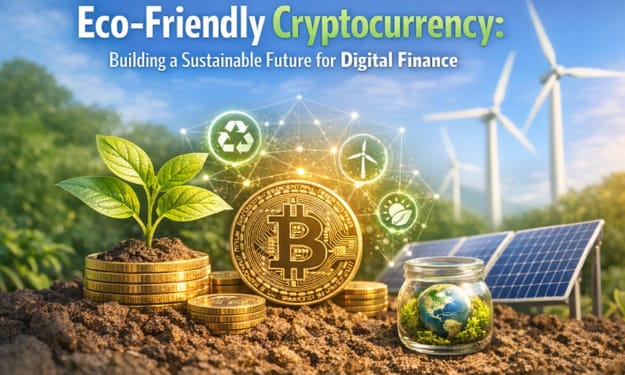
Eco-Friendly Cryptocurrency: Building a Sustainable Future for Digital Finance
The rapid growth of digital assets has transformed global finance, but it has also raised serious concerns about environmental sustainability. Traditional blockchain networks—especially those relying on energy-intensive mining—have drawn criticism for their high electricity consumption and carbon footprint. In response, a new wave of innovation has emerged: eco-friendly cryptocurrency.
By Siddarth D3 days ago in The Chain
How Bitcoin Mining Software Works: A Complete Step-by-Step Guide
Bitcoin has become one of the most widely recognized digital currencies in the world. Since its introduction, it has transformed the way people think about money, decentralization, and digital assets. Behind the Bitcoin network lies a powerful process known as mining, which keeps the system secure and operational. For beginners who want to explore this process, understanding Bitcoin mining software is an important first step.
By smithtaylor4 days ago in The Chain
Why Didn't Anyone Tell Us
Men, move along. This is not for you. This is for the women. I was forty-five when I began menopause. It is pretty young for that to be going on in a woman’s life, but I had undiagnosed PCOS, my entire life. Thank you to all the gynecologists I had seen my entire life. That in itself should encourage women to keep seeking second opinions, especially when you are not getting correct answers or any at all.
By Alexandra Grant2 days ago in Humans


Comments
There are no comments for this story
Be the first to respond and start the conversation.