
Blockchain Mining
Demystifying the Backbone of Cryptocurrency

Blockchain mining is the engine driving the cryptocurrency revolution. It’s the process that validates transactions, secures the blockchain, and mints new coins. In this comprehensive exploration, we’ll delve into the intricacies of blockchain mining, its significance, challenges, and how it shapes the future of decentralized finance (DeFi).
What is Blockchain Mining?
At its core, blockchain mining is the process of solving complex mathematical puzzles to validate and add new transactions to a blockchain ledger. Miners, who participate in this process, use powerful computers to compete in solving these puzzles, with the first to succeed earning the right to add a new block to the blockchain and receive a reward—often in the form of cryptocurrency.
This decentralized mechanism ensures the integrity and security of the blockchain, eliminating the need for intermediaries like banks in digital transactions. Mining is integral to cryptocurrencies like Bitcoin, Ethereum (pre-Merge), and many others, maintaining trust and transparency across the network.
The Mining Process in Detail
Transaction Collection: Miners collect pending transactions from the network and package them into a candidate block.
Hashing and Puzzle Solving: Using computational power, miners solve a cryptographic puzzle that involves finding a hash value below a specific threshold. This process, known as Proof of Work (PoW), requires immense computational effort.
Validation and Block Addition: Once a miner successfully solves the puzzle, they broadcast the solution to the network. Other nodes validate the solution, and if verified, the block is added to the blockchain.
Rewards: The miner receives a block reward (a set amount of cryptocurrency) and transaction fees as incentives for their efforts.
Types of Mining
Solo Mining: Involves an individual miner using their resources. While rewarding, it requires substantial investment in hardware and electricity.
Pool Mining: Miners pool their computational resources to increase their chances of solving the puzzle and share the rewards proportionally.
Cloud Mining: Allows individuals to lease mining resources from a provider, eliminating the need for direct hardware investments.
The Role of Mining in Blockchain Security
Blockchain mining ensures the network remains secure and tamper-proof. Since altering a block requires re-mining all subsequent blocks, the computational effort involved makes such attempts unfeasible. Mining upholds the decentralized ethos of blockchain by preventing any single entity from gaining control over the network.
Challenges in Blockchain Mining
Energy Consumption: Mining, especially Bitcoin, demands enormous electricity due to its computational intensity. This has raised concerns about its environmental impact.
Rising Difficulty: As more miners join the network, the difficulty of puzzles increases, necessitating more powerful hardware and energy.
Centralization Risks: Large mining pools dominate the industry, leading to concerns about centralization in what is supposed to be a decentralized system.
Hardware Costs: The race for efficient mining rigs, such as ASICs (Application-Specific Integrated Circuits), drives up costs, making mining less accessible to individuals.
Innovations in Mining
Proof of Stake (PoS): Some blockchains, like Ethereum post-Merge, are transitioning to PoS, which eliminates the need for mining. Validators, chosen based on their stake in the cryptocurrency, validate transactions instead of miners solving puzzles.
Green Mining: Efforts to use renewable energy sources for mining aim to mitigate its environmental impact.
Layer 2 Solutions: Technologies like the Lightning Network reduce the load on the main blockchain, easing the mining burden.
The Economics of Blockchain Mining
Mining profitability depends on several factors:
Cryptocurrency Price: Higher coin values increase rewards.
Hash Rate: The computational power of the miner impacts their chances of solving puzzles.
Electricity Costs: Energy consumption is a major expense for miners.
Network Difficulty: Increased difficulty reduces profitability for less powerful setups.
Applications Beyond Cryptocurrency
While mining is synonymous with cryptocurrency, its principles extend to other domains:
Decentralized Applications (dApps): Blockchain mining underpins the secure operation of dApps by validating transactions and executing smart contracts.
Supply Chain Management: Mining helps maintain immutable records in supply chain networks.
Voting Systems: Blockchain-based voting leverages mining to ensure election integrity.
Regulatory and Ethical Considerations
Government Regulations: Some nations embrace mining, while others, citing environmental or financial risks, impose bans or restrictions.
Carbon Footprint: Ethical concerns over mining’s energy consumption are driving calls for sustainable practices.
Taxation: Authorities increasingly monitor mining activities for taxation, adding complexity for miners.
Future Trends in Blockchain Mining
Eco-Friendly Solutions: The push for green mining is set to transform the industry.
Diversification: New blockchain protocols are innovating beyond PoW, reducing reliance on traditional mining.
Quantum Computing: As quantum computing advances, its potential impact on mining security and efficiency could be revolutionary.
ecentralization Revival: Efforts to promote small-scale mining could restore decentralization in the mining landscape.
Conclusion
Blockchain mining remains a cornerstone of the cryptocurrency ecosystem, securing networks, validating transactions, and driving innovation. As the industry evolves, striking a balance between decentralization, sustainability, and profitability will be key to its continued success.
L0oking to harness blockchain technology or explore innovative software solutions? Discover Hexadecimal Software, your expert partner in software development and services. For insightful discussions on blockchain, AI, and more, visit their blog at Hexadecimal Blog.
About the Creator
Keep reading
More stories from shreyash-hexa and writers in The Chain and other communities.
Revolutionizing Content Creation
Artificial Intelligence (AI) is revolutionizing content generation, transforming how businesses and individuals create, manage, and distribute information. By leveraging AI technologies, organizations can streamline their content creation processes, enhance creativity, and improve engagement with their target audiences. Here’s an in-depth look at how AI is reshaping the landscape of content generation.
By shreyash-hexaabout a year ago in Futurism
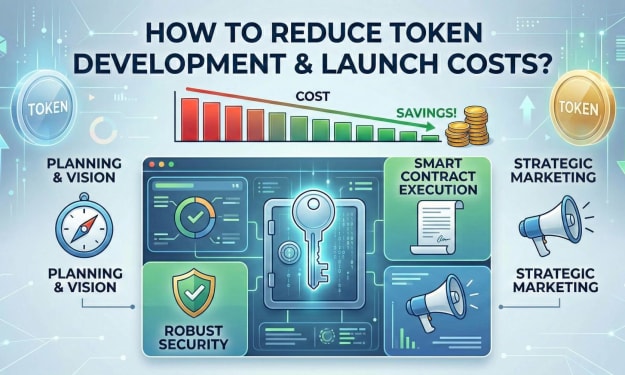
How to Reduce Crypto Token Development and Launch Costs?
Launching a crypto token often looks deceptively simple from the outside. Smart contracts can be deployed in minutes. Token standards are well documented. Marketing channels are accessible. Yet founders frequently discover that what seemed like a modest technical exercise turns into a six-figure undertaking. Development, audits, legal structuring, exchange listings, liquidity provisioning, branding, community management, and post-launch maintenance compound rapidly.
By Jennifer Atkinson4 days ago in The Chain
How Stablecoin Issuers Make Money: 12 Proven Revenue Models
Stablecoins have become a cornerstone of the digital asset ecosystem, offering price stability in an otherwise volatile market. As demand surges—from retail traders hedging risk to large institutions conducting cross-border settlements—the question arises: How Stablecoin Issuers Make Money. Unlike pure speculative tokens, stablecoins must maintain a peg to fiat or another asset, which creates unique revenue opportunities. In this post, we unpack each model, illustrate with case studies, and outline strategic considerations for issuers aiming for both profitability and trust.
By Siddarth D7 days ago in The Chain



Comments
There are no comments for this story
Be the first to respond and start the conversation.