
Bitcoin Heatmap: Visualizing Market Trends for Smarter Trading
Learn how to use Bitcoin heatmaps to track price trends, market sentiment, and trading opportunities

Introduction
In the fast-paced world of cryptocurrency, Bitcoin heatmaps have emerged as a powerful tool for traders and investors. These visual tools provide an at-a-glance understanding of market trends, price movements, and potential support and resistance levels.
A Bitcoin heatmap translates complex market data into color-coded charts, helping traders make informed decisions quickly. Whether you are day trading or managing long-term investments, understanding and using Bitcoin heatmaps can give you an edge in the volatile crypto market.
In this article, we’ll explore what Bitcoin heatmaps are, how they work, their benefits, and how you can incorporate them into your trading strategy.
Table of Contents
What is a Bitcoin Heatmap?
How Bitcoin Heatmaps Work
2.1 Color-Coding Price Levels
2.2 Visualizing Market Depth
2.3 Combining with Other Indicators
Types of Bitcoin Heatmaps
3.1 Price Heatmaps
3.2 Order Book Heatmaps
3.3 Volatility Heatmaps
Benefits of Using a Bitcoin Heatmap
How to Read a Bitcoin Heatmap
Tools and Platforms for Bitcoin Heatmaps
Tips for Using Bitcoin Heatmaps Effectively
Common Mistakes to Avoid
Case Studies: Heatmaps in Action
Quick Takeaways
FAQs
Engagement Prompt
1. What is a Bitcoin Heatmap?
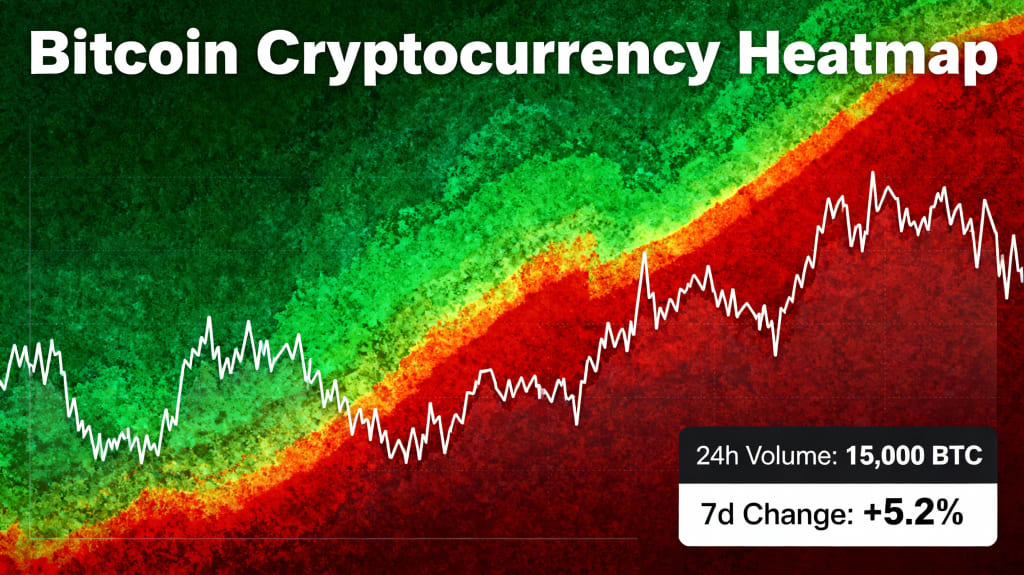
A Bitcoin heatmap is a visual representation of price levels, market liquidity, or volatility in the Bitcoin market. It uses colors to highlight areas of high activity, support, resistance, or concentration of orders.
The heatmap simplifies complex trading data, enabling traders to spot trends, identify potential buy/sell zones, and make decisions quickly.
2. How Bitcoin Heatmaps Work
2.1 Color-Coding Price Levels
Green often indicates strong support zones or areas where buyers are active.
Red highlights resistance zones or areas where sellers dominate.
Yellow or orange may represent moderate activity or neutral zones.
2.2 Visualizing Market Depth
Heatmaps show the density of buy and sell orders at different price levels. This helps traders anticipate price movements based on liquidity.
2.3 Combining with Other Indicators
Bitcoin heatmaps can be paired with technical indicators like RSI, MACD, or moving averages to confirm trends and entry/exit points.
3. Types of Bitcoin Heatmaps
3.1 Price Heatmaps
Show historical price movement intensity over a period. Traders can spot recurring support and resistance levels.
3.2 Order Book Heatmaps
Visualize the concentration of buy and sell orders across exchanges. Helps traders predict potential price bounces or breakdowns.
3.3 Volatility Heatmaps
Highlight periods of high or low volatility. Useful for planning trades and risk management.
4. Benefits of Using a Bitcoin Heatmap
Quick Decision-Making: Visual cues reduce analysis time.
Identify Key Zones: Easily spot support and resistance levels.
Market Sentiment: Gauge bullish or bearish momentum.
Risk Management: Helps avoid entering trades in illiquid or high-risk zones.
5. How to Read a Bitcoin Heatmap
Look at color intensity — darker colors usually indicate stronger levels.
Observe clustering of orders — areas with dense buy/sell orders often act as strong support/resistance.
Monitor changes over time — shifts in heat zones can indicate trend reversals.
6. Tools and Platforms for Bitcoin Heatmaps
Some popular platforms include:
TensorCharts: Provides real-time order book heatmaps and market analytics.
Bookmap: Visualizes liquidity, order flow, and market depth for BTC.
TradingView with Plugins: Some plugins offer heatmap overlays for price and volume.
7. Tips for Using Bitcoin Heatmaps Effectively
Use in conjunction with other technical analysis tools.
Focus on areas with the highest liquidity for trade execution.
Watch for sudden shifts in heat intensity — may indicate breakout or breakdown.
Avoid overreliance — heatmaps are a guide, not a guarantee.
8. Common Mistakes to Avoid
Ignoring market fundamentals — heatmaps only show historical and current order data.
Trading solely based on colors — combine with other analysis for accuracy.
Overreacting to minor fluctuations — small heat changes do not always indicate trend shifts.
9. Case Studies: Heatmaps in Action
Example 1: A BTC price bounce at a strong green support zone predicted by heatmap clustering.
Example 2: Resistance identified on an order book heatmap prevented entering a losing trade.
Example 3: Volatility heatmap helped traders avoid high-risk trading during sharp market swings.
10. Quick Takeaways
Bitcoin heatmaps visualize market data for easier decision-making.
Support and resistance levels are more identifiable through heatmaps.
Combining heatmaps with technical analysis enhances trading accuracy.
Heatmaps can help manage risk by showing areas of liquidity and volatility.
They are tools to guide strategy, not replace proper research.
FAQs
1. What is the best Bitcoin heatmap tool?
Popular options include TensorCharts, Bookmap, and TradingView with heatmap plugins.
2. Can heatmaps predict Bitcoin price movements?
Heatmaps show zones of interest and liquidity but do not guarantee price direction. Use with other analysis tools.
3. Are Bitcoin heatmaps suitable for beginners?
Yes, they provide visual insights, but beginners should combine them with basic technical analysis.
4. How often should I check a Bitcoin heatmap?
Active traders may monitor heatmaps in real-time, while long-term investors may use them less frequently.
5. Can heatmaps detect market manipulation?
They can highlight large clustered orders that might indicate whale activity or potential manipulation.
About the Creator
saif ullah
Content writer on different niches, specially on finance.
Keep reading
More stories from saif ullah and writers in The Chain and other communities.
Trump in Bitcoin: How the Former President Influences Crypto Markets
Introduction Bitcoin and cryptocurrency have captured global attention over the past decade, not just from investors but also from political leaders. Among the most discussed figures is former U.S. President Donald Trump, whose opinions on digital currencies have influenced market sentiment.
By saif ullah2 months ago in The Chain
Australia Blockchain Market: Digital Trust, Decentralization & Enterprise Adoption
According to IMARC Group, the Australia blockchain market reached a value of USD 78.0 Million in 2024 and is projected to expand to USD 130.7 Million by 2033, growing at a compound annual growth rate (CAGR) of 5.9% during 2025–2033. This steady expansion reflects Australia’s measured but increasingly strategic adoption of blockchain technologies across financial services, government operations, supply chains and enterprise data systems. Rather than speculative use cases alone, Australia’s blockchain ecosystem is evolving around practical applications such as digital identity, payments infrastructure, smart contracts, asset tokenisation and secure data sharing. As trust, transparency and efficiency become critical in a digitised economy, blockchain is positioning itself as a foundational technology supporting long-term digital transformation.
By Shrestha Roy6 days ago in The Chain




Comments
There are no comments for this story
Be the first to respond and start the conversation.