
Benefits of RFID - Why do you need RFID Solutions?
RFID, or radio frequency identification, is a technology that uses radio waves to identify and track objects. RFID solutions have become increasingly popular in recent years, as they offer a wide range of benefits to businesses and organizations. Here are some of the key benefits of RFID:

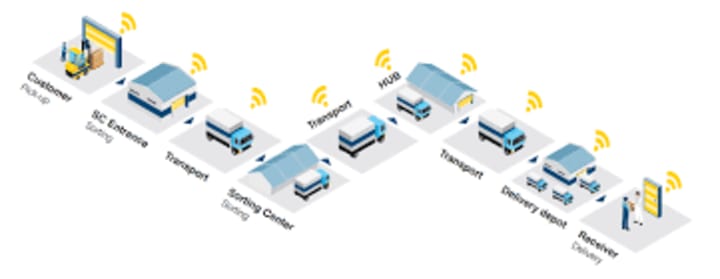
RFID solutions are widely used in a variety of industries, such as logistics, healthcare, retail, and manufacturing. They can be used to track inventory, monitor the movement of goods and people, prevent theft and counterfeiting, and improve supply chain management.
RFID solutions can be passive or active. Passive RFID tags do not have their own power source and rely on the reader to provide power and communicate with the tag. Active RFID tags have their own power source and can communicate with the reader over a longer range.
Improved Efficiency:
RFID solutions can help businesses and organizations improve efficiency by automating tasks that were previously performed manually. For example, RFID technology can be used to automate inventory management, reducing the time and resources required to keep track of stock
Real-Time Visibility:
RFID solutions enable real-time visibility into the location and status of objects. This can be especially useful in industries such as logistics and supply chain management, where real-time tracking of goods is critical.
Increased Accuracy:
RFID technology is highly accurate, allowing businesses and organizations to track and identify objects with a high degree of precision. This can help reduce errors and improve overall accuracy in tasks such as inventory management and asset tracking.
Enhanced Security:
RFID solutions can be used to enhance security by enabling access control and authentication. For example, RFID technology can be used to track employee access to restricted areas, ensuring that only authorized personnel are granted access.
Cost Savings:
RFID solutions can help businesses and organizations save money by reducing the time and resources required to perform manual tasks such as inventory management. RFID technology can also help reduce the risk of lost or stolen items, further reducing costs.
Improved Customer Experience:
RFID solutions can be used to improve the customer experience by enabling faster and more accurate tracking of orders and shipments. This can help businesses provide better service to their customers and improve customer satisfaction.
Increased Productivity:
RFID solutions can help increase productivity by streamlining processes and reducing the time and resources required to perform manual tasks. This can help businesses and organizations achieve greater efficiency and output.
Better Decision-Making:
RFID solutions can provide businesses and organizations with valuable data that can be used to make better decisions. For example,Rfid Module is a data collected through RFID technology can be used to optimize inventory management, reduce waste, and improve overall efficiency.
Scalability:
RFID solutions can be easily scaled to meet the needs of businesses and organizations of all sizes. This makes RFID technology a flexible and versatile solution that can be adapted to a wide Rfid range of industries and applications.
RFID solutions can be passive or active. Passive RFID tags do not have their own power source and rely on the reader to provide power and communicate with the tag. Active RFID tags have their own power source and can communicate with the reader over a longer range.
Overall, RFID solutions offer a range of benefits including improved efficiency, accuracy, and security.
Conclusion:
RFID solutions offer a wide range of benefits to businesses and organizations. Whether you are looking to improve efficiency, enhance security, reduce costs, or improve the customer experience, RFID technology can help you achieve your goals. With its high accuracy, real-time visibility, and scalability, RFID is a valuable tool for businesses and organizations across a wide range of industries.
About the Creator
Keep reading
More stories from Custom Box and writers in The Chain and other communities.
Which market is the best for wholesale custom boxes?
Custom boxes have become an integral part of modern-day business, and they are widely used by a wide range of industries for packaging and shipping products. Custom boxes offer businesses a unique branding opportunity, allowing them to create customized packaging that reflects their brand image, personality, and values. While many businesses choose to purchase custom boxes from retail stores, the best option for wholesale custom boxes is to source them from a dedicated wholesale market.
By Custom Box3 years ago in Families
Eco-Friendly Cryptocurrency: Building a Sustainable Future for Digital Finance
The rapid growth of digital assets has transformed global finance, but it has also raised serious concerns about environmental sustainability. Traditional blockchain networks—especially those relying on energy-intensive mining—have drawn criticism for their high electricity consumption and carbon footprint. In response, a new wave of innovation has emerged: eco-friendly cryptocurrency.
By Siddarth D3 days ago in The Chain
How Bitcoin Mining Software Works: A Complete Step-by-Step Guide
Bitcoin has become one of the most widely recognized digital currencies in the world. Since its introduction, it has transformed the way people think about money, decentralization, and digital assets. Behind the Bitcoin network lies a powerful process known as mining, which keeps the system secure and operational. For beginners who want to explore this process, understanding Bitcoin mining software is an important first step.
By smithtaylor4 days ago in The Chain
Lycan Lore
As the students of my 10am mythology class take their seats, I decide to steer the day's curriculum away from Greek and dive into a Western European discourse on the misaligned beliefs of the Werewolf. A tale of truth or fiction. No one really knows.
By Lamar Wigginsabout 20 hours ago in Fiction




Comments
There are no comments for this story
Be the first to respond and start the conversation.