
A Letter From a Hacker
A short non-fiction piece told from the perspective of Jeremy, the man who once hacked into Satoshi Nakamoto's email.

Dear Satoshi,
Your dox, passwords and IP addresses are being sold on the darknet. Apparently, you didn’t configure Tor properly and your IP leaked when you used your email account sometime in 2010. You are not safe. You need to get out of where you are as soon as possible before these people harm you.
Thank you for inventing Bitcoin.
To whom this will inevitably concern,
A few years ago I fell down an internet rabbit hole about the Zodiac Killer. It got so deep I convinced myself I had cracked an unsolved cipher left by the killer. The infamous Z-13 cipher, a thirteen-character cryptogram that Zodiac claimed held his identity. If you treat it as a substitution cipher and an anagram, the letters could be rearranged to spell Arthur Lee Alln (Or Arthur Le Allen), A misspelling of the main suspects name, Arthur Leigh Allen. The Zodiac was well known for misspelling words so that wasn’t so far-fetched. Also, by removing the ‘igh’ from Leigh, all the letters that are duplicated in the name spell the word ‘real’, and the ones not repeated spell the word ‘hunt’.
I was convinced I’d cracked it.
Problem is, over time, I realised I was just seeing what I was looking for. It’s called the Baader-Meinhof phenomenon; the idea that if you see enough evidence for a certain outcome, you will only find evidence to support that outcome.
That’s why I couldn’t stay mad at Leah McGrath. I read the article she wrote in Newsweek, identifying Dorian Satoshi Nakamoto as The Satoshi Nakamoto; elusive inventor of bitcoin, and I was hooked. Arthur Leigh Allen went by Leigh, so it wasn’t so out of the box to claim Dorian went by Satoshi. McGrath interviewed Dorian and asked him about his work between the years of 2007-2009, the year Satoshi founded bitcoin, to the year he terminated his involvement with it. Dorian responded “I am no longer involved, and I can no longer discuss it. It’s been turned over to other people and I no longer have any connection.”
As soon as he made this statement, McGrath was sold on this being the guy. Why wouldn’t she be? He has the name, and pretty much confirmed it himself. Dorian even lived in the same town as Hal Finney, the man to receive the first bitcoin transaction from Satoshi Nakamoto. Everything fell into place.
But Dorian denied being Satoshi, saying he misinterpreted the question about his previous work, which he revealed was for city bank. Also, McGrath’s Newsweek article came out 0n 6th March 2014 and, on 7th March, Satoshi’s p2p foundation profile made a post stating, “I am not Dorian Nakamoto.”
I believe this is the truth. To be Satoshi you’d have to have extensive knowledge of the C+ coding language, cryptography, economics, and, although Dorian was a physicist, he just didn’t have the knowledge to be Satoshi. McGrath felt the tug of the line but pulled out a red herring.
I hoped she was right though. After seven years of this endless mystery, I’d hoped she’d cracked it. I needed her to be right.
“I need to know who he is. I need to stand there, I need to look him in the eye, and I need to know that it’s him.”
-JG in Z, 2007
Satoshi Nakamoto isn’t his real name. I know that, I think. It’s either an amalgamation of four Japanese tech giants – Samsung, Toshiba, Nakamichi, Motorola – or there is an etymological meaning. The alternate Japanese characters used to spell Satoshi have a semantic field of intelligence, and Nakamoto means 'central origin'. Satoshi is the genius origin behind the worlds most successful cryptocurrency, it makes sense he’d choose this name for himself.
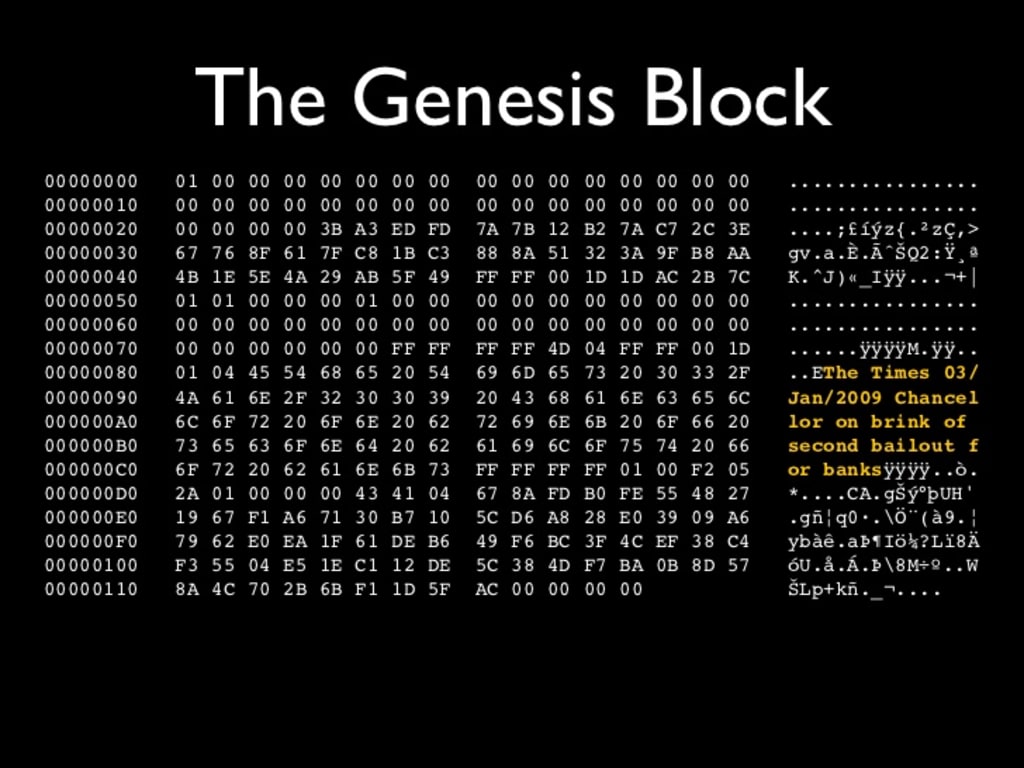
But is he really Japanese? On Satoshi’s P2P foundation profile, he claims he was born on the 5th April, 1975, and is from Japan. But, apart from the name, nothing else points to him being Japanese. When Nakamoto released bitcoin as an opensource software on the 3rd January 2009 and people started mining the Genesis Block, a message was found hidden in the code. “The Times 03/jan/2009, chancellor on brink of second bailout for banks.” This reference an article from London based Newspaper, The Times, talking about the 2008 financial crisis.
Every message he has written contains two constants; double spacing after a full stop, a practice associated with typewriters, and the use British English, as opposed to the American English taught in Japan. Also, in 2008, Satoshi wrote his famous Whitepaper, entitled “Bitcoin: A peer-to-peer electronic cash system” on the Sypherpunks. Whitepaper is predominantly British term.
So why did he say he was Japanese if he’s so clearly British?
Does he change how he writes just to hide his identity?
Is the 5th April even his real birthday?
I have researched everything that has happened on the 5th April 1975 but I couldn’t find anything of interest. Another dead end, just like Craig Wright.
01010000 01100001 01110100 01101001 01100101 01101110 01100011 01100101 00100000 01101001 01110011 00100000 01100001 00100000 01110110 01101001 01110010 01110100 01110101 01100101
-3301
Craig Wright was a potential identity for Satoshi Nakamoto. Wired and Gizmodo both suggested Wright was Satoshi and the BBC and The Economist claimed Wright had digitally signed messages using cryptographic keys from the early days of Bitcoin. Also, a blog post on his personal website, CraigWright.net, posted a message with that same cryptographic signature, claiming he is Satoshi. Occam’s Razor would suggest it was him, he confessed after all. But that’s not satisfying enough for me. Why would Satoshi confess his identity if he went to such heights to conceal it? Also, the signature Wright used was revealed to be a recycled one used by the real Satoshi in 2010.
In 2019, Wright started to sue people for liable for not believing he was Satoshi, and in April 2019 he tried to copyright the whitepaper that Nakamoto released in 2008. Why would Satoshi do this?
It’s not like him. I Know Satoshi. He wouldn’t do this. In 2009, when Wikileaks was having funding trouble, PC World released an article suggesting Bitcoin could be used to help them out of financial trouble. Satoshi replied “Wikileaks has kicked the hornet’s nest and the swarm is coming towards us.” After this, Satoshi handed over the bitcoin’s ownership to Gavin Anderson. Satoshi remained in email correspondence with Gavin until 2011, where he wrote, “I wish you wouldn’t keep talking about me as a mysterious shadowy figure, the press just turns that into a pirate currency angle, maybe instead make it about the open-source project and give more credit to your dev contributors. It helps to motivate them.”
Satoshi hated negative attention and opposed any focus on his true identity. So Wright’s confession and subsequent lawsuits are nothing like the Satoshi I know. I followed Wright for months but I found myself back to square. This was the pattern. Just like a typewriter, no matter how far you progress, you know eventually you’ll be sent back to the left of the page.
Lol… Back and to the left.
Research was never going to get me anywhere, so I knew I had to take matters into my own hands. I had to try and lure him out. Otherwise, I’d never know who this man is. I’d never see his face. But even that didn’t work. I hacked his email, pretended to sell his IPs and personal details on the dark web in the hopes I would see some panic. I thought it might make him slip up. But I was wrong.
Satoshi was careful. I suppose he has to be.
“I have spoken to him on the phone, I was actually going to divulge who he was. I was going to say, ‘listen, it was this guy,’” And you know what he told me? Very smart motherfucker, he said ‘What if you’re wrong?’ He goes, ‘if you’re right, then Satoshi is going to have to hire fifty security guards and change his life, or else he will die. if you’re right, then that person has the ability to do something about it. But what if you’re wrong? You will end up destroying an innocent man’s life forever, and probably cause his death.’”
-John McAfee, discussing a conversation with Satoshi Nakamoto
That quote makes it sound like Satoshi was into something criminal. Of course he wasn’t. He strongly opposed bitcoin being used in criminal activity. Regardless, bitcoin was the primary currency on the Silk Road, a dark web market for elicit substances and contraband. But he is speculated to be sitting on a fortune. Allegedly he holds 980000 bitcoin, almost 5% of the bitcoin to ever enter distribution. Essentially, he is sitting on 30 billion dollars.
But that’s not why I want to find him. He’s enough for me.
I suppose anyone would want to get their hands on it, though, and he would do anything to protect it. Whether he’s hording it to raise the demand for bitcoin, waiting until the price is so high he could trade it all in one go, or petter it into distribution over the course of many years (Which 20th May 2020 would suggest, when 50 bitcoins from Satoshi’s horde were traded just as bitcoin went through a halving), he wants to keep his hands on that fortune. If his identity is revealed, the government will want to tax him, and some people will do anything to get their hands on him.
I don’t want his fortune though. He is enough for me. I wanted to scare him with my email but I’m still no closer to finding his identity. But I’ll keep trying. I think it’s my destiny to find him.
And I will find him, eventually.
Do I need to…? Absolutely not. I like to… I enjoy… I have to… But it’s not, like, this compulsive need.
SC in TO, 2007
I will find him eventually!
Yours sincerely,
Jeremy.
P.S. Bill Gates want to chip you.
About the Creator
Keep reading
More stories from writers in The Chain and other communities.
Top 10 Blockchain Development Companies in USA in the 2026 for Enterprise Innovation
Blockchain technology has moved far beyond cryptocurrencies. By 2026, enterprises across finance, healthcare, logistics, supply chains, and digital identity are using blockchain to create transparent, secure, and automated systems. According to industry forecasts, the global blockchain market is expected to surpass $90 billion by 2030, with the United States leading enterprise adoption.
By Nia Higgins2 days ago in The Chain
Eco-Friendly Cryptocurrency: Building a Sustainable Future for Digital Finance
The rapid growth of digital assets has transformed global finance, but it has also raised serious concerns about environmental sustainability. Traditional blockchain networks—especially those relying on energy-intensive mining—have drawn criticism for their high electricity consumption and carbon footprint. In response, a new wave of innovation has emerged: eco-friendly cryptocurrency.
By Siddarth D5 days ago in The Chain
My First Time Skiing and I Got Lost, Alone, in the French Alps
Looking back, I can trace some of my life’s biggest adventures to a simple action from my sister. She’d introduced me to Tommy (a very long time ago), a colleague of hers, who had overshared his penchant for Italian-looking women, and I ticked that box.
By Chantal Christie Weiss2 days ago in Humans



Comments
There are no comments for this story
Be the first to respond and start the conversation.