
Why Are Half Wigs The Cheaper Of The Glueless Wig Series?
Affordable Price For Every Black Girl

When visiting wig shops, you'll often notice that half wigs are often significantly cheaper than glueless wigs. For example, a half wig made of the same material can be nearly half the price of a 360 lace style. The reason isn't complicated; it all comes down to the "half"—it's not a full wig at all, which naturally saves a lot of money. To put it simply, it's the combination of less material, simpler production, and lower requirements.

First, there's a significant reduction in material. A half wig only needs to cover a small portion of the scalp from the crown to behind the ears. For example, the half wig I bought previously had a mesh cap that was less than one-third the size of a full wig. Less human hair is used, and the synthetic fiber material also saves material, which naturally keeps costs down. Take human hair, for example. To make a full-length 360-degree lace wig, you'd need at least 200 grams of hair, while a half wig would require only 80 grams at most. This cost difference alone is significant. On the other hand, for a full-length, glue-free lace wig, the lace base alone would have to cover the entire circumference of the head. Imported Swiss mesh lace, priced by the square centimeter, is several times more expensive per square than the elastic mesh used in a half wig. This cost alone is significantly higher than a half wig.
The process also saves a lot of effort. A half wig doesn't require a full-length simulated hairline. Lace wigs only require a small stitch around the edge, while lace-free wigs use elastic mesh to close the edges, which can be done with just a few clicks of a sewing machine. Unlike 13x6 lace-front wigs, simply assembling the lace and hair takes a long time. Workers have to meticulously weave the hair onto the lace mesh, stitch by stitch. More sophisticated ones even have to create "invisible knots," untangling each one individually. This means they can only produce a few wigs in a day, and labor costs skyrocket. Half wigs, on the other hand, are mass-produced on an assembly line. Workers simply place the wig on the machine, set the program, and churn out ten wigs in half an hour. This lowers labor costs and naturally results in a more affordable price.
Another easily overlooked point: half wigs in glueless wigs sereis don't require the same level of detail. Full-length wigs require meticulous attention to detail, requiring precise adjustments to the mesh cap and tightness. Otherwise, they can easily shift. Even a single hair misaligned at the hairline could be a glaring mistake. Half wigs are much looser, requiring only the center section to be fixed securely. The edges can blend in with your own hair, making a slight misalignment of the mesh cap or a one or two centimeter difference in hair length virtually unnoticeable. This design, with its high "tolerance for error," reduces defective products, eliminating the need for factories to scrap entire wigs for minor flaws, naturally reducing costs.
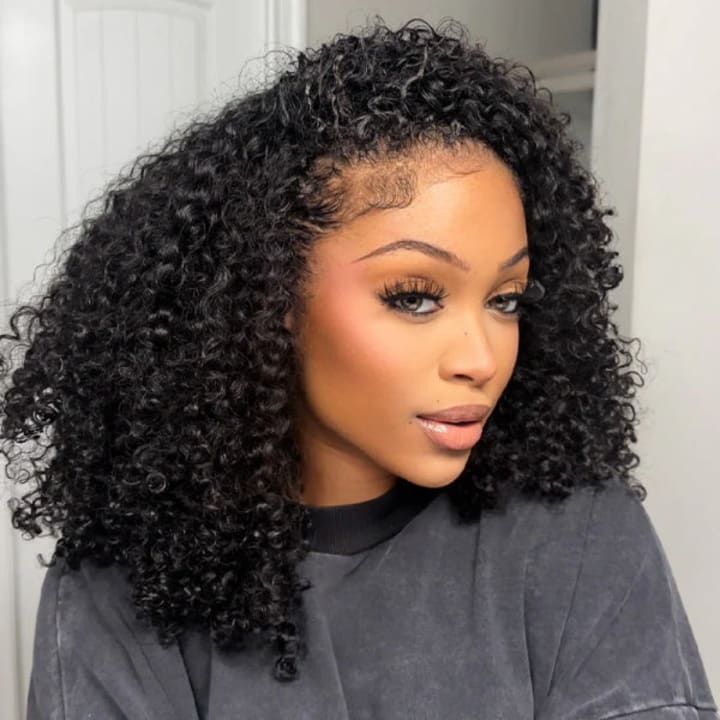
Of course, you get what you pay for. Half wigs offer limited coverage, making them suitable for those with less hair or those who prefer a more subtle look. For example, someone with thinning hair on the crown can use a half wig to conceal it, creating a natural and economical effect. However, if you want a complete hair color or hairstyle change, you'll still have to opt for a full wig. However, for those who want to try something new without breaking the bank, a half wig is a very cost-effective option. Achieving a new look for a fraction of the price is a win-win situation. After all, money doesn't come cheap, and being able to achieve the desired effect with minimal effort is a sign of true living.

Comments
There are no comments for this story
Be the first to respond and start the conversation.