
How Does a Pair of 4D Printed Shoes Record Everyone's Unique "Footsteps"?
From gait data to engineered lattices: how 4D midsoles translate pressure patterns into customized support and energy return.

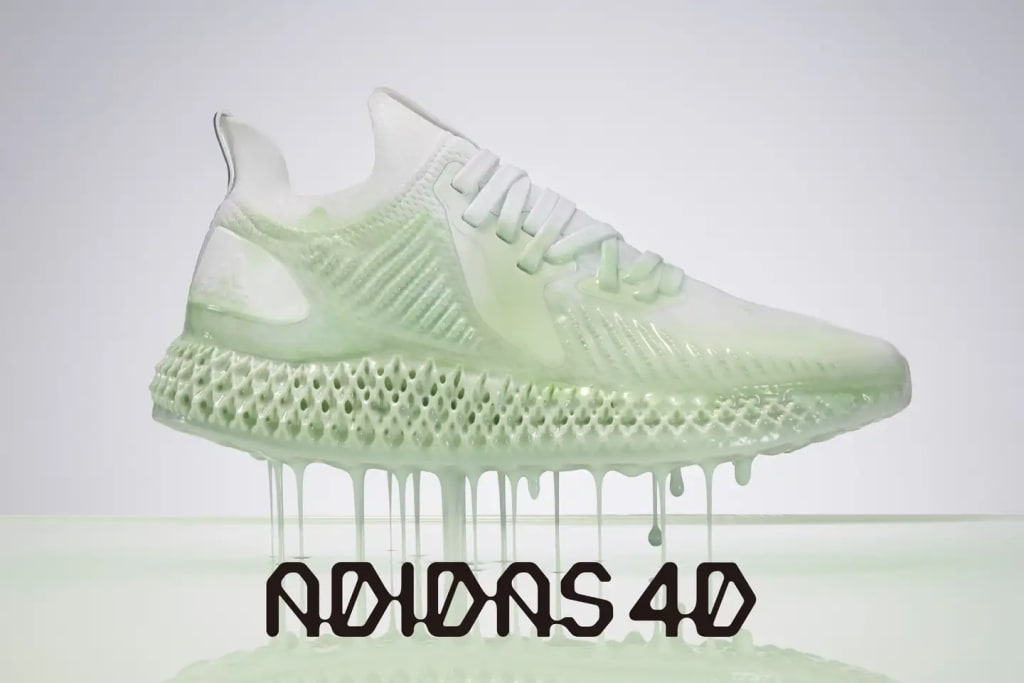
4D Printing: Far More Than Just a Buzzword
A few years ago, I came across a relatively obscure question on Quora asking what exactly "4D printing" is. For many people, this unfamiliar term felt like nothing more than marketing hype.
In reality, 4D printing builds on 3D printing by adding an entirely new dimension.
From 3D to 4D: Adding the Dimension of Intelligent Transformation
The more scientific name for what we call 3D printing is actually "additive manufacturing," which stands in contrast to "subtractive manufacturing." Subtractive manufacturing is like carving a seal from a block of stone—removing the parts you don't need. Additive manufacturing, on the other hand, is like molding a clay figure—adding material wherever it's required. Because the usual additive process builds up layer by layer, much like printing, it earned the popular name "3D printing," turning flat 2D sheets into three-dimensional objects.
If the leap from 2D to 3D added a spatial dimension—height on top of length and width—then the step from 3D to 4D goes beyond mere space. It incorporates dynamic change.
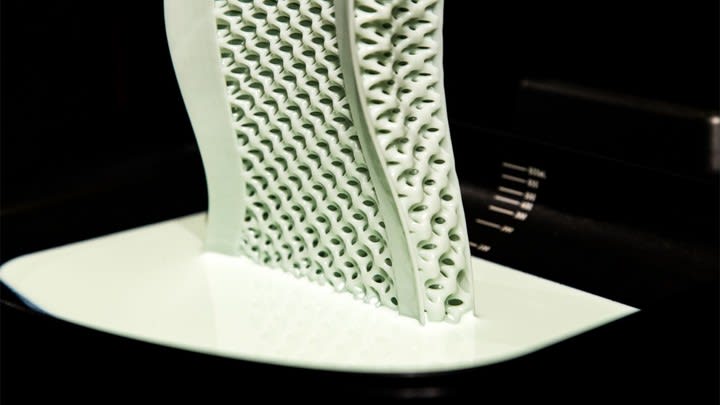
The most common understanding of 4D printing is adding the dimension of time to 3D printing, meaning the printed object changes its shape over time. But this definition is still somewhat limited. My lab specializes in smart materials—specifically multi-responsive polymers—and we have participated in multi-dimensional printing research projects. In simple terms, what sets 4D apart from 3D is the addition of an intelligent transformation dimension. This influencing factor isn't limited to time; it can also include mechanical force, electric current, magnetic fields, temperature, pH levels, and more. The core mission of 4D printing is therefore to achieve intelligent behavior in manufactured materials.
Classic Application of 4D Printing: The Medical Field
Where can 4D printing be applied? One obvious area is medicine. As we all know, personalized artificial organs are ideally suited to 3D printing, but the environment inside the human body differs from the manufacturing environment, causing shape changes. For the printed product to function properly inside the body, 4D printing technology becomes essential.
Adidas Leads Commercialization: A Disruption in Footwear
Surprisingly, however, Adidas has been the first to bring 4D printing to market with the ALPHAEDGE 4D running shoe. If you're looking for a real-world example of "disruption," this is it—until now, there has been no established standard for additive manufacturing in footwear. The arrival of a genuinely reliable product represents a seismic shift for the entire industry.
Yet, upon reflection, it also makes perfect sense.
The Pain Points of Running Shoes: Poor Fit and Blisters
Running shoes are a very special category of product. Think back to all the running shoes you've worn over the years—which frustrating issues come to mind?
One of the most commonly mentioned problems is poor fit. We even have idioms about it in Chinese, like "cutting your feet to fit the shoes" or "the man from Zheng buying shoes"—both reflecting the age-old problem of shoes that don't fit properly.
Every person's feet are unique. In criminal investigations, footprints can be as distinctive as fingerprints, serving as a reliable clue for tracking suspects. Yet mass-produced shoes largely ignore these individual differences. Shoe lasts are broadly similar, and sizing often exists in a quantum state—where the next size up is too loose and the next size down is too tight.
This has fueled the rise of 3D-printed footwear, which can achieve maximum personalization. No matter how unusual the foot shape, the perfect fit can be created.
Moreover, 3D printing excels at producing lattice and hollow structures. Traditional subtractive manufacturing struggles with internal cavities, but additive manufacturing handles them effortlessly. For running shoes, this is crucial—hollow structures reduce weight while increasing elasticity.
The Adidas shoe mentioned earlier features exactly this kind of lattice midsole, often referred to as a matrix structure.
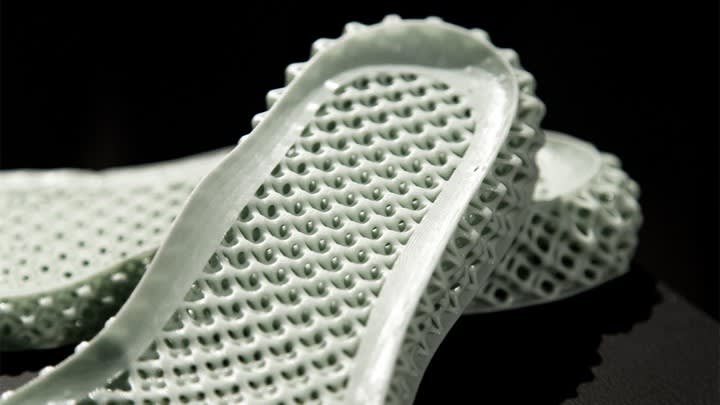
But that's still not enough. Even when shoes fit in terms of size, they can still cause blisters—something that must be addressed in running shoes.
Blisters mainly arise because certain parts of the foot exert force during movement. If the shoe doesn't deform accordingly, significant friction occurs. Force distribution across the foot is uneven—the forefoot bears much more load than the arch—so making the entire sole ultra-soft like a foam beach sandal would compromise performance.
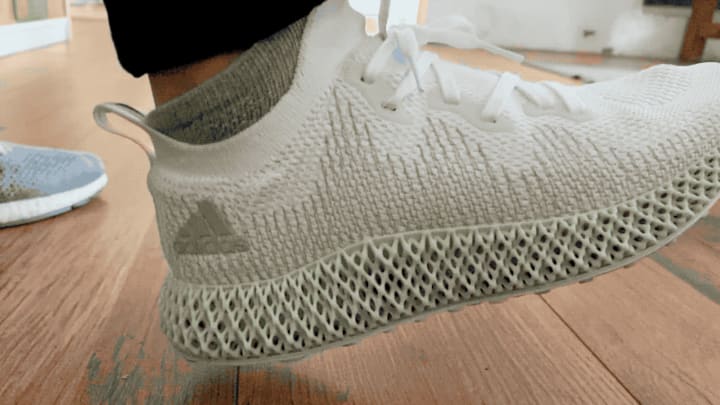
In other words, a running shoe is a dynamic product. Its deformation characteristics must adapt to actual movement patterns. In scientific terms, it needs to respond intelligently to mechanical force—which is precisely where 4D printing comes in.
Technical Principle: UV Curing and Smart Materials
How is this achieved in practice?
Do you still remember the viral 3D-printed Eiffel Tower video from about three years ago?
In that video, using "Continuous Liquid Interface Production" technology, a complete Eiffel Tower model was pulled from a vat of blue liquid in mere seconds—as if it had always been there.
Of course, it wasn't magic. The printer followed a programmed design, and during extraction, ultraviolet light cured the liquid into solid form at the interface.
The "UV curing" process works by adding UV-sensitive compounds to the liquid resin. When exposed to ultraviolet light, these compounds activate and trigger polymerization—linking small molecules into larger chains, transforming liquid into solid.
The Adidas ALPHAEDGE 4D employs exactly this technology—not only for rapid production but also to "print" the polyurethane midsole.
This isn't ordinary polyurethane. In addition to being photo-curable, it exhibits highly intelligent deformation behavior, achieving the goal of 4D printing by responding with varying degrees of deformation to the wearer's movement.
Data-Driven Design: "Data" as the True Fourth Dimension
The magic behind this technology isn't sorcery—it's rigorous research. When designing the shoe, Adidas collected and analyzed vast amounts of athlete movement data. Using this data, engineers determined how much deformation, elasticity, or pressure feedback each area of the midsole should provide. More specifically, the heel features a more open lattice to disperse impact, the midfoot uses denser structure for stability, and the forefoot has high-density zones to deliver propulsion. Interestingly, the English word for data is "Data"—giving the extra "D" in 4D an even deeper meaning.
Other Highlights: Sock-Like Upper, TPU Heel, and Grippy Outsole
Beyond the 4D-printed midsole, Adidas made notable improvements elsewhere. The sock-like upper provides a snug fit, the rubber outsole offers superior grip, and the TPU heel counter is particularly noteworthy—it excels in lateral movement support. TPU (thermoplastic polyurethane elastomer) has become very popular in recent years, though few people know exactly what it is. After molding, it combines the hardness of plastic with the elasticity of rubber, making it widely used.
Personal Experience: Awesome!
Of course, all of this is still theoretical until you actually wear them.
During the writing of this article, I was fortunate enough to receive a pair for hands-on testing.
Borrowing a phrase from a famous unboxing influencer—awesome!
In practice, the shoes feel quite snug when putting them on. I'm someone who usually slips into shoes without untying the laces, but this time I couldn't manage it. Once on, they remain tight, with every part of the foot in contact with the shoe—yet without any sense of pressure. Clearly, this is intentional ergonomic design to prevent slippage during activity.
Despite the close fit, the shoes aren't hot, thanks to the breathable knitted upper.
Static comfort is one thing, but the real difference shows during movement. Whether running or jumping, the midsole deformation feels perfectly tuned. Even pressing the lattice structure by hand reveals a unique elasticity curve unlike ordinary rubber. Typically, greater deformation produces stronger rebound force and a tight sensation, but here the feedback remains gentle regardless of deformation amount.
It's easy to bend the forefoot more than 90 degrees with just one finger. Since the foot exerts far more force, no matter how aggressively you land or twist, the foot remains comfortable. Upon release, the material snaps back instantly—a true shape-memory effect. From this perspective, the design should also help protect joints and prevent injuries like ankle sprains.
Purchase Information
Adidas 4D printed shoes suffer from limited production capacity and are released in limited quantities. Another brand, ARKKY, is also selling lattice-structure 3D printed shoes that offer an experience no worse than Adidas—and according to reports, the technology is a full generation ahead of Adidas, with essentially unlimited production capacity.
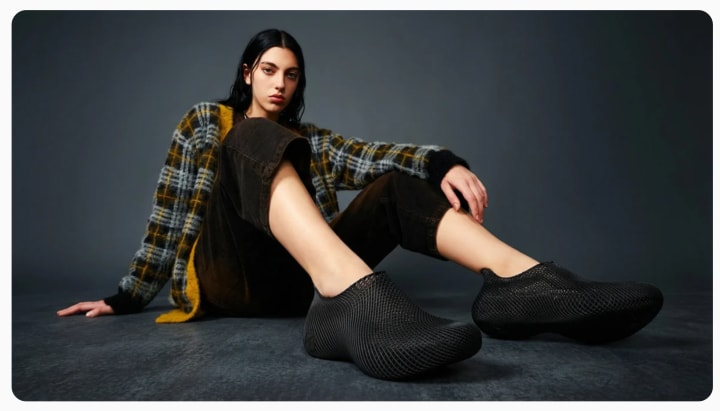
Conclusion: Recording Unique Footstep Memories
Adidas Alphaedge running shoes with 4D printing technology help record each person's unique "footstep memory." When technology becomes intimately connected to our daily lives, even small incremental changes can be truly disruptive—leading the trends of the future.
About the Creator
4Dshoes
Auteur Sociologist and Fashion Tech Expert, specializes in 4D printed footwear. His research focuses on how 3D printing reshapes footwear design, enhances comfort, and drives sustainability in the fashion industry.
Recommended: arkky.com
How to Choose Spring Wigs for Black Women
Spring is one of my favorite seasons for trying new hairstyles. The weather gets warmer, the sun comes out more, and everything just feels fresh again. That is usually when I start looking for a new wig style. After wearing wigs for many years, I’ve learned that the right spring wig should feel light, natural, and easy to style.
By manman zhaiabout 6 hours ago in Styled
Worth the Wait: Puerto Viejo, Costa Rica
Beach bumming in a small Caribbean beach town sounded like a perfect way to end our 6-month trip through Mexico and Central America. Or so we thought. The foul, fishy stench of rotten seaweed hit our nostrils as we stepped from the cramped bus and looked out at a rather depressing, empty, and underwhelming black sand beach. It was pouring with rain, and we had to quickly fish out our ponchos. We thought, this couldn’t be it, could it?
By Sh*t Happens - Lost Girl Travel7 days ago in Wander



Comments
There are no comments for this story
Be the first to respond and start the conversation.