
United States School Furniture Market 2025: Reinventing Classrooms for the Future
How ergonomic design, smart classrooms & sustainability are reshaping America’s learning spaces

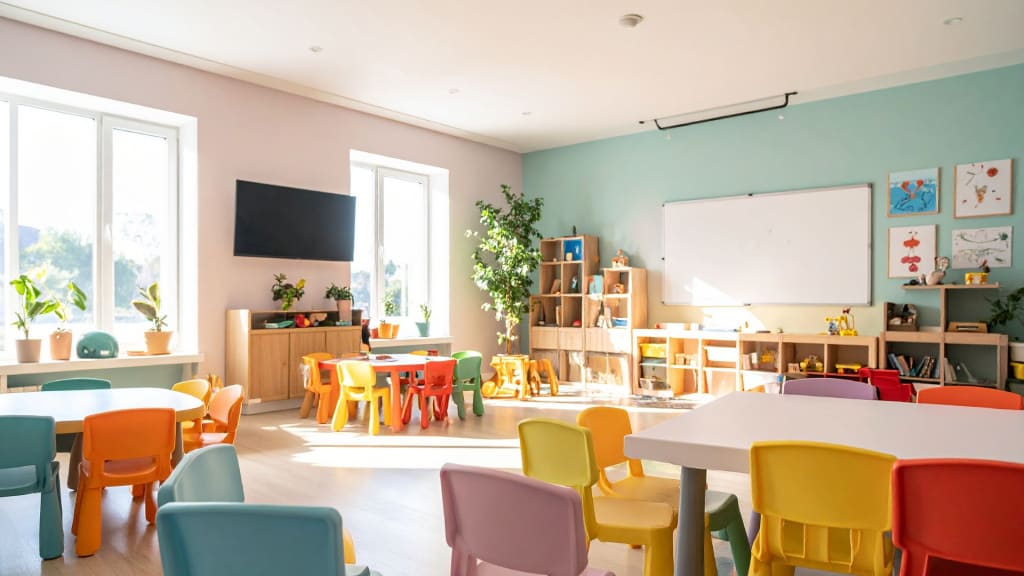
The Classroom is Changing — And the Furniture Is Finally Keeping Up
American classrooms are evolving from static chalk-and-talk settings into dynamic learning hubs where creativity, collaboration, and comfort take center stage. The transformation isn't just digital — it’s physical too. The desks, chairs, storage units, and lab tables students interact with daily are now seen as critical influencers of engagement, health, and learning outcomes.
According to Renub Research, the United States School Furniture Market is estimated to be valued at US$ 1.98 billion in 2024 and is expected to grow at a CAGR of 7.07% from 2025 to 2033, reaching US$ 3.66 billion by 2033. This surge is being driven by modernization initiatives, ergonomic awareness, rising student populations, sustainability mandates, and rapid adoption of technology-enabled classroom environments.
Market Snapshot
Report Features Details
Base Year 2024
Forecast Years 2025–2033
Historical Years 2021–2024
Market Size (2024) US$ 1.98 Billion
Market Forecast (2033) US$ 3.66 Billion
Growth Rate (CAGR 2025–2033) 7.07%
What Defines Modern School Furniture?
School furniture is no longer limited to desks and chairs. Today, it encompasses:
Adjustable ergonomic seating
Collaborative modular desks
Smart storage with digital locking systems
Lab-grade, chemical-resistant tables
Interactive learning stations
Furniture built from recycled, low-emission materials
The objective is clear: reduce physical strain, increase focus, encourage teamwork, accommodate technology, and promote environmental responsibility.
With children spending 6–7 hours a day seated, poor furniture design doesn’t just disrupt learning — it affects posture, cognitive function, and long-term spinal health. This has pushed U.S. school districts to rethink procurement and embrace human-centered design principles.
Key Growth Drivers
1. Massive Government & Private Investments in School Modernization
Infrastructure is getting a long-overdue reboot. A strong indicator of this shift came in November 2023, when the U.S. Department of Education allocated US$ 37 million through the Supporting America’s School Infrastructure (SASI) initiative to help modernize classrooms across eight states.
Schools are replacing legacy desks with adaptive furniture to accommodate:
STEM and robotics labs
Hybrid learning environments
Technology-powered collaboration zones
AI-enabled learning desks
Funding isn’t just upgrading buildings — it's redefining what learning looks like inside them.
2. Growing Demand for Ergonomic & Student-Centric Design
A 2022 NIOSH study revealed that students spend most of their in-school lives sitting, which has made ergonomics a policy concern, not a luxury. Several U.S. states are now considering or implementing mandatory ergonomic benchmarks for public school furniture.
Schools are investing in:
Height-adjustable desks
Lumbar-support chairs
Sit-to-stand workstations
Desks with integrated tablet/laptop mounts
These adaptations reduce physical stress, increase concentration, and improve knowledge retention.
3. Sustainability as a Procurement Standard
The demand for green furniture is rising sharply. Schools increasingly prefer:
FSC-certified wood
Non-toxic finishes
Recycled plastics
Low-VOC adhesives
Recyclable components
The National School Supply and Equipment Association reported that schools allocating budget for customizable, sustainable furniture increased by 15% in 2022, a trend that continues upward.
Challenges Slowing the Market
1. High Cost of Smart & Customized Furniture
Adaptive, tech-linked, or modular furniture often carries a premium cost, limiting adoption—especially in rural and low-funded public schools.
2. Supply Chain Disruptions & Raw Material Volatility
Delays in sourcing wood, steel, and polymers—combined with shipping bottlenecks and labor shortages—have inflated prices and disrupted manufacturing timelines.
Market Breakdown: What’s Selling Most?
By Product
1. Seating Furniture
The fastest evolving segment. Demand is shifting toward ergonomics, mobility, and collaboration. Popular options include stackable chairs, swivel seating, adjustable stools, and standing desks.
2. Storage Units
Smart lockers, space-saving cabinets, and modular storage on wheels are gaining traction. Schools need flexible solutions to support expanding enrollments without expanding room size.
3. Lab Furniture
With STEM learning booming, lab tables now feature chemical resistance, integrated power ports, and mobility for rapid classroom reconfiguration.
By Material
Material Key Trends
Wood Durable, sustainable, widely used; MDF & plywood preferred for cost-balance
Metal High strength, rust-resistant coatings, common in labs and lockers
Plastic Lightweight, moldable, increasingly recycled and eco-friendly
Others Composite blends for hybrid durability and design
By Application
Classrooms: Smart desks, collaborative seating, interactive boards
Libraries & Labs: Storage-heavy units, lab-grade tables, organized shelving
Others: Auditorium seating, teacher workstations, cafeteria furniture
By Distribution Channel
Offline (dominant): Schools prefer to physically inspect furniture before bulk procurement.
Online (rapidly growing): E-procurement platforms, customizable catalogs, faster bulk ordering.
Regional Market Highlights
East U.S.
Tech-rich cities like New York, Boston, and Washington, D.C. lead adoption with investments in digitally integrated and ergonomically advanced classrooms.
North U.S.
Extreme weather drives demand for durable, cold-resistant materials. Cities like Chicago, Minneapolis, and Detroit are seeing high renovation activity.
South & West U.S.
Rapid population growth, increasing school enrollments, and new campus development boost demand for space-efficient, flexible furniture solutions.
Competitive Landscape
Key players shaping innovation and distribution include:
Smith System (Steelcase Inc.)
MillerKnoll, Inc.
The HON Company
Virco
Fleetwood Group
VS America, Inc.
Hertz Furniture
Paragon Furniture
Haskell Education
Marco Group
These companies compete across four core areas:
✅ Product innovation
✅ Strategic partnerships
✅ Revenue expansion
✅ Smart classroom integration
Future Outlook: Classrooms Designed for Humans, Powered by Technology
By 2033, investments in school furniture will no longer be about replacement — they will be about reinvention. The industry is moving toward:
AI-integrated desks
Sensors that correct posture
Modular plug-and-play classrooms
100% recyclable school furniture lines
Furniture leasing models for budget-limited districts
Hybrid learning spaces that work both on-campus and remotely
Final Thoughts
The U.S. school furniture sector is entering an era where design influences learning as much as curriculum does. The next decade will belong to manufacturers and policymakers who understand that a classroom upgrade must be physical, digital, and human-centered.
With the market projected to nearly double in value, growing from US$ 1.98 billion in 2024 to US$ 3.66 billion by 2033, the opportunity for innovation, sustainability, and long-term educational impact is greater than ever.
About the Creator
Janine Root
Janine Root is a skilled content writer with a passion for creating engaging, informative, and SEO-optimized content. She excels in crafting compelling narratives that resonate with audiences and drive results.
Keep reading
More stories from Janine Root and writers in Styled and other communities.
North America Plug-in Hybrid Electric Vehicle Market Forecast 2025–2033
The transportation industry is undergoing a dramatic transformation as North America shifts toward cleaner, smarter, and electrified mobility. Among all electrification formats, Plug-in Hybrid Electric Vehicles (PHEVs) are securing a powerful foothold. With the ideal balance of electricity-based driving and fuel flexibility, PHEVs are emerging as a preferred choice for consumers hesitant to adopt fully electric vehicles.
By Janine Root 2 months ago in Styled
Y2K Fashion 2026: Trends, Staples, and How to Style the Revival
The Y2K fashion revival is bigger than ever in 2026. Once a late‑90s and early‑2000s trend, Y2K style has now become a major cultural moment in streetwear and mainstream fashion thanks to influencers, social media, and designers remixing nostalgic aesthetics for modern wardrobes. From rhinestone belts to velour tracksuits and platform sneakers, this fashion wave mixes playful glam with bold street style.
By Ryan Riceklton6 days ago in Styled
The "It-Girl" Aesthetic: Why the 1ct Oval Engagement Ring is 2026’s Ultimate Fashion Statement
Fashion trends come and go, but every few decades, a piece of jewelry transcends the "bridal" category and becomes a genuine fashion icon. In the 90s, it was the minimalist baguette. In the 2010s, it was the cushion-cut halo. But as we navigate 2026, the crown belongs to only one: the 1ct oval engagement ring.
By Mohd Kaish6 days ago in Styled


Comments
There are no comments for this story
Be the first to respond and start the conversation.