
United States Costume Jewelry Market Size and Forecast 2025–2033
Affordable Glamour on the Rise: How U.S. Consumers Are Powering a New Era of Fashion Jewelry

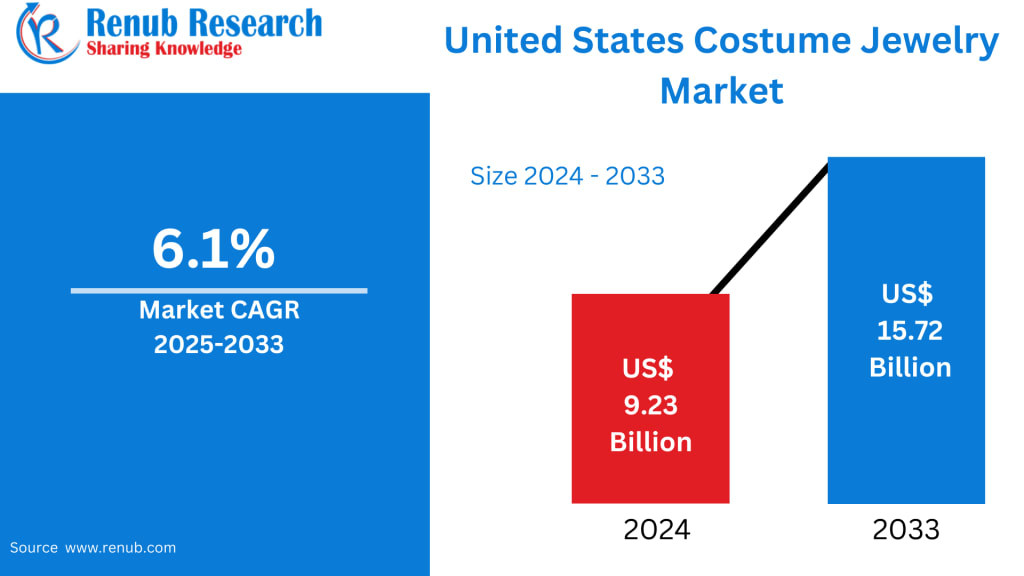
The United States costume jewelry industry is entering one of its most dynamic growth phases, driven by fashion-conscious consumers, evolving e-commerce models, and the rising desire for affordable luxury. According to Renub Research, the market is projected to increase from US$ 9.23 billion in 2024 to US$ 15.72 billion by 2033, advancing at a robust CAGR of 6.1% from 2025 to 2033. As Americans increasingly embrace self-expression through style, costume jewelry—once considered an alternative to fine jewelry—now stands as a mainstream fashion staple.
This editorial takes a deep dive into the forces shaping the United States costume jewelry market, from demographic style shifts and online shopping growth to challenges in quality perception and market saturation. It also breaks down key product segments, distribution channels, major states influencing demand, and the competitive landscape.
United States Costume Jewelry Market Outlook
Costume jewelry, also known as fashion jewelry or imitation jewelry, refers to accessories made using non-precious materials such as glass, plastic, synthetic gems, and base metals. The goal is clear: deliver beauty, vibrancy, and trend-forward design without the hefty cost of traditional jewelry made from diamonds, gold, or platinum.
In contrast to fine jewelry—which often symbolizes long-term value—costume jewelry thrives on fast fashion, variety, and self-expression. For millions of Americans, it offers a practical yet stylish way to experiment with different looks, complement outfits, or follow the season’s hottest trends.
From Hollywood icons to TikTok creators, influencers have propelled demand significantly. Their curated looks, often featuring mix-and-match accessories, reach millions instantly—sparking nationwide trends overnight. Add to that the availability of thousands of designs at low price points, and it becomes clear why costume jewelry has embedded itself deeply into U.S. fashion culture.
Another emerging factor is the shift toward individuality-focused fashion. Consumers today prefer pieces that feel personal—be it bold, artistic, cultural, or symbolic. Costume jewelry gives designers complete creative freedom, making it a powerful medium for modern accessory artistry.
Growth Drivers in the United States Costume Jewelry Market
1. Spike in Fashion-Savvy Consumers
The rise of millennials and Gen Z as dominant fashion buyers has transformed the market landscape. These consumers value style, diversity, affordability, and instant trend adoption. For them, jewelry is not merely ornamental—it’s a reflection of identity.
Costume jewelry gives them the flexibility to build large collections and switch aesthetics frequently without the financial burden of fine jewelry. Social media platforms amplify this behavior, where viral looks, short-form content, and influencer partnerships inspire consumers to replicate stylish trends instantly.
The U.S. also continues to witness a rise in disposable income. As per the Bureau of Economic Analysis, personal spending has increased consistently across major states such as California and New York. While luxury jewelry sales have benefited from this rising affluence, so has the upscale segment of costume jewelry—bridging the gap between affordability and premium appeal.
2. Expansion of E-commerce & Social Commerce
The rapid adoption of e-commerce is reshaping the costume jewelry market. Online platforms provide:
Unlimited style choices
Easy price comparisons
Virtual try-on tools
Customer reviews
Convenient returns
Younger consumers particularly prefer online shopping for fashion items, making digital distribution a critical revenue driver.
Social commerce—shopping directly through Instagram, TikTok, Pinterest, and Facebook—is accelerating growth even further. Small independent designers, who once struggled to find commercial space, now reach national audiences effortlessly. Viral videos featuring unboxings, styling tutorials, or “jewelry hauls” often lead to massive overnight sales.
A notable example is from July 2023, when bridal retailer Kleinfeld partnered with Centric Brands to launch a new line of costume bridal jewelry, marketed heavily through social and digital touchpoints.
3. Demand for Affordable Luxury and Personalization
American consumers increasingly want luxurious-looking jewelry without luxury-level spending. Advances in plating, finishing, and gemstone replication techniques have elevated the perceived value of costume jewelry dramatically.
At the same time, personalization is booming—particularly among Gen Z buyers who cherish symbolic or meaningful accessories. Initial pendants, custom charms, name bracelets, zodiac pieces, and engraved fashion rings are in high demand.
In August 2025, CH Jewelry Designs launched a new customized jewelry platform using Bagisto, offering handcrafted and Western-inspired personalized items that resonated strongly with U.S. consumers. Such digitized customization experiences are becoming increasingly common.
Key Challenges in the U.S. Costume Jewelry Market
1. Market Saturation and High Competition
The U.S. market is overflowing with brands—from luxury fashion houses and mass-market retailers to small Etsy sellers. This saturation forces companies to constantly innovate or risk getting lost in the crowd.
The influx of low-cost imports intensifies price wars, hurting local manufacturers and designers. For smaller brands, heavy spending on marketing, branding, and influencer partnerships is often necessary just to stay visible.
2. Quality & Durability Concerns
Because costume jewelry uses non-precious materials, problems such as:
Tarnishing
Chipping
Fading
Metal allergies
Short lifespan
are common consumer complaints.
Repeated negative experiences often discourage repurchase, especially at higher price points. To combat this, brands are increasingly investing in protective coatings, hypoallergenic materials, and improved craftsmanship—though these upgrades add to production costs.
United States Costume Jewelry Market by Product
Costume Rings
The U.S. costume ring segment thrives on trends such as:
Stackable rings
Oversized statement rings
Minimalist bands
Vibrant gemstone-inspired styles
Young consumers lead this category, using rings to elevate both daily outfits and special occasion wear. Digital marketplaces expand access to unique and artisanal ring styles, further boosting sales.
Costume Bracelets
Bracelets are one of the most versatile and best-selling segments. Popular types include:
Chain bracelets
Charm bracelets
Bangles
Cuffs
Beaded styles
Stackable bracelets especially resonate with younger buyers who enjoy curated arm layering looks. Gift purchases surge during holidays and special occasions.
Costume Necklaces
Necklaces remain the most dominant and expressive category, driven by constant social media influence. The popularity of:
Layered chains
Pendants
Chokers
Statement necklaces
continues to rise. Fast-fashion brands refresh collections seasonally to keep up with high turnover trends.
Market by Distribution Channel
Offline Channels
Despite online dominance, offline stores—traditional jewelry shops, department stores, fashion retailers—still play a major role. Shoppers value:
Immediate product inspection
Styling advice
Impulse buying opportunities
Physical retail also enjoys increased traffic during holiday seasons and gifting periods.
Online Channels
Online retail is expanding rapidly due to:
Detailed catalogues
Nationwide access
Competitive pricing
Social media integration
For many younger buyers, online platforms remain the default method of jewelry shopping.
Market by End User
Women
Women represent the largest consumer group, purchasing costume jewelry for daily styling, workwear, social events, and self-expression. The rising self-purchase trend among women significantly drives sales.
Men
Though smaller in volume, men’s costume jewelry is expanding—especially in urban markets. Chains, rings, bracelets, and stud earrings are popular.
Children
This niche segment focuses on safe, hypoallergenic, colorful, and themed jewelry. These products are popular for gifting or party favors.
Key Regional Markets in the United States
California
A major style capital, California’s influences come from Los Angeles, Hollywood culture, and a diverse younger population. Sustainable and eco-friendly jewelry trends are especially strong here.
New York
A global fashion hub, New York fosters constant demand for trendy, multicultural, and runway-inspired jewelry. Tourism and fashion events further elevate sales.
Other major markets include:
Texas
Florida
Illinois
Pennsylvania
Ohio
Georgia
New Jersey
Washington
Massachusetts
Virginia
Michigan
And others across the country
Each contributes uniquely to national trends based on demographics, fashion culture, and economic strength.
Market Segmentation Overview
By Product
Ring
Earring
Bracelet
Necklace
Others
By Distribution Channel
Offline
Online
By End User
Men
Women
Children
Top U.S. States Analyzed
California, Texas, New York, Florida, Illinois, Pennsylvania, Ohio, Georgia, New Jersey, Washington, North Carolina, Massachusetts, Virginia, Michigan, Maryland, Colorado, Tennessee, Indiana, Arizona, Minnesota, Wisconsin, Missouri, Connecticut, South Carolina, Oregon, Louisiana, Alabama, Kentucky, Rest of U.S.
Competitive Landscape
Major companies analyzed with five viewpoints each—Overview, Key Persons, Recent Developments, SWOT, and Revenue Analysis—include:
Louis Vuitton Malletier SAS
Cartier
Sabika
Yanbal
Richline Group, Inc.
Stella & Dot
Lulu Ave
Giorgio Armani S.p.A.
These companies dominate with strong branding, trend-driven designs, and vast distribution networks.
Final Thoughts
The United States costume jewelry market is evolving rapidly, merging affordability with luxury-like aesthetics. As consumers increasingly express individuality through fashion—and as digital commerce continues reshaping purchasing behavior—the sector is set for strong, sustained growth through 2033.
With innovative designs, influencer-driven trends, eco-conscious materials, and personalized accessories becoming mainstream, costume jewelry is no longer just a budget-friendly alternative. It’s a cultural pillar of American fashion.
About the Creator
Janine Root
Janine Root is a skilled content writer with a passion for creating engaging, informative, and SEO-optimized content. She excels in crafting compelling narratives that resonate with audiences and drive results.
Keep reading
More stories from Janine Root and writers in Styled and other communities.
United Kingdom Costume Jewelry Market Size and Forecast 2025–2033
The United Kingdom costume jewelry market is accelerating with renewed force, driven by changing fashion cycles, digital retail expansion, and a growing appetite for affordable luxury. According to Renub Research, the UK costume jewelry market is projected to rise from US$ 1.13 billion in 2024 to US$ 1.94 billion by 2033, reflecting a steady CAGR of 6.22% during 2025–2033.
By Janine Root 2 months ago in Styled
Eid Salwar Kameez Trends 2026: What Women Are Choosing This Year
Eid is one of those moments when fashion feels meaningful it’s not just about looking good, it’s about feeling good, comfortable, and confident as you celebrate with family and friends. As we head into Eid 2026, the fashion mood is clearly shifting. Women are choosing salwar kameez designs that are lighter, softer, and more versatile than ever, while still feeling special enough for the occasion.
By Amit Mandal7 days ago in Styled
Burmese Curly Wig vs. Kinky Curly Wig vs. Straight Wig
If you’ve ever stood in front of your mirror holding three gorgeous glueless wigs and thought, “Okay… but who am I today?”—trust me, you’re not alone. I’ve worn all three: a Burmese curly wig, a kinky curly wig, and a straight wig. Different seasons. Different moods. Different versions of me. And honestly? Each one hits differently.
By manman zhai5 days ago in Styled


Comments
There are no comments for this story
Be the first to respond and start the conversation.