
Ultra-Thin Hair Patches: A Brutally Honest Guide to Price vs. Durability
How do ultra-thin hair patches compare in price and durability for front hairlines?

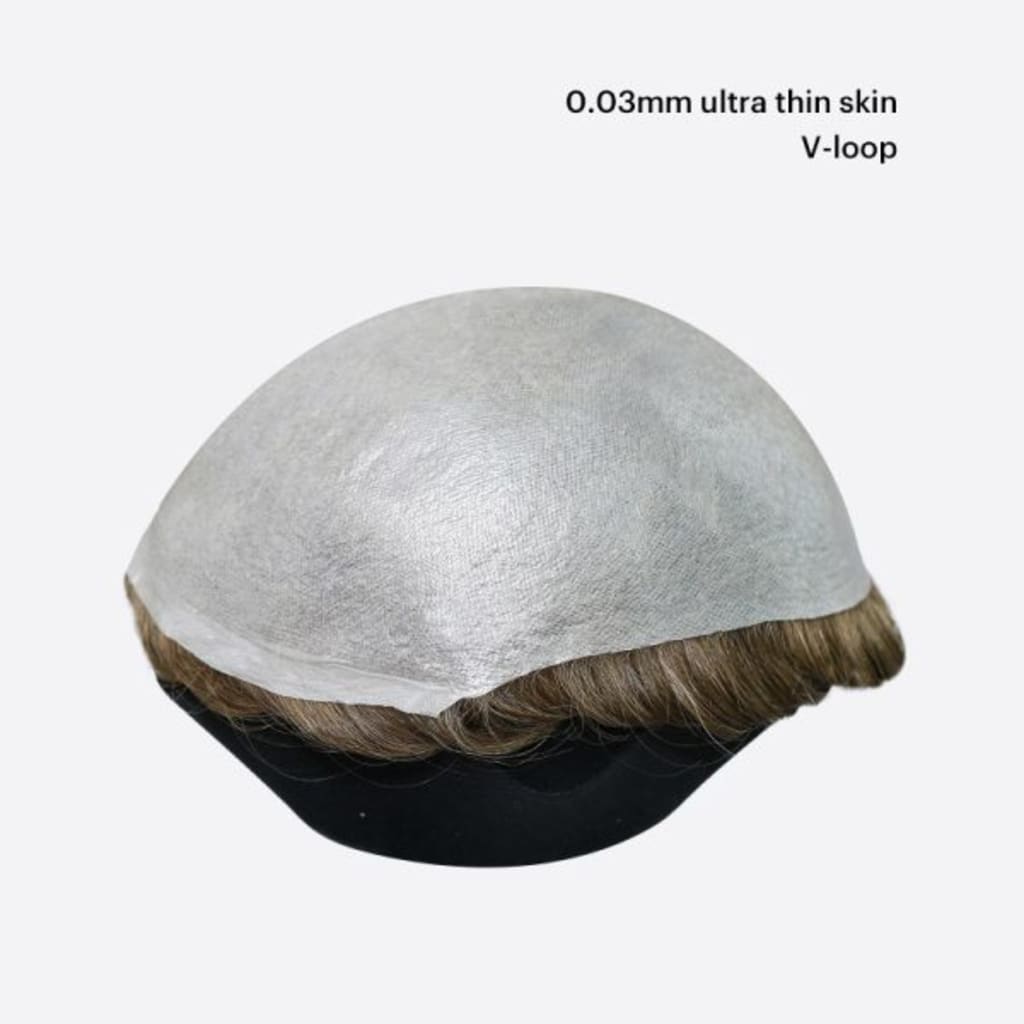
An ultra-thin hair patch can give you an incredibly realistic, undetectable hairline because it uses a very fine base. But this design creates a trade-off: the system's upfront price versus how long it will actually last.
Simply put, the thinner and more natural-looking the base, the less durable it is. That means you'll have to replace it more often, which drives up your total long-term cost.
The Core Trade-Off: A Head-to-Head Comparison
Choosing the right base thickness for your hair system is the single most important decision you'll make. It affects its appearance, durability, and the total cost. Each level offers a different balance between how real it looks and how long it lasts, which impacts both the upfront price and how often you'll need to replace it. Once you understand these trade-offs, you can pick the right system for your budget, lifestyle, and the look you want.
0.02-0.03mm "Hollywood" Skin: Maximum Realism, Minimum Lifespan
This base offers the highest level of realism and is almost invisible once it's on. It's often called "Hollywood" grade, and its main advantage is an invisible front hairline that looks like it's melting right into your skin. This is because the ultra-thin polyurethane is see-through, and it uses V-looped hair—a knotless technique where hair is injected into the base, creating the illusion of hair growing directly from your scalp.
But the trade-off for that incredible realism is that it's extremely fragile. The 0.02-0.03mm base is delicate and needs very careful handling, as it's prone to tearing when you're cleaning or reapplying it. Its lifespan is the shortest of all poly systems, meaning it needs to be replaced often. So, while a single unit might seem affordable, the ongoing cost makes it the most expensive option over time. It's best suited for special events or for experienced wearers who care more about a flawless look than anything else.
0.04-0.06mm "All-Rounder" Skin: The Balanced Daily-Wear Option
The 0.04-0.06mm thickness range is the industry standard for daily wear, offering a great balance between a natural look and practical durability. This base is thin enough to create a realistic and discreet front hairline that satisfies most people, yet it's strong enough to handle the demands of regular use. It perfectly balances a great look with a more reasonable replacement schedule.
This is the most popular choice for a reason: it delivers consistent, high-quality results without the intense maintenance or short lifespan of the ultra-thin models. The base is tough enough for routine cleaning and re-bonding, making it a great option for everyday life. For most people, this "all-rounder" gives you the perfect mix of an undetectable appearance and manageable long-term upkeep, offering strong value and predictable performance.
0.08mm+ "Workhorse" Skin: Prioritizing Durability and Budget
Polyurethane bases that are 0.08mm or thicker are designed mainly for longevity and affordability. This option is the most durable of all skin systems, built to handle serious wear and tear from active lifestyles, frequent handling, and repeated cleanings. The extra thickness means it's much stronger, drastically cutting down the risk of rips or damage during cleaning and making the unit last much longer.
Now, the front hairline of a "workhorse" system is less invisible up close than its thinner cousins, but its main benefit is the cost. The extended durability means you'll need replacements far less often, which significantly lowers the yearly cost. That makes it an excellent choice for first-time wearers learning to handle a system, people on a strict budget, or anyone who values low maintenance and maximum lifespan over getting the most seamless hairline possible.
Calculating the True Cost of Ownership (TCO)
What you'll actually spend on a hair system is more than just the initial price tag. To create a realistic budget, you need to calculate the Total Cost of Ownership (TCO), which includes the system's price spread out over time plus the ongoing costs for maintenance supplies. This way, you see how a system's durability directly impacts how affordable it is in the long run. When you break it all down, you can accurately predict your monthly and annual spending, making sure there aren't any financial surprises.
The Upfront Cost: What You Pay for the Hair Patch Itself
The price of a hair system mostly depends on the quality of the hair itself, not just the base material. Things like hair type, length, and density can really change the price, even for systems with the exact same base. For example, Remy human hair, where all the cuticles are aligned in the same direction to prevent tangling, costs more than standard human hair because it's higher quality and lasts longer. It also makes sense that systems with longer hair or higher density cost more—they simply take more hair and more work to make. That's why the initial purchase reflects these custom features, and it's usually the biggest single cost you'll have.
The "Hidden" Costs: Adhesives, Solvents, and Maintenance Products
The money you'll spend on supplies is a regular, non-negotiable part of wearing a hair system. You'll need things like adhesives for attachment, solvents for removal, and special cleansers to keep everything clean. Adhesives, which come as rolls of tape or liquid glue, hold the system to your scalp for daily or extended wear. You'll need solvents to safely dissolve that bond without damaging the base or your skin. On top of that, proper hygiene means you'll need scalp cleaners and shampoos made to get rid of residue without wrecking the system's materials. How much you spend on this stuff each month depends on your bonding method and how often you reapply, but it all adds up to a consistent ongoing cost that you have to factor into your budget.
Putting It All Together: Your Estimated Monthly Budget
To figure out your true monthly budget, you combine the monthly cost of the hair system itself with what you spend on supplies. It's simple: just divide the total price of the system by how many months it's expected to last. For instance, an ultra-thin "Hollywood" base might seem cheaper upfront, but you have to replace it every four to six weeks, which means it has a high monthly cost. On the other hand, a durable 0.08mm+ "workhorse" system may have a higher initial price, but you're spreading that cost out over several months, which makes the monthly cost much lower. When you add what you spend on tapes, adhesives, and solvents to this amount, you get a clear and predictable total cost of ownership. This calculation shows why a more durable system is often the more affordable option over time.
The Science of Durability: Factors That Impact Lifespan
How long a hair system lasts really depends on two things: how it's made and how you live. The materials and the way the hair is attached determine how durable it is to start with. But it's your daily routine, your environment, and your cleaning habits that control how fast it wears out. Once you get a handle on both of these, it helps you choose the right system and take care of it to make it last as long as possible.
Base Thickness and Ventilation: Why V-Loops Are So Fragile
The biggest thing affecting a hair system's durability is the ventilation method. That's just the fancy term for how individual hairs are attached to the base. Right away, you're looking at a trade-off: do you want a system that's perfectly invisible, or one that lasts longer? Systems designed to look incredibly real, especially those with ultra-thin skin bases, often use knotless methods that are naturally more fragile and shed more easily.
Ventilation methods basically come in two flavors: knotted and knotless. On lace and mono bases, the hair is typically tied with tiny, microscopic knots. These knots are a strong anchor for the hair, which really cuts down on shedding. The only downside is that you can sometimes see them if you look super closely. On the other hand, thin skin (poly hair system) bases often use knotless methods like V-looping. This is where each hair is looped through the base in a V-shape and sealed inside. It creates an amazing illusion of hair growing right out of your scalp, but it's not very secure. With every wash, comb, and just daily rubbing, those V-looped hairs can slowly work themselves loose and fall out. This speeds up hair loss and means you'll need a replacement sooner.
Your Lifestyle's Impact: How Activity, Climate, and Sleep Habits Affect Your Hair Patch
Your daily routine and environment have a huge say in how long your hair system will last. Things like working out, the climate you live in, and even how you sleep add stress—both chemical and physical—that can break down the hair, the base, and the glue. If you have an active lifestyle, you're going to sweat more. The chemicals in your sweat can weaken the adhesive bond. This forces you to remove and reapply it more often, which puts extra stress on the system over time.
Your environment also plays a big part. Swimming in chlorinated pools or saltwater strips moisture from the hair, leaving it dry, brittle, and more likely to break. Too much sun can also fade the hair's color and weaken it over time. Then there's friction, which is another major cause of wear and tear. The constant rubbing against a cotton pillowcase while you sleep can cause tangles and gradual hair loss. The same goes for wearing hats or helmets all the time—that friction can lead to shedding. Knowing this helps you take steps to protect your investment, like switching to a silk pillowcase or using a special swim cap.
Frequently Asked Questions
How are hair patches attached?
Adhesive. Plain and simple. You're looking at medical-grade liquid glue or specialized double-sided tape. It's applied to your scalp and the base of the patch. It needs to be secure, obviously, but also gentle enough not to irritate your skin. It's a daily or weekly routine, depending on the adhesive and how you live.
Can a hair patch be used for a receding hairline?
Absolutely. That's actually one of their main uses. Especially the ultra-thin ones. A receding hairline is right at the front, super visible. You need something that blends perfectly, something that looks like it's growing right out of your scalp. That's where these thin systems shine. They're designed for that kind of realism where it matters most.
How realistic do ultra-thin hair patches look?
Damn near perfect. That's the whole point of "ultra-thin" and those knotless ventilation methods like V-looping. They're engineered to be virtually undetectable, especially at the hairline. You get that natural scalp appearance, no visible knots, no obvious base. BUT, and this is a HUGE but, that extreme realism comes at a cost. Remember the trade-off? These systems are more fragile. V-loops? They shed more easily. You're choosing invisibility over raw durability. It's a constant battle, keeping that perfect look.
About the Creator
Alex Morgan
Written by Bono Hair’s content team — experts in professional hair replacement solutions and advocates for confidence, authenticity, and self-expression through modern hair systems.
Keep reading
More stories from Alex Morgan and writers in Styled and other communities.
Can You Recommend The Top Brands for French Lace Wigs?
The Ultimate Guide to Top Lace Wig Brands: Where Luxury Meets Realism In the modern beauty landscape, a lace wig is no longer just a solution for hair loss—it is a powerful fashion statement and a tool for self-expression. However, with an ocean of brands claiming to offer the "most natural look," finding the right one can feel like a daunting task.
By Alex Morgan16 days ago in Styled
PhotoGPT for Photoreal Beauty Service Branding and Client Before After Content
In beauty services, visuals are often the first point of trust. Before a consultation, a review, or a conversation, people form impressions through images. If photos feel overly edited or inconsistent, confidence drops quickly. If they feel natural, clean, and believable, they create reassurance.
By Abbasi Publisher4 days ago in Styled
The Pride Flag and the Diversion
For nearly a decade, the LGBTQIA Pride Flag rippled in the wind at Christopher Park, a kaleidoscope of color staked into the soil of America’s first national monument to LGBTQIA+ liberation. That flag came down this week. Federal officials, citing new guidance from the Trump Administration, silently lowered the rainbow flag from its pole across the street from the Stonewall Inn. The birthplace of the modern gay rights movement now flies only the United States flag.
By Tim Carmichael2 days ago in Pride



Comments
There are no comments for this story
Be the first to respond and start the conversation.