
The Beauty Standards I Unfollowed
Breaking free from a lifetime of filters, rules, and other people’s opinions.
The Beauty Standards I Unfollowed
By: Abdullah
When I was thirteen, my reflection became my enemy.
It wasn’t that I didn’t like my face before it’s that I had never really looked at it through the eyes of the world. That changed when I joined social media. Suddenly, I was scrolling past perfect cheekbones, airbrushed skin, and girls my age who seemed like they had stepped straight out of a magazine. I didn’t know their photos were filtered. I didn’t know their lighting was staged. I only knew that I didn’t look like them, and therefore, something must be wrong with me.
It started small. I tilted my head in every selfie to make my jawline sharper. I learned which side of my face was “better.” I refused to post pictures without makeup. I even wore a hoodie at the beach because my body wasn’t “bikini ready.” The beauty rules multiplied don’t smile too wide or you’ll get wrinkles, don’t cut your hair short or your face will look round, don’t eat that because carbs are the enemy.
Some of these rules didn’t even come from strangers — they came from people I loved. A family member once told me, “You’d be so pretty if you lost a little weight.” Another said, “Never leave the house without lipstick, you’ll look tired.” It was all meant as advice, but to me, it sounded like warning signs: You are not enough as you are.
By the time I was twenty, I had become an expert at presenting the “acceptable” version of myself. I filtered my photos. I avoided posting unless I thought I looked flawless. I measured my value in likes and comments. And yet, the more I chased beauty, the uglier I felt inside.
The Turning Point
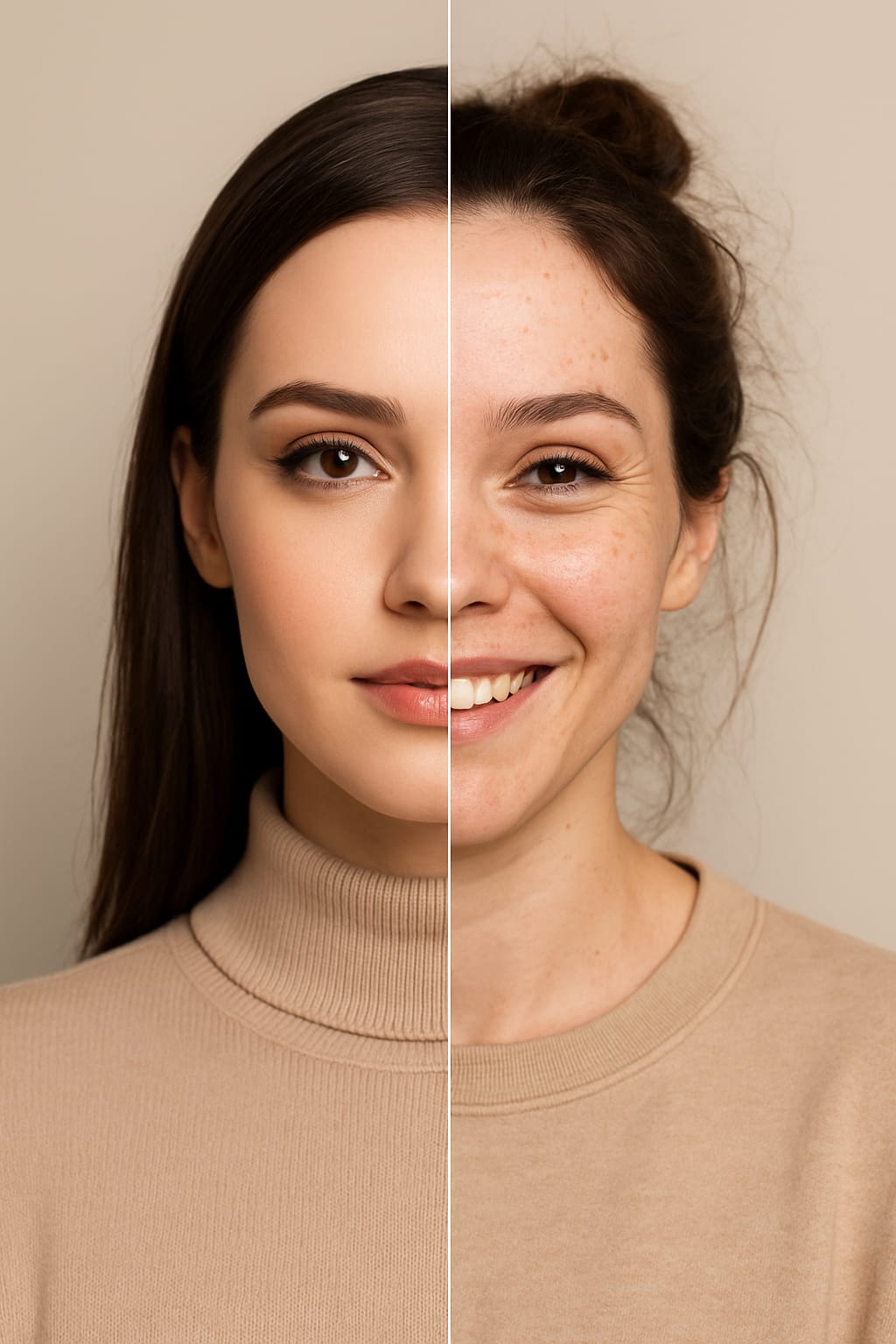
One night, scrolling through my feed, I saw a post from an influencer I had followed for years. She uploaded a raw, unedited picture next to her usual filtered version. The difference was shocking — and freeing. The “perfect” skin I had envied had texture. The tiny waist was the result of clever posing. The caption read: “This is what I actually look like. Don’t let the internet convince you otherwise.”
Something cracked open in me.
That night, I went through my Instagram and unfollowed every account that made me feel smaller. Not just influencers, but also friends who only posted overly staged, picture-perfect versions of themselves. It wasn’t personal I just needed space to breathe without comparison poisoning me.
I replaced them with accounts of people who looked like me, with different bodies, skin tones, and styles. I followed creators who proudly posted makeup-free selfies, women in their 50s and 60s glowing without Botox, plus-size fashion influencers who dressed boldly, and people with scars and stretch marks who weren’t hiding them.
The Standards I Let Go
1. “Thin is the only beautiful.”
I stopped equating my worth with my waistline. My body is not a before-and-after project it’s my home.
2. “You must hide imperfections.”
I let my skin breathe. Yes, I get breakouts. Yes, my pores are visible. That’s called being alive.
3. “Pretty is polished.”
I stopped apologizing for messy hair, chipped nails, or the days I look tired. I am not a product; I am a person.
4. “Dress for your body type.”
I started wearing what I love, not what “flatters” me according to outdated fashion rules. If I feel good, I wear it.
5. “Aging is the enemy.”
I decided I want laugh lines. I want proof that I lived fully, not fear of looking older.
What Happened Next
At first, letting go of these standards felt like walking outside without armor. I worried people would notice I wasn’t “trying” anymore. But here’s the secret: nobody cares as much as we think they do.
What they did notice was my confidence. My smile became easier. I took pictures because I wanted to remember moments, not because I thought I looked good. I laughed more. I wore clothes I actually liked instead of ones that were “safe.”
And ironically, I started getting more genuine compliments. Not “You’re so pretty” but “You look so happy” or “You seem like yourself.” Those words meant more to me than any filter ever could.
Why It Works
This shift works because it’s sustainable. Filters and beauty rules are an endless race there’s always a new flaw to fix, a new trend to follow. But living authentically is a finish line you can actually reach and stay at.
Unfollowing beauty standards didn’t mean I stopped caring about how I look. It meant I stopped caring about looking perfect for other people. I still wear makeup sometimes but it’s because I like it, not because I think I have to. I still enjoy dressing up but for my own joy, not for approval.
The moment I stopped chasing beauty, I started living it.
If you’re reading this and feeling the same exhaustion I once felt, I want you to know: you are already enough. You don’t need permission to take up space, to smile without posing, to wear what makes you feel alive.
The beauty standards you follow are optional.
And the ones you unfollow?
They might just set you free.
About the Creator
Keep reading
More stories from Abdullah Khan and writers in Styled and other communities.
Top 5 Laco Watches Every Collector Should Own in 2026
Laco is a name that has a lot of history. This company has more than 100 years of experience in making watches that tell more than the time. They have a tradition of constructing tool watches tailored to pilots, divers, and explorers seeking a tool that they could rely on with their lives.
By Arfa Gravity5 days ago in Styled
What Are the Best Structured Dresses for Corporate Offices?
Dressing for a corporate office often requires a careful balance between professionalism and personal style. While traditional business attire once leaned heavily on suits and separates, modern workplaces have gradually embraced more versatile options. Among them, structured dresses have become one of the most reliable choices for women navigating professional environments.
By BTK COLLECTIONa day ago in Styled
Becca
"Everything is so... flat." Denille said stupidly as she looked around her new neighborhood. She looked around at the muted desert where even the smallest sign of life seemed to have given up. The plant life was shrubs that were half cooked by the heat and where there should have been a lawn, a mess of white rocks laid glistening in the sun. Even the sky looked stretched thin, like the sun had ironed it smooth. She’d moved from Riverside, where at least there were hills, but here in Barstow, everything felt baked and brittle.
By Sara Wilsona day ago in Fiction



Comments (1)
Nice