
Smart Textiles: Shaping the Future of Wearable Technology in the Apparel Industry
Smart Textiles: Weaving Technology into the Future of Fashion

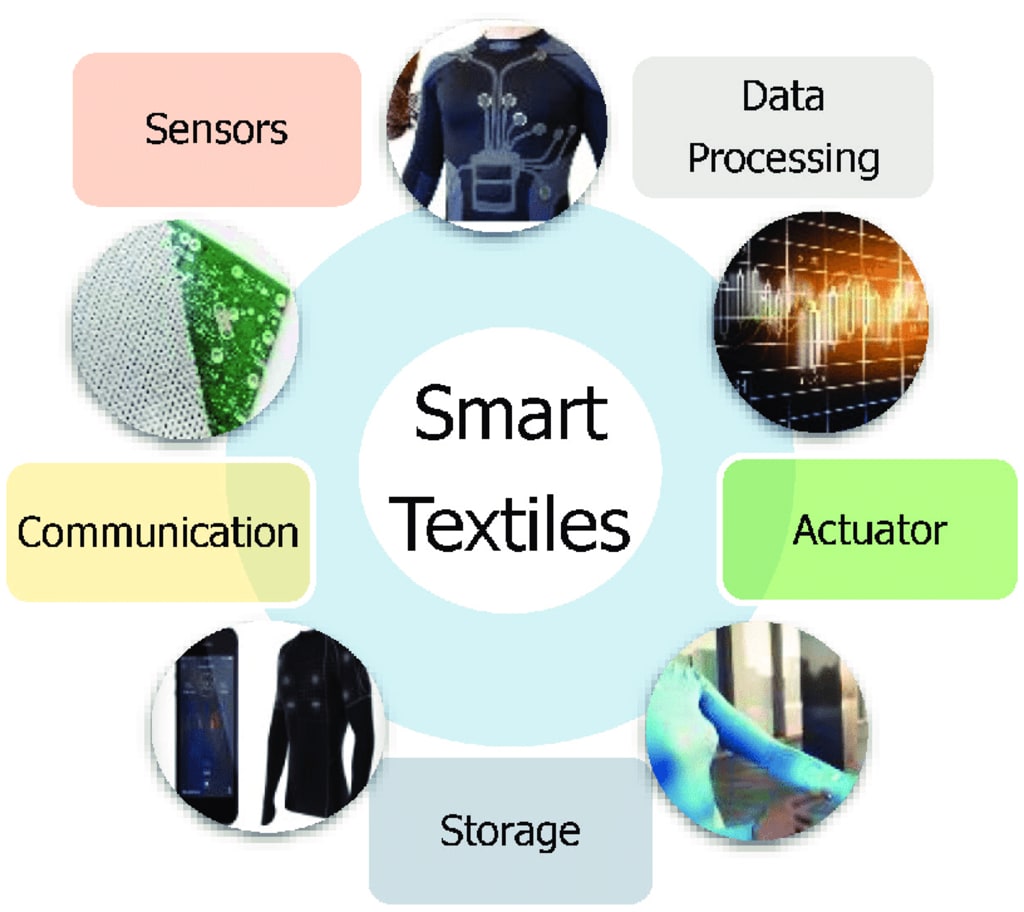
The fusion of technology and fashion has ushered in a transformative era for the apparel industry, with smart textiles standing at the forefront of this revolution. Also referred to as e-textiles or intelligent fabrics, smart textiles are materials embedded with electronic components—such as sensors, microcontrollers, actuators, and conductive yarns—that enable them to sense, react, and adapt to environmental stimuli or user input. As consumer demands evolve toward more functional, interactive, and health-conscious garments, smart textiles offer an exciting glimpse into the future of clothing that does more than cover and protect—it connects, analyses, and enhances daily life.
1. What Are Smart Textiles?
Smart textiles are fabrics integrated with digital or electronic technologies that add functionality beyond traditional textile use. They can respond to stimuli like temperature, pressure, humidity, or even a user’s biometric data. These textiles may either be passive, merely sensing and reporting information, or active, capable of reacting in real time by changing colour, shape, temperature, or providing haptic feedback.
There are generally three classifications of smart textiles:
- Passive Smart Textiles: Only sense the environment (e.g., temperature-sensing shirts).
- Active Smart Textiles: Sense and react (e.g., shape-memory fabrics, self-heating jackets).
- Ultra-Smart Textiles: Contain processing units to make decisions (e.g., military uniforms that detect chemical threats and signal a warning).
2. Applications in Apparel
Smart textiles are revolutionizing apparel across various sectors, including:
a. Health & Wellness Monitoring:
Wearable garments can now track heart rate, respiratory function, muscle activity, and even hydration levels. Examples include compression shirts with embedded ECG sensors or socks that detect early signs of diabetic foot ulcers. This innovation provides real-time health tracking without the need for external devices.
b. Sports & Fitness:
Athletic wear with smart fabric tracks performance metrics like speed, cadence, posture, and recovery. Companies like Hexoskin and Athos have developed apparel that delivers insights on muscle effort and breathing patterns, allowing athletes to optimize training and prevent injury.
c. Fashion & Aesthetics:
Smart fabrics are making waves in haute couture and everyday wear. Designers use LEDs, fibber optics, and thermochromic inks to create garments that change colour or display messages in response to environmental cues or user input. It's fashion that not only makes a statement but interacts with the world around it.
d. Military & Défense:
Military-grade smart textiles enhance soldier performance and safety through features like ballistic protection, temperature regulation, or camouflage that adapts to surroundings. Uniforms can be equipped with biometric sensors for vital signs and GPS trackers for real-time location monitoring.
e. Workplace Safety:
In hazardous occupations such as mining or firefighting, smart apparel can alert wearers to toxic gas exposure, extreme temperatures, or prolonged periods without movement, helping to reduce injuries and save lives.
f. Everyday Use and Connectivity:
Imagine jeans that charge your phone or a jacket that controls your music playlist. Smart textiles integrated with Bluetooth and Wi-Fi can allow for seamless connectivity, enabling users to control smart home devices, receive call notifications, or use voice assistants—right from their clothes.
3. Technological Components Behind Smart Textiles
Several innovations drive the capabilities of smart textiles, including:
- Conductive Fibbers and Threads: These fibbers transmit electrical signals and are key to integrating sensors into fabrics without compromising comfort or flexibility.
- Flexible Sensors: Used to measure physiological parameters like temperature, heart rate, and muscle strain.
- Microcontrollers and Power Sources: Tiny computing units and compact, flexible batteries embedded in garments help manage data collection and communication.
- Wireless Communication Modules: Enable smart clothing to sync with smartphones, apps, and cloud platforms for data storage and analysis.
4. Challenges in Smart Textile Development
Despite the promise of smart textiles, there are still several hurdles to overcome:
a. Durability and Wash ability:
Textiles must withstand repeated washing, friction, and environmental exposure without degradation in performance. Making electronic components waterproof and stretch-resistant is still a significant challenge.
b. Power Supply Integration:
Smart textiles require a reliable and lightweight power source. Developing long-lasting, flexible batteries that are safe and unobtrusive remains a focus area.
c. Data Privacy and Security:
As garments collect and transmit sensitive biometric data, ensuring secure data encryption and user privacy is critical, especially in medical and military applications.
d. Cost of Production:
Currently, smart textiles are often expensive due to the complexity of production and limited scale. Making them affordable and scalable is key to widespread adoption.
5. Market Trends and Growth Potential
According to industry research, the global smart textiles market is projected to grow significantly, with estimates placing it at over $13 billion by 2030. This surge is driven by increased adoption in healthcare, sports, and military sectors, as well as consumer demand for more personalized, functional clothing.
Tech giants like Google, Apple, and Samsung are investing in smart clothing projects, while apparel leaders such as Levi’s, Adidas, and Under Armour are collaborating with tech companies to develop connected garments. For instance, Google’s Project Jacquard introduced a touch-sensitive denim jacket that allows users to control their phone through gestures on the sleeve.
6. The Sustainable Side of Smart Textiles
In addition to functionality, many smart textiles are being developed with sustainability in mind. Self-heating clothing can reduce the need for external heating, while garments that monitor health can reduce dependence on medical devices and unnecessary hospital visits. Moreover, as e-textile technology evolves, the use of biodegradable sensors and energy-harvesting fabrics could further reduce the environmental footprint of wearable electronics.
7. The Future Outlook
As the boundary between clothing and technology continues to blur, the next decade promises a rise in everyday garments that are not only stylish but also intelligent and responsive. Advancements in nanotechnology, AI integration, machine learning, and material science will enable smarter, lighter, and more intuitive apparel.
In the near future, we can expect:
- Clothes that automatically adjust to climate changes.
- Outfits that track your emotional state and recommend stress-reducing exercises.
- Uniforms that call for help when vital signs drop suddenly.
- Office wear that boosts posture and reduces fatigue.
Conclusion
Smart textiles represent a significant evolution in the world of wearable technology and apparel industry. With applications spanning from health monitoring to entertainment and workplace safety, their integration into everyday life is rapidly becoming more practical and widespread. As technology becomes more seamlessly woven into the very fabric we wear, the possibilities for innovation and transformation in fashion and function are truly limitless. The convergence of textiles and technology is no longer a futuristic concept—it's a present-day reality shaping the way we dress, move, and interact with the world around us.
About the Creator
textilenews
publisher
Keep reading
More stories from textilenews and writers in Styled and other communities.
Trump’s Tariffs Shake Global Fashion: Shein’s Chinese Suppliers Shut Down in Sudden Blow to Fast Fashion
In a seismic shift reverberating through the global fashion industry, the reintroduction and tightening of tariffs under Donald Trump’s renewed economic policies have forced a wave of shutdowns among Shein’s Chinese suppliers. Once considered untouchable in the digital age of fast fashion, Shein’s supply chain—built on hundreds of small, agile manufacturers across China—has been hit hard by the sudden escalation of trade tensions. The tariffs, aimed at curbing Chinese imports and protecting U.S. manufacturing, have had unintended yet profound consequences for the fashion ecosystem, disrupting production, delaying deliveries, and reshaping consumer pricing. This unexpected twist is redefining the future of global retail, prompting brands, manufacturers, and consumers to adapt or fall behind.
By textilenews9 months ago in Styled
Top 10 Tigre Rosa Heels Loved by Fashion Influencers in 2026
Dubai’s fashion landscape in 2026 is all about statement design, craftsmanship, and meaningful luxury, and no brand captures this spirit quite like Tigre Rosa. Blending Italian artisanal footwear with symbolic aesthetics, Tigre Rosa heels have become a must-wear among fashion influencers, style icons, and trendsetters not just in the UAE — but across the global fashion scene.
By tigrerosaofficial5 days ago in Styled
Dhoti Salwar for Haldi, Mehndi & Pre-Wedding Functions
Pre-wedding functions like haldi and mehndi are all about colour, movement, and comfort. These are the events where you sit on the floor, laugh a lot, get your hands painted, and stay dressed for hours. That’s exactly why, in recent years, dhoti salwar has become a favourite choice for these celebrations. It offers the festive feel of ethnic wear while staying easy to move in something every haldi and mehndi outfit should do well.
By Amit Mandal4 days ago in Styled
Miss Persephone's Manual to a Seemingly Ordinary Life
Miss Persephone was found at the dining table, her blue eyes swollen, her tears arriving and retreating like the tides of the ocean. Earlier that day, her family had visited her in the retirement home where she had lived for eight years. It was her eightieth birthday.
By Imola Tóth4 days ago in Fiction


Comments
There are no comments for this story
Be the first to respond and start the conversation.