
Regional Styles of Navratri Lehengas: Gujarat to Maharahtra
This blog talks about different styles of lehengas for navratri according to the different regions of India
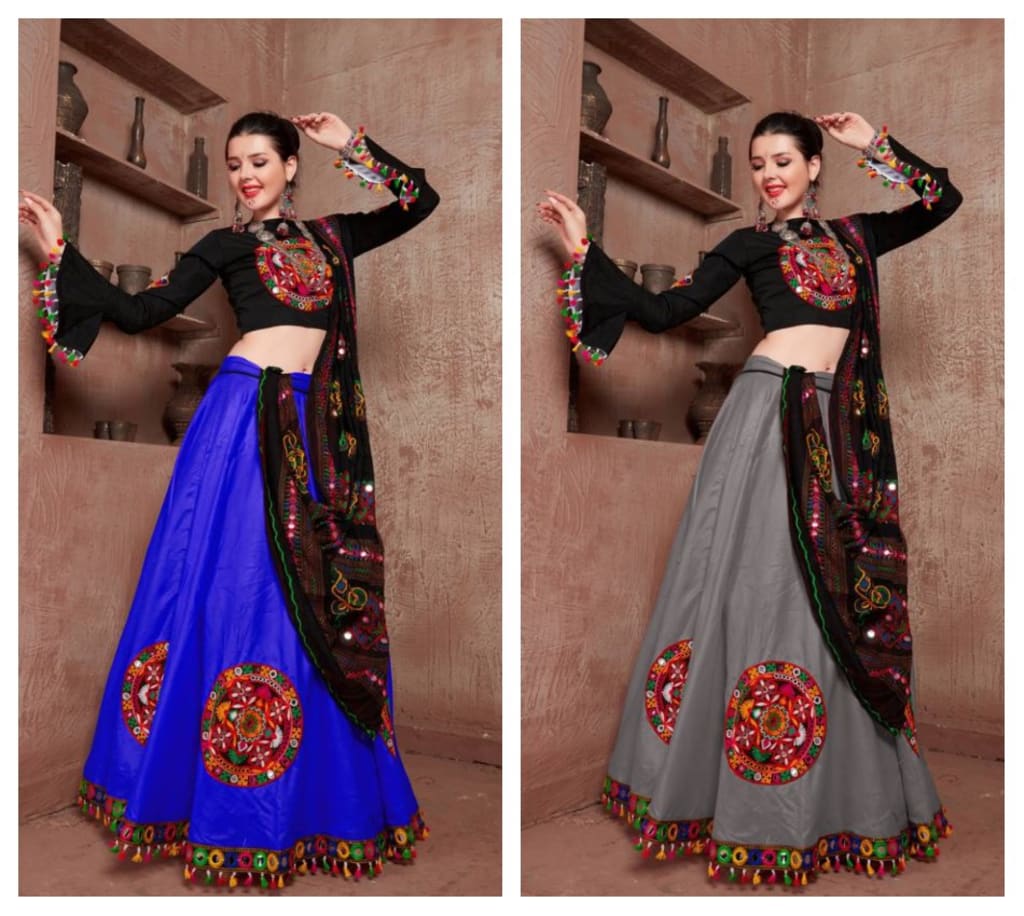
Navratri is certainly one of the most colorful and lively festivals in India! It is, after all, nine nights of worship, dance and a plethora of bright garments! Although the festival is about spirituality and worship, it is also a cultural celebration of music, traditions and of course- fashion! Out of all the fashions we don for this festival, lehengas have a separate spotlight. With their sweeping skirts and grandiose nature, lehengas are certainly the ultimate outfit for Garba and Dandiya nights. However, lehengas for Navratri do not appear identical everywhere. For one, the same lehenga can look oh-so-different regionally! So each state may add their own twist based on their own traditions. This dissimilarity is evident based on even the way lehengas follow different customs during Navratri, from Gujarat to Maharashtra to Uttar Pradesh! Therefore, there are many different styles, all specific to each region, making
The Gujarati Charm of Navratri Lehengas
Gujarat is the birthplace of Garba and Dandiya Raas, so it definitely plays a big role in our dressing for Navratri season. Gujarati are bright and bold with lots of mirror work, large embroidered design elements. The chaniya choli of Gujarat is one-of-a-kind with respect to anything in the western world where there may possibly be a little bit of handwork but nothing with tiny mirrors, shells, beads, bright colored threads and everything in between. Each lehenga tells a story of folk art and none will look alike. Most Gujarati lehengas will have a flared skirt that allows for lots of wide spins and bright turns on stage.
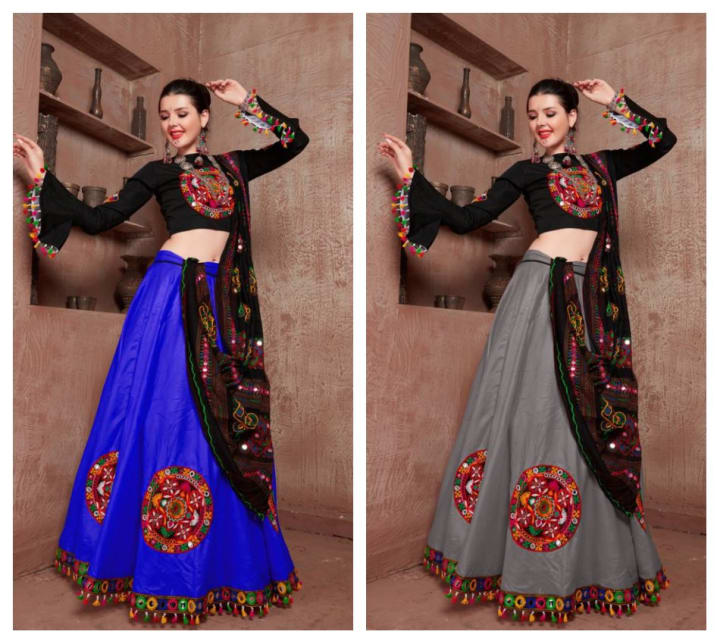
An important part of the Gujarati lehenga is the dupatta, which is usually worn across the shoulders with a simple drape. Many patterns are seen including scenes from folk tales that usually have figures, flora, peacocks or geometric patterns so the look offers a rustic but celebratory vibe. For many people, putting on a Gujarati style Navratri lehenga is not just a fashion sense; it is also a way to reconnect to the roots of Garba, and the cultural importance to Gujarat.
Rajasthani Influence on Navratri Lehengas
Although Navratri is most recognized for the vibrant celebrations in Gujarat and Maharashtra, the Rajasthani style has a strong influence on festive wear. Rajasthani lehengas have bandhani prints, gota patti work, and colorful tie and dye fabrics. The lehengas are typically cotton, silk, or georgette fabric, which feels great for hours of wear while dancing. The lehengas are big on bold colorful styles with red, orange, yellow and green reflecting the festival and the bright spirit.
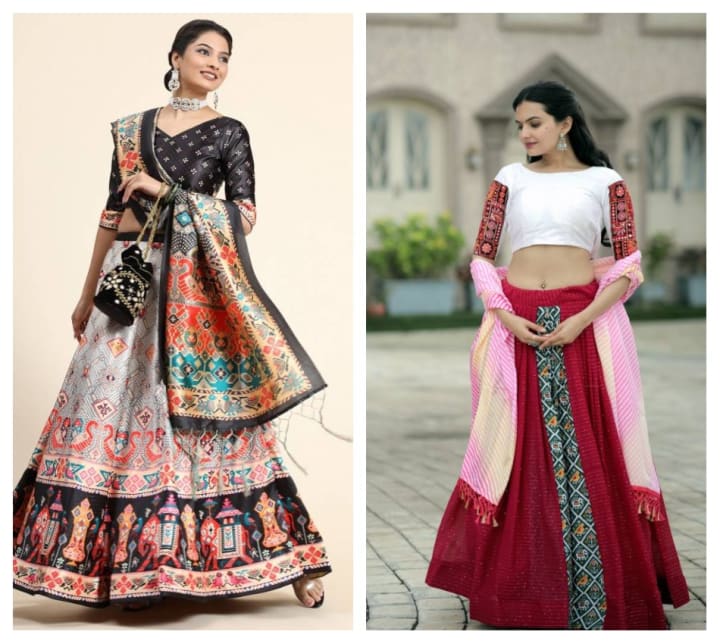
The choli or blouse on Rajasthani women's style is embellished with mirror embellishments or fine embroidery, and the dupatta is generally layered with heavy borders. The use of jewelry such as oxidized silver or kundan completes this look, while Rajasthani lehengas bring a royal quality to a Navratri celebration.
Maharashtrian Touch to Navratri Lehengas
The Maharashtra Navratri lehengas look a bit different from other regional lehengas. Traditional Maharashtrians tend to wear nauvari saree for festive occasions, but we are seeing an increase in demand for lehengas, especially in the millennial and GenZ category. The lehenga style in Maharashtra incorporates contemporary cuts with traditional motifs, meaning this is an easy space for both brides and festive wearers to fuse together.
Maharashtrian navratri lehengas typically have a Paithani style print or have motifs from the famed Paithani saree. The skirts and dupattas have peacock and lotus motifs and incorporate golden zari (silver or gold thread weaves that can be woven in the fabric) as a print. For lehengas, the colors tend to be rich and deep - such as royal blue, maroon, and emerald - all of which reflect the joy of the grandeur of our traditions. Women also wear accessories with their lehenga that reflect their culture: a nath, chandrakor bindi, green glass bangles etc., which gives a cultural essence that is different than other regions.
Blending Regional Styles
The sheer melting pot of different styles on the dance floor is what makes Navratri unique. For example, a Garba night in Mumbai can have Gujarati chaniya cholis next to lehengas inspired by Maharashtrian fashion and merged with Rajasthani prints. Young women truly love to mix, whether that means a Gujarati skirt with a Rajasthani dupatta, or a Maharashtrian inspired blouse with a colorful Gujarati lehenga! This blend is still very traditional but provides opportunity for individuality of expression.
About the Creator
Keep reading
More stories from Samir Nair and writers in Styled and other communities.
Celebrity Inspired White Lehenga Styles You Can Try
Historically, the color white has always signified innocence, purity, grace, reverence, and sophistication. In the realm of Indian ethnic fashion, we have now ushered in a timeless ethnic garment, wrap your head around it, the white lehenga; a vibrant piece that falls beautifully right at the intersection of traditional and modern sophistication. Whether you're attending weddings, receptions, large family events, festivals, parties, etc. the white lehenga is the ultimate piece that speaks of versatility and offers infinite styling options! If you are inclined to reproduce styles that are actionable like the celebrities you admire, here are some lehenga dress styles you can wear that will inspire attention.
By Samir Nair5 months ago in Styled
FREE THE NIPPLE. BURN THE BRA. APOLOGISE TO OUR SPINES.
There are few things in modern life as quietly infuriating as the social expectation that women should strap themselves into uncomfortable, restrictive underwear every single day for the emotional comfort of strangers. Not safety. Not warmth. Not even practicality. Comfort. Specifically men’s comfort. Because somewhere along the way, we collectively decided that a woman’s nipple is a public threat, while a man’s nipple is background furniture.
By No One’s Daughter7 days ago in Styled


Comments
There are no comments for this story
Be the first to respond and start the conversation.