
Philippines Luxury Goods Market: Rising Wealth, Global Brands & Evolving Premium Lifestyles
How economic expansion, luxury retail growth and digital access are transforming premium purchases in the Philippines

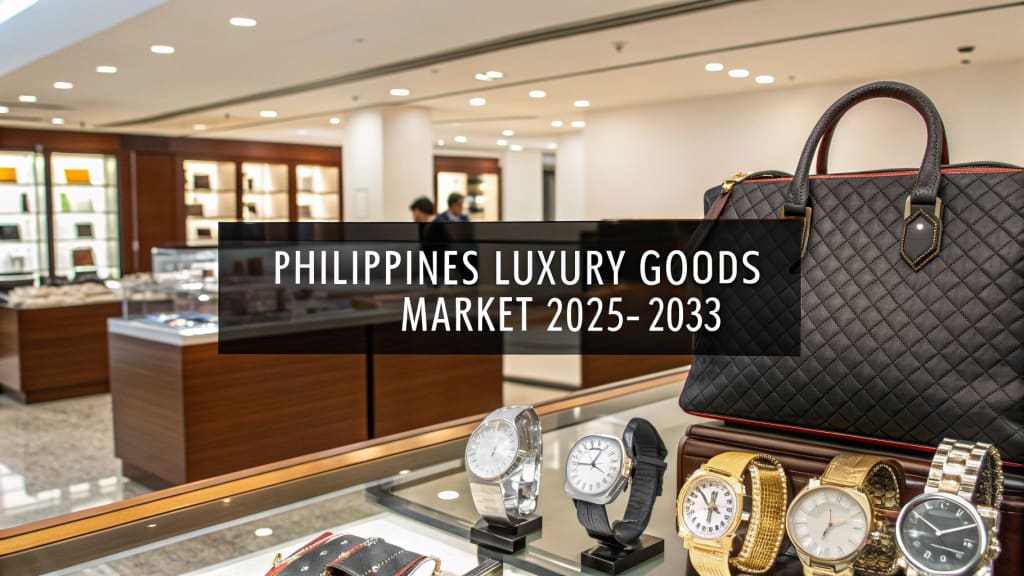
The luxury goods market in the Philippines is gaining traction as affluent consumers, tourism growth and online luxury retail combine to create a more dynamic premium goods environment. The market reached USD 2.88 billion in 2024 and is projected to grow to USD 4.39 billion by 2033, representing a CAGR of 4.40% during 2025-2033.
What’s fueling luxury demand?
Several key factors are driving this market:
• Rising disposable incomes and growth of the affluent and upper-middle-class segments are increasing premium spending power among Filipino consumers.
• The appeal of international luxury brands remains strong—status, exclusivity, celebrity associations and social-media influence all matter.
• Expanding retail infrastructure—luxury boutiques, department stores and duty-free outlets in key cities like Manila and Cebu—combined with expanding e-commerce channels give luxury brands new visibility and reach.
• Tourism and travel retail contribute meaningfully: visitors from other markets often engage in luxury shopping, and local consumers are also increasingly travelling and shopping premium goods abroad, which feeds back into demand domestically.
Segmentation & key themes
Data shows the luxury goods market in the Philippines breaks down across product categories, distribution channels and consumer segments:
• Product type: Watches & jewellery, bags & leather goods, apparel, footwear, cosmetics & fragrance. The report notes unique local demand for handcrafted luxury items and brands incorporating Filipino materials and design heritage.
• Distribution channel: Both offline boutiques and online luxury retail are important. While physical flagship stores remain a key part of the luxury experience, e-commerce and social-commerce channels are gaining ground.
• Consumer behaviour: Demand is particularly strong among younger, brand-aware consumers, influenced by social media, celebrity endorsements and global fashion trends. As spenders become more conscious about design, authenticity and exclusivity, luxury brands are adapting.
What the Opportunities Are
The Philippines luxury goods market presents attractive openings for brands, retailers and investors:
• Designer collaborations and local styling: Luxury brands that incorporate Filipino artistry or offer localized editions (e.g., leveraging native materials, cultural themes) can connect more deeply with local consumers who value both global luxury and local identity.
• Digital-first luxury retail models: Brands building strong online platforms, private-client portals and social-commerce experiences can capture younger affluent shoppers who expect seamless digital and offline integration.
• Luxury deals and experiential retail: Luxury is increasingly about experience—not just the product. Flagship stores offering personalised services, VIP events, celebrity access, and unique in-store experiences can differentiate in a competitive market.
• Duty-free and tourism channels: With the Philippines growing its tourism and travel-retail infrastructure, luxury brands have a chance to capture high-spend travellers while also converting domestic shoppers into premium buyers.
• Value offerings and premium accessibility: While exclusivity remains important, brands that balance premium design with “entry-luxury” items or accessible categories might capture growing demand from the emerging upper-middle segment.
Recent News & Developments in the Philippines Luxury Goods Market
• Jul 2025: A major luxury house opened its first flagship store in Makati with a custom capsule collection inspired by Filipino craftsmanship and celebrated local celebrities at the launch—underscoring rising local luxury-brand collaborations and the premium retail expansion.
• Sep 2025: E-commerce data revealed that online luxury goods purchase volume in the Philippines grew by 25% year-on-year in H1 2025, driven by younger affluent consumers and improved payment/logistics infrastructure.
• Oct 2025: A luxury retailer announced a “sold-out” limited-edition series of high-end watches exclusively for the Philippine market, resulting in a 40% premium above global MSRP—showing local willingness to pay for exclusivity and rare design deals.
Why Should You Know About Philippines Luxury Goods Market?
You should know about the Philippines luxury goods market because it gives you insight into a fast-evolving premium consumption landscape in Southeast Asia. The market reflects how design, celebrity influence and deals converge with consumer wealth, digital access and lifestyle shifts. Whether you’re a designer looking to expand, a brand building luxury positioning, an investor judging growth potential or a retailer mapping new markets—this sector shows where value is being created. The Philippines isn’t just a “emerging luxury market” label—it’s a place where global brands, local culture and new consumption behaviours meet to generate real opportunity.
About the Creator
Amyra Singh
Market research analyst who loves spotting patterns, digging into data, and turning insights into strategies that help brands grow and stay ahead of the curve.
Keep reading
More stories from Amyra Singh and writers in Styled and other communities.
The Philippines Clothing Market: Fashion Revolution in Southeast Asia
A Market on Fire: The Numbers Don't Lie The Philippine clothing market is booming like never before. Industry reports show the apparel sector growing at an impressive rate, fueled by a perfect storm of economic growth, urbanization, and changing consumer preferences. Young Filipinos, who make up nearly 60% of the population, are driving unprecedented demand for both local and international fashion brands.
By Amyra Singh5 months ago in Styled
Plus Size Salwar Kameez Designs That Don’t Cling or Pull
Finding a plus-size salwar kameez that feels comfortable all day long shouldn’t be complicated, but too often, women end up in outfits that cling, pull, or feel tight in all the wrong places. In 2026, the trend is shifting toward designs that flatter naturally without squeezing or pulling, and the best part is that these looks don’t sacrifice style for comfort. This blog showcases the best plus-size salwar kameez designs that provide ample room to move, breathe, and feel confident, whether you’re attending a family event, heading out for a festive dinner, or simply stepping outside for a casual lunch.
By Amit Mandalabout 2 hours ago in Styled
Hand-Tied vs. Machine Wefts: The Ultimate Guide to Choosing Your Perfect Extensions
In the world of professional hair extensions, "wefts" are the gold standard for adding significant length and volume. However, the choice between Hand-Tied Wefts and Machine Wefts often leaves clients—and even some stylists—uncertain.
By Emma Smith3 days ago in Styled


Comments
There are no comments for this story
Be the first to respond and start the conversation.