Latest Stories
Most recently published stories in Styled.
Perfume Market Size and Forecast 2025–2033. AI-Generated.
Global Perfume Market Overview The global perfume market is experiencing a robust transformation, driven by evolving consumer preferences, rising disposable incomes, and the rapid digitalization of retail channels. According to Renub Research, the Perfume Market is expected to reach US$ 95.97 billion by 2033, up from US$ 56.66 billion in 2024, registering a healthy CAGR of 6.03% from 2025 to 2033.
By Marthan Sir15 days ago in Styled
A Practical Approach to Better Garment Fit. AI-Generated.
Tailoring is often seen as a straightforward task that begins with taking measurements and ends with stitching fabric into a finished garment. However, in actual practice, tailoring requires skill, observation, and careful planning to achieve the right balance. A single overlooked detail can affect the entire outcome of a garment. One of these details is to tailor around the navel and check the fabric before cutting. When a tailor starts a new garment, measurements are usually the first step. Shoulder width, sleeve length, chest size, waist, and overall length are noted carefully. Among these measurements, the navel or mid-body area plays a critical role. This section determines how the garment hangs on the body and whether it feels comfortable during movement. A small miscalculation here can make a shirt look tight, loose, or unbalanced. Tailoring the navel does not mean focusing on one single point. Knowing how the upper and lower bodies connect is necessary. Every measurement affects structure and balance from one shoulder bone to the other and from the shoulder to the wrist. If the shoulders are wide but the mid-body is not planned correctly, the garment will not sit naturally on the wearer. Despite accurate measurements, many tailoring problems begin with fabric handling. Material, weave, and quality all affect how a fabric behaves. Some fabrics stretch, some shrink, and others lose shape over time. This is why reviewing the fabric before cutting is one of the most important steps in tailoring. Unfortunately, many tailors overlook this step due to time pressure or overconfidence. A common issue faced in tailoring shops is fabric shortage. Sometimes, tailors start cutting right away because they think the cloth they are given is sufficient. Later, they realize there is not enough fabric for sleeves, hems, or finishing details. Once the fabric is cut, there is no solution except compromise. This affects garment quality and customer satisfaction. Defects can also be identified through fabric inspection. Small holes, weak threads, stains, or weaving flaws may not be visible at first glance. These issues frequently surface following washing or stitching. By checking fabric carefully under proper lighting before cutting, a tailor can avoid placing important garment sections on damaged areas. Another important factor is fabric grain direction. Cutting against the grain of the fabric can result in twisting and discomfort. This becomes especially noticeable around the navel and waist area, where balance is crucial. Proper alignment ensures that the garment moves naturally with the body and maintains its shape over time. The right fabric planning also affects the length of the shirt and pants. Regardless of the quality of the stitching, a shirt that is either too long or too short can ruin its appearance. Bad ankle-breaking pants affect posture and self-assurance. These issues usually trace back to rushed cutting and lack of fabric review. Professional tailoring is not about working fast. It is about working carefully. A skilled tailor is aware that taking a few extra minutes to examine the fabric and review the measurements can save hours of later correction. Planning before cutting saves material, time, and reputation. In the end, tailoring the navel represents attention to balance and structure. It reflects the tailor’s understanding of the human body and fabric behavior. The finished garment is more comfortable, looks more natural, and lasts longer when the measurements and fabric work together. True tailoring begins long before the scissors touch the cloth.
By Muhammad Adnankhan16 days ago in Styled
Beyond the Sparkle: A Guide to Choosing 1ct Oval Engagement Rings
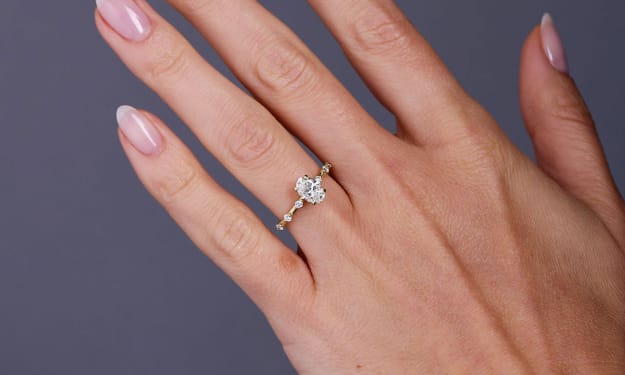
Choosing an engagement ring is perhaps one of the most daunting yet exhilarating tasks a person can undertake. It’s not just about the gold or the stone; it’s about a promise captured in a physical form. Recently, there has been a significant shift in what couples are looking for. The spotlight has moved away from traditional circles and squares, landing firmly on the graceful silhouette of 1ct oval engagement rings.
By layladiamondkaish16 days ago in Styled
The Hidden Geometry of Love: Why the 1ct Oval Diamond is Taking Over the World
Every engagement ring tells a story, but some stories are told more eloquently than others. In the past decade, we have seen a massive shift in bridal trends. While the classic round brilliant cut held the throne for nearly a century, a new contender has emerged as the favorite for the modern aesthetic: the 1ct oval diamond.
By layladiamondkaish16 days ago in Styled
How an AI Shopping Assistant Made Me Rock My College Days
College was supposed to be this era where I magically walked into adulthood looking effortlessly stylish every single day. Spoiler alert: I did not. The first month looked like the bloopers reel of my own fashion documentary. Mismatched outfits. Panic buying. Borrowing clothes like it was a survival strategy. And the ultimate enemy I did not recognize until later: decision fatigue.
By Amelia Davis16 days ago in Styled
5 Essential Mistakes to Avoid When Buying a 1ct Oval Diamond Ring
Buying an engagement ring is one of the most significant emotional and financial decisions you will ever make. It is a symbol that will be worn every day for decades. Among the various diamond shapes available today, the oval cut has skyrocketed in popularity. Its unique ability to combine the classic brilliance of a round diamond with a more modern, elongated silhouette makes it an irresistible choice for many brides-to-be.
By Mohd Kaish16 days ago in Styled
Lab-Grown vs. Natural Diamonds: Which is Better for a 1ct Engagement Ring?
The jewelry industry is witnessing a revolutionary shift. For decades, natural diamonds were the only choice for a romantic proposal. However, the rise of lab-grown technology has sparked a massive debate among modern couples. If you are currently shopping for a 1ct oval diamond ring, you might be wondering: Should I go for the tradition of a natural stone or the modern value of a lab-grown one? Both options have their unique merits, and understanding the differences is key to making a confident investment.
By Mohd Kaish16 days ago in Styled
The Timeless Allure of 1ct Oval Diamond Rings: A Comprehensive Buyer’s Guide
An engagement ring is more than just a piece of jewelry; it is a profound symbol of love, commitment, and a new chapter in life. While trends come and go, the 1ct oval diamond ring has emerged as a frontrunner in the bridal world. Combining the classic brilliance of a round diamond with a unique, elongated silhouette, the oval cut offers a sophisticated aesthetic that appeals to both traditional and modern brides. In this guide, we will explore why the 1-carat oval diamond is the "sweet spot" for many and how to choose one that offers the best value and sparkle.
By Mohd Kaish16 days ago in Styled