
How to Pick the Perfect 3D Printed Shoes for Your Needs
3D Printed Shoes Buying Guide


The Future is Underfoot
A few years ago, mentioning "3D printed shoes" likely evoked images of stiff, heavy prototypes or expensive toys for geeks. However, in 2025, the footwear industry is undergoing a silent yet seismic revolution. Driven by innovative brands like ARKKY and explosive technological growth, 3D printed footwear has officially bridged the gap from "lab experiment" to "high-performance daily gear."
This year, we have witnessed 3D printed shoes surpassing traditional shoemaking in comfort, durability, and production efficiency. This is no longer a fantasy about the future; it is about how you can choose a shoe that understands your feet better right now. This guide will deeply analyze the technological innovations of 2025 and walk you through how to pick the perfect pair of 3D printed shoes tailored to your specific needs.
The 2025 Technological Singularity – Why Buy Now?
To pick a good shoe, you first need to understand the technology behind it. Compared to previous years, 3D printed shoes in 2025 have taken a quantum leap, primarily due to two core breakthroughs: Ultrafast Photocuring Technology and Bio-based Elastic Materials.
1. A Revolution in Speed and Precision: ARKKY and AIHALS Technology
In the past, 3D printing a pair of shoes could take dozens of hours, often resulting in visible layer lines and fragility. But now, industry leader ARKKY has changed the game with its AIHALS (Artificial Intelligence Hindered Asynchronous Light Synthesis) technology. This innovation uses AI algorithms to monitor the printing process in real-time, combined with Liquid Photopolymer, achieving astonishing printing speeds and micron-level precision.
- What does this mean for you? You are no longer buying rough prototypes but perfect, intricately detailed industrial-grade products. AIHALS technology allows for more complex and robust lattice structures, eliminating defects common in traditional manufacturing.
2. Material Transformation: From "Plastic Feel" to "Walking on Clouds"
Early 3D printed shoes were often dubbed "torture devices" due to stiff materials. The massive innovation of 2025 lies in material science. The latest 53% Bio-based TPU materials are not only eco-friendly but, more importantly, possess superior elasticity, softness, and compression resistance.

- Experience Upgrade: This material combines the durability of rubber with the lightness of foam, completely solving the "stiffness" pain point. It can withstand millions of flexes without cracking, far exceeding the durability of traditional EVA midsoles.
Dimensional Superiority – Why 3D Printed Shoes Beat Tradition
Before choosing, you need to understand why 3D printed shoes are a better choice than traditional sneakers. It's not just a gimmick; it's a structural advantage.
1. Lattice Structure Cushioning
Traditional running shoes rely on foam materials (like EVA or Boost) for cushioning, but foam "collapses" and loses elasticity over time. The core advantage of 3D printed shoes lies in the parametrically designed lattice structure. Thousands of tiny hexagonal or complex geometric structures make up the midsole, creating "mechanical cushioning."
- Advantage: This structure provides physical-level energy return and virtually never degrades like foam. No matter how long you wear them, the bounce remains as good as new.
2. 360-Degree Breathability (The "Air Conditioning" for Feet)
Traditional shoes rely on upper mesh for breathability, but the sole remains a closed "sauna." 3D printed shoes utilize their hollow structure to achieve true 360-degree breathability. Air can flow freely through the sole, wicking away heat and moisture from the bottom of your feet.
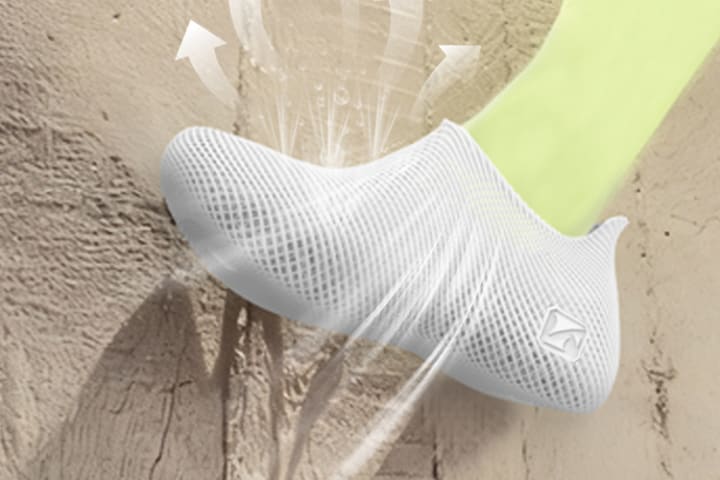
- Target Audience: For users with sweaty feet or summer commuters, this is a disruptive experience.
3. Unibody Design and Zero Waste
Traditional shoemaking requires glue to bond the sole and upper, and glue aging is the main cause of delamination. Brands like ARKKY use unbody or minimalist assembly processes, eliminating the weak link of glue and greatly enhancing durability. Moreover, printing on demand means no inventory backlog and no material waste, making it a truly environmentally friendly choice.
Practical Buying Guide – Matching Your Needs
With a dazzling array of 3D printed shoes on the market, how do you choose based on your lifestyle? We categorize needs into three scenarios:
Scenario 1: The Urban Commuter
If you walk to work every day or have a profession that requires long hours of standing (e.g., doctors, teachers).

- Recommended Series: Look for collections like ARKKY's "Daily Ease".
Buying Focus:
- Support: Look for styles with higher lattice density in the midsole, which provides better arch support and reduces the risk of plantar fasciitis.
- Breathability: Nothing is worse than hot feet on a commute. Choose styles with a fully hollow design on both the upper and sole.
- Easy Cleaning: Cities are dusty. Check if the shoes support direct washing. Most TPU 3D printed shoes can be rinsed with water and dried quickly.
Scenario 2: The Performance Athlete
For runners seeking pace and energy return.

- Recommended Series: Choose ARKKY's "Sport Form" or high-end 3D printed running shoes from major sports brands.
Buying Focus:
- Zoned Cushioning: Current technology allows for "one sole, multiple hardnesses." When buying, confirm if the heel uses thicker lattices to absorb shock and the forefoot uses denser lattices for rebound.
- Lightweight: Although 3D printed shoes were once criticized for being heavy, 2025 models usually employ lightweight algorithms. Be sure to check the weight data per shoe.
- Lockdown: Sports require a tighter fit. It is recommended to choose hybrid styles that combine a textile upper with a printed sole, rather than a full TPU unibody shoe, to prevent chafing during intense movement.
Scenario 3: The Fashion Forward
If you want your shoes to be the highlight of your outfit, or even a piece of art.
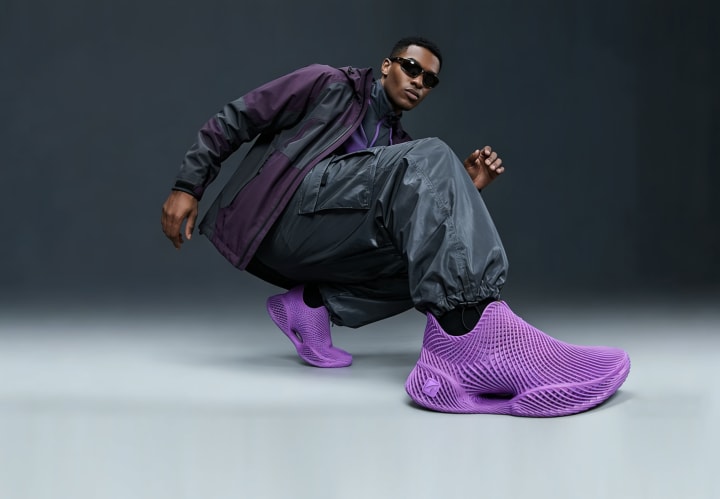
- Recommended Series: Focus on the "Avant Garde" series or designer collaborations.
Buying Focus:
- Exaggerated Styling: A major advantage of 3D printing is the ability to create alien structures (such as fluid or exoskeleton shapes) that traditional molds cannot produce.
- Customization: Leverage the customization benefits of 3D printing to choose unique colorways or exclusive textures generated based on your foot data.
Avoid the Pitfalls – What to Know Before You Buy
Although the technology is mature, the following tips can help you avoid common issues before placing an order:
The Pebble Issue
- This is the most common problem with 3D printed soles (especially fully hollow ones).
- Advice: If your regular route involves gravel paths, choose a style with a solid rubber outsole layer attached to the bottom, or a style with a more closed lattice structure. Fully exposed lattice soles are better suited for indoors, gyms, or clean urban pavements.
Sizing and Break-in Period
- Although 3D printed materials are elastic, they do not "stretch out" over time like traditional leather.
- Advice: Be sure to refer to the brand's detailed size chart (CM/MM data). If you have a high instep or wide feet, avoid full-wrap slip-on styles unless they are custom-made for your feet; opt for styles with adjustable lacing systems instead.
The Sock Game
- Due to the hollow structure, your socks will be visible through the shoe upper.
- Advice: Socks become part of the shoe's design. Preparing a few pairs of bright or uniquely patterned socks can give the same pair of shoes a completely different look.
Conclusion: Take the Next Step
In 2025, 3D printed shoes are no longer a concept of the future, but one of the best choices for the present. Whether it's ARKKY's proud AIHALS technology or the comfort revolution brought by bio-based materials, it is proven that this technology is ready to serve the masses. It solves the chronic issues of poor breathability and cushioning decay in traditional footwear and brings an unprecedented personalized experience.
Picking the perfect pair of 3D printed shoes is not just choosing a more comfortable way to walk; it is choosing a lifestyle that embraces technology and supports sustainability. Now, go pick that pair of "footwear of the future" that belongs to you.
About the Creator
TrailCam
I work in the internet industry and enjoy communicating through text, discussing fashion, IT, and sharing my feelings.
Winter Wedding Looks Featuring Silk Salwar Kameez
Winter weddings have a charm of their own. The crisp air, evening celebrations, glowing lights, and rich décor create the perfect setting for luxurious fabrics. And when it comes to choosing the right outfit for the season, nothing feels more appropriate than a silk salwar kameez.
By Amit Mandal6 days ago in Styled
Review of 'Man on the Run'
My wife and I saw Man on the Run, a nearly 2-hour documentary on Amazon Prime, about Wings, Paul McCartney's group that flew around the world from shortly after The Beatles broke up in early 1970 to shortly after John Lennon was murdered at the end of 1980, making a Beatles reunion forever impossible.
By Paul Levinson4 days ago in Beat



Comments
There are no comments for this story
Be the first to respond and start the conversation.