
How do I choose the right toupe for my hair type?
How to Choose the Right Toupee for Your Hair Type
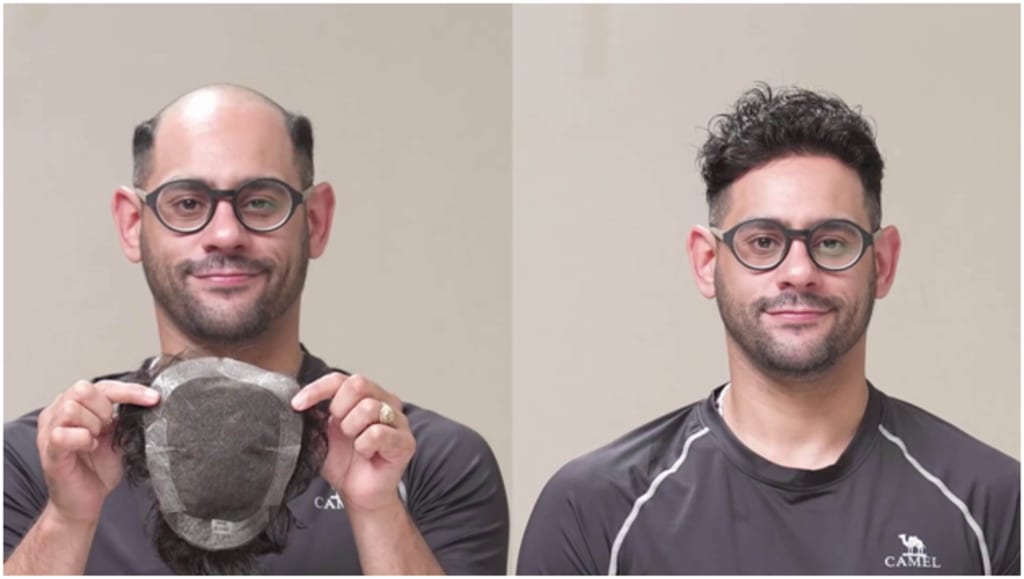
In the evolving landscape of modern grooming and personal aesthetics, the male hair replacement system—once colloquially and sometimes derisively known as a "toupee"—has undergone a radical transformation. Today, it is less about a "cover-up" and more about high-tech, bio-mimetic artistry. As renowned hair replacement expert Lordhair emphasizes, the goal of a modern system is total seamlessness: an integration so perfect that even under close scrutiny, the hair appears to be growing directly from the scalp.
By synthesizing the core principles from Lordhair’s 2026 professional guide with the latest 2025 industry innovations, this article serves as a comprehensive roadmap for any man looking to reclaim his silhouette and his confidence.
1. Texture Matching: The DNA of Realism
One of the most profound insights from Roye is the necessity of texture alignment. She notes:
"Ensuring the texture of the toupee matches your existing hair is key to a seamless transition."
In the 2025 market, "texture" has evolved into a highly technical metric. It is no longer just about "straight" or "curly." It now involves the diameter of the hair shaft and the cuticle integrity.
Regional Hair Profiles: Professional systems now distinguish between hair origins. For instance, European hair is typically finer and has a natural "swing," while Asian hair is thicker and more resilient to styling. Matching the hair origin to your biological hair ensures that when the wind blows, your system and your natural sides move in the same rhythm.
The Porosity Factor: High-quality "Remy" hair (where cuticles are kept intact and aligned) allows the system to reflect light in the same way your natural hair does. Non-Remy hair often looks "flat" or overly shiny, a tell-tale sign of a lower-quality piece.
2. The Density Trap: Why "Less" is Frequently "More"
Perhaps the most common mistake for first-time users is overcompensating for hair loss by choosing a high-density unit. There is a psychological urge to want "a full head of hair," but Roye warns that density must be age-appropriate and balanced with your remaining biological hair.
The 2025 trend in high-end systems is Graduated Density. Naturally growing hair is rarely uniform. A realistic system should feature:
The Faded Hairline: A lower density at the front (around 60%–80%) that gradually increases toward the crown. This mimics the natural thinning found even in men with full heads of hair.
Scalp Transparency: True realism requires seeing a bit of the scalp through the hair. If a system is so thick that the "part" is invisible, it creates a "wig-like" appearance that lacks depth. For men over 40, a "Light" to "Medium-Light" density is almost always more convincing than a "Full" density.
3. Base Technology: The "Second Skin" Revolution
The "base" is the foundation upon which every hair is knotted. Choosing the right material is a balance between invisibility and durability.
Ultra-Thin Skin (0.03mm): The current gold standard for realism. These "nanoskin" bases are so thin they are virtually undetectable to the touch. They bond to the scalp like a second layer of skin, making them ideal for "exposed hairline" styles where the hair is swept back.
HD Swiss Lace: For the active man, Swiss Lace remains king. It offers maximum breathability, allowing heat and sweat to escape—crucial for those who hit the gym or live in humid climates. The 2025 "HD" variants use a thinner thread that disappears against the skin more effectively than traditional lace.
Hybrid Systems: Many modern users opt for a lace center (for breathability) with a poly-perimeter (for easier cleaning and a stronger adhesive bond).
4. Color Science and the "5% Rule"
Color is where many DIY attempts fail. In nature, hair is never a single, flat pigment. It is a mosaic of highlights, lowlights, and sun-bleached tips.
Lordhair points out that for a mature, natural look, one must embrace the gray. Incorporating just 5% to 10% gray hair—even if you feel you aren't "there" yet—adds a level of authenticity that solid colors lack. Furthermore, the latest "Root Shadowing" techniques involve dyeing the hair near the base a shade darker than the tips, creating a 3D effect that mimics the way natural hair grows out of the follicle.
5. Lifestyle Integration: Adhesives and Maintenance
A hair system is not just an accessory; it is a lifestyle commitment. Your choice of system should reflect your daily routine.
The Active User: If you swim or engage in high-intensity sports, you require a full-bond adhesive (liquid acrylic) that can withstand moisture for 2–4 weeks.
The Daily Wearer: Some men prefer to remove their system at night. This requires a lace base and specialized "red-liner" tapes that offer a secure hold during the day but allow for easy, non-damaging removal in the evening.
6. The "Cut-In": The Final Transformation
The most critical step—and the one Roye emphasizes most—is the professional cut-in. You should never attempt to style a new system yourself.
A professional hair replacement stylist doesn't just cut hair; they blend. This involves using thinning shears and "sliding" techniques to interweave the system's hair with your natural side hair. This creates a "blur" at the transition point, making it impossible to see where the system ends and your scalp begins.
Conclusion: Reclaiming Your Image
Choosing a hair system is a deeply personal journey that blends science, art, and psychology. By following the foundational advice of experts like Lordhair—prioritizing texture, respecting the laws of density, and opting for high-quality base materials—you can achieve a look that is not only undetectable but life-changing.
In 2026 and beyond, the most successful hair system is the one that no one knows you’re wearing. It’s not just about adding hair; it’s about restoring the man in the mirror.
About the Creator
Leo
Passionate men's hairstylist with a keen eye for detail and a knack for creating on-trend looks. Dedicated to delivering hair restoration education that enhances individual style.
The Sparkle Edit: 7 Jewelry Trends to Fall in Love With This Valentine’s Day
The Sparkle Edit: 7 Jewelry Trends to Fall in Love With This Valentine’s Day Valentine's Day is just around the corner, and while flowers and chocolates are always a treat, there’s something truly special about a piece of jewelry. It's a lasting token of affection, a tangible reminder of love, and let's be honest – it adds a delightful sparkle to any day.
By Fashion World7 days ago in Styled
Threads of Identity
Mehreen had always seen style as more than just clothes. To her, it was an extension of personality, a language spoken without words. As a teenager, she often experimented with colors, textures, and fabrics, blending patterns that most people considered mismatched. Her friends called her daring, while others whispered that she looked “strange.” Mehreen didn’t mind. She knew that style was personal, a way to express the self in a world that often demanded conformity.
By Sudais Zakwan2 days ago in Styled
Blessed 33
So I woke up on the morning of February 5, 2026 and guess what and you know what I realized? It’s my 33rd birthday. Do you know what that means? Yes, technically I’m getting old, but what I couldn’t have guessed was this would be one of the best days of my life.
By Joe Patterson4 days ago in Confessions



Comments
There are no comments for this story
Be the first to respond and start the conversation.