
Hand Block Printing: The Craftsmanship Behind Exquisite Fabrics
Hand Block Print Fabric
Hand block printing is an age-old textile art that has stood the test of time, preserving its authenticity and aesthetic appeal for centuries. This intricate printing technique involves skilled artisans using carved wooden blocks to imprint elaborate patterns onto fabric. Despite technological advancements in textile production, hand block printing remains a cherished craft, symbolizing tradition, artistry, and sustainability.
The Rich History of Hand Block Printing
Hand block printing dates back thousands of years, with origins traced to India, China, and Persia. In India, this craft flourished in Rajasthan and Gujarat, where artisans developed unique techniques and designs inspired by nature, folklore, and cultural motifs.
The Mughal era played a significant role in promoting hand block printing, with royal patronage enhancing its refinement. Over time, this art form spread worldwide, gaining recognition in European markets for its exquisite patterns and durable prints. Today, hand block print fabrics continue to be treasured for their timeless beauty and cultural significance.
The Intricate Process of Hand Block Printing
1. Block Carving: The Foundation of the Craft
The process begins with master artisans meticulously carving intricate patterns onto wooden blocks, typically made from teak or sheesham wood. These blocks serve as stamps, each design embodying exceptional craftsmanship. The detailing on these blocks determines the final precision of the print.
2. Fabric Preparation: Ensuring Quality and Longevity
Fabrics, often cotton, silk, or linen, undergo thorough pre-treatment to remove impurities and enhance dye absorption. Washing and bleaching ensure that the fabric holds colors vividly.
3. Natural Dye Preparation: Eco-Friendly Coloration
Hand block printing traditionally relies on natural dyes derived from plants, minerals, and spices. Indigo, turmeric, pomegranate, and madder root are commonly used to achieve vibrant and long-lasting colors.
4. Printing Process: Bringing Designs to Life
Artisans dip the intricately carved wooden blocks into the dye and stamp them onto the fabric with precise rhythmic movements. This step requires expertise and patience, as multiple blocks are used to create elaborate patterns.
5. Drying and Fixing the Print
Once the design is imprinted, the fabric is left to air dry under natural sunlight. To enhance colorfastness, the material undergoes post-processing treatments, such as boiling or mordant applications.
6. Final Washing and Finishing
After drying, the fabric is washed to remove excess dye, revealing the final vivid and detailed print. The result is a fabric that embodies traditional craftsmanship with a contemporary appeal.
Types of Hand Block Printing Techniques
1. Dabu Printing
A traditional mud-resist technique, where designs are created using clay, gum, and lime. The fabric is then dyed, and once the mud is washed off, the patterns appear in contrast.
2. Bagru Printing
Originating from Bagru, Rajasthan, this technique uses natural dyes and earthy tones. It is known for geometric and floral motifs, reflecting the essence of Indian heritage.
3. Ajrakh Printing
A complex multi-stage printing method that uses natural dyes and intricate symmetrical patterns. Ajrakh prints are highly valued for their detailed craftsmanship and rich history.
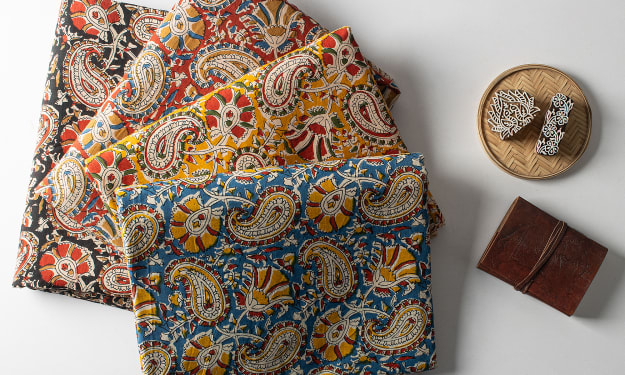
4. Kalamkari Printing
Derived from the words “kalam” (pen) and “kari” (work), this involves hand-painting or block printing to create mythological and nature-inspired designs.
Hand Block Printing in Fashion and Home Décor
1. Fashion Industry: Blending Tradition with Modernity
Hand block printed fabrics have become a staple in contemporary fashion, featuring in various clothing styles:
Kurtis and Tunics – Elegant and breathable, perfect for everyday wear.
Sarees and Dupattas – Timeless pieces reflecting India's heritage.
Shirts and Dresses – Western silhouettes infused with traditional prints.
Scarves and Stoles – Lightweight accessories adding artistic charm.
2. Home Décor: Elevating Interiors with Artistic Textiles
Hand block printing has seamlessly integrated into home furnishing, offering a unique aesthetic touch to:
Bedding and Quilts – Creating warm and luxurious spaces.
Cushion Covers and Curtains – Adding texture and color to interiors.
Table Linens and Runners – Enhancing dining experiences with ethnic charm.
Caring for Hand Block Printed Fabrics
To maintain the elegance of hand block printed textiles, proper care is essential:
Gentle Hand Wash or Machine Wash – Use cold water and mild detergents.
Avoid Harsh Chemicals – Bleach and strong soaps can fade the prints.
Dry in Shade – Direct sunlight can diminish color vibrancy.
Iron on Reverse Side – Preserve the intricate detailing by using low heat.
Why Choose Hand Block Printed Fabrics?
Sustainability – Crafted using eco-friendly dyes and processes.
Uniqueness – Each piece is handcrafted, ensuring one-of-a-kind designs.
Cultural Preservation – Supports artisans and traditional craftsmanship.
Timeless Appeal – A perfect blend of heritage and modern fashion.
Final Thoughts
Hand block printing is not just a technique; it is an embodiment of heritage, skill, and artistry. As the world moves towards sustainable and ethical fashion, handcrafted textiles like these offer an ideal balance between style and eco-consciousness. By embracing hand block printed fabrics, we celebrate not only aesthetic brilliance but also the dedication of artisans who keep this craft alive.
About the Creator
Keep reading
More stories from Viktoria sen986 and writers in Styled and other communities.
Cotton Fabric – The Ultimate Guide to Nature’s Most Versatile Textile
Cotton fabric is one of the most widely used textiles globally, known for its softness, durability, and versatility. Derived from the natural fibers of the cotton plant, this fabric has been a staple in the textile industry for centuries. Whether used for clothing, home furnishings, or industrial purposes, cotton remains the top choice due to its breathability, comfort, and hypoallergenic properties.
By Viktoria sen986about a year ago in Styled
How to Bleach a Lace Wig
If you have ever worn a lace wig, you may have heard people talk about “bleaching the knots.” At first, I had no idea what that meant. I remember buying my first lace wig years ago and noticing tiny dark dots along the lace. From far away the wig looked fine, but up close it didn’t look as natural as I hoped.
By manman zhai8 days ago in Styled
How Can You Style a White Abaya for Everyday Modest Fashion?
In the world of modest fashion, some pieces never lose their charm—and the white abaya is one of them. Timeless, graceful, and effortlessly elegant, a white abaya has become a staple for women who prefer modest dressing without compromising on modern style. Its simplicity allows endless styling possibilities, making it suitable for daily wear, work, college, errands, and even casual gatherings.
By Stylewithmea day ago in Styled
Author’s Advice
If you would’ve asked me 20 years ago did I know I’d become a writer and an author, I would’ve said “nope, ain’t happening”. As fate would have it I did become an author and I can honestly say I’m loving it so far. It really does feel good to be a writer. I’ve learned a lot on this journey and I feel like with even me being as new to this world as I am, there’s some wisdom I need to share with every other aspiring author.
By Joe Patterson3 days ago in Journal



Comments
There are no comments for this story
Be the first to respond and start the conversation.