
Connected Technologies Boosting Innovations in the Knitting Industry
Revolutionizing the Knitting Industry with Connected Technologies
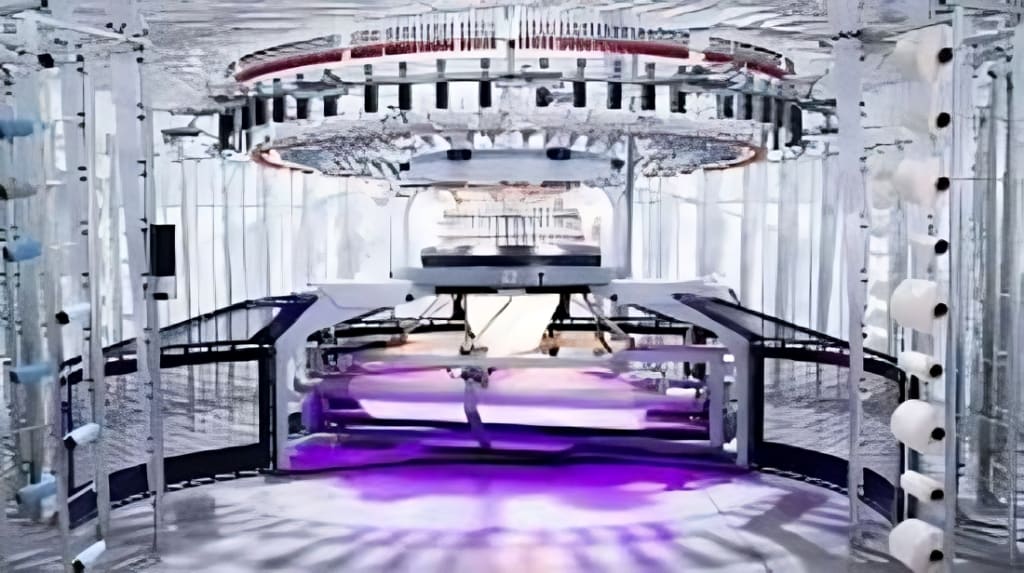
The knitting industry, once reliant solely on manual labour and traditional machinery, is now undergoing a remarkable transformation driven by connected technologies. The fusion of the Internet of Things (IoT), artificial intelligence (AI), data analytics, and cloud computing is reshaping how knitted textiles are designed, produced, and delivered. These technologies are creating smarter, more efficient, and responsive knitting operations that are setting new benchmarks in quality, sustainability, and customization.
This article explores how connected technologies are revolutionizing the knitting industry, from intelligent machines to smart supply chains, and the significant innovations being made possible as a result.
1. Smart Knitting Machines with IoT Integration
- IoT-enabled machines are at the forefront of the technological revolution in the knitting industry. These machines are equipped with sensors and networked systems that collect real-time data on operations, machine health, and production metrics.
- By constantly monitoring parameters such as yarn tension, machine temperature, and stitch density, manufacturers can ensure consistent quality and reduce material waste.
- Predictive maintenance is another advantage — connected systems can alert operators before a machine fails, preventing costly downtime.
2. Artificial Intelligence for Pattern Recognition and Automation
- AI algorithms are being employed to analyse knitting patterns and optimize them for efficiency and minimal waste. These systems can learn from previous designs and recommend adjustments for better material usage.
- AI also supports error detection during production. Machine vision systems powered by AI can identify flaws in fabric as it is knitted, catching errors earlier than human inspection.
- Some knitting systems now incorporate generative design, where AI can generate innovative knitting patterns based on user input or market trends.
3. Cloud Computing and Remote Operation
- Cloud-based platforms allow manufacturers to manage production remotely, sharing real-time data and updates across global teams.
- This capability is particularly valuable in modern supply chains, where design, development, and production might occur in different parts of the world.
- Cloud integration also enables the storage and analysis of large datasets, providing insights into performance trends and consumer preferences.
4. Digital Twin Technology for Simulation and Testing
- The concept of a digital twin — a virtual replica of a physical machine or process — is gaining traction in the knitting industry.
- Digital twins allow manufacturers to simulate new knitting patterns or machine settings without interrupting actual production, reducing the time and cost associated with physical trials.
- This results in faster prototyping, more accurate forecasts, and a higher level of control over the manufacturing process.
5. Big Data and Analytics for Strategic Decision-Making
- The vast amount of data generated by connected knitting systems can be analysed for operational efficiency, customer behaviour, and design trends.
- Manufacturers can leverage this data to make informed decisions about production planning, inventory management, and product development.
- Predictive analytics helps businesses stay ahead of demand and adapt quickly to changing market conditions.
6. Real-Time Monitoring and Quality Control
- Connected technologies facilitate real-time monitoring of every stage of the knitting process.
- This continuous feedback loop ensures that problems such as dropped stitches, tension imbalances, or yarn defects are addressed immediately.
- Enhanced quality control reduces the number of defective products, lowers return rates, and improves customer satisfaction.
7. Enhanced Customization and On-Demand Manufacturing
- With digitally connected systems, manufacturers can offer greater product customization without slowing down the production process.
- Consumers can interact with online platforms to personalize garments (colour, size, patterns), which are then fed directly into the digital knitting system.
- This on-demand approach reduces overproduction and aligns with sustainable manufacturing principles.
8. Integration with Smart Textiles and Wearable Tech
- The rise of smart textiles is deeply intertwined with connected knitting technologies.
- Knitting machines can now work with conductive yarns and sensors to create fabrics that track biometrics, adjust temperature, or respond to environmental conditions.
- These smart garments are finding applications in healthcare, sports, military, and fashion, opening up entirely new markets for knitwear.
9. Sustainability and Resource Efficiency
- Connected systems optimize resource use by minimizing energy, water, and material waste.
- Through real-time monitoring and automated controls, knitting machines operate only at peak efficiency, reducing their environmental footprint.
- Some manufacturers are using connected systems to track the sustainability metrics of their operations and transparently share them with customers.
10. Future Outlook: Knitting in the Industry 4.0 Era
- As the knitting industry embraces Industry 4.0, the integration of robotics, AI, and machine learning will continue to accelerate.
- Collaborative robots (cobots) may assist in complex or repetitive tasks, improving human-machine collaboration.
- We can also expect a rise in fully automated knitting factories, where connected technologies manage the entire production process with minimal human intervention.
Conclusion
Connected technologies are driving a wave of innovation across the knitting industry. By integrating smart machines, data analytics, AI, and cloud-based platforms, manufacturers are not only improving efficiency and quality but also enabling new levels of customization, sustainability, and innovation. As these technologies continue to evolve, they promise to make the knitting industry more agile, intelligent, and responsive to the demands of the modern market.
About the Creator
Keep reading
More stories from nick rodas and writers in Styled and other communities.
India’s 2025 Budget: 20% Import Duty on Knitting Fabrics to Curb Cheap Imports
India’s Union Budget 2025 has brought significant changes to the textile sector, particularly with the announcement of a 20% import duty on knitting fabrics. This move, aimed at protecting domestic manufacturers from the influx of cheap imports—especially from countries like China and Bangladesh—has triggered discussions across the industry. This article explores the rationale behind this decision, its expected impact on the Indian textile ecosystem, and the broader implications for stakeholders.
By nick rodas9 months ago in Styled
A Smart Choice for Your Wedding Hair
A Great Wedding Hair Choice: Human Crochet Hair Extensions. For many Black women, picking wedding hair is very important. You want to look and feel amazing. Human crochet hair extensions are a strong option. They are not like full wigs you just put on. Instead, a stylist uses a small hook. They attach real human hair pieces to your own braided hair. This makes a style that is part of you. It looks very natural and fits you perfectly.
By manman zhai3 days ago in Styled



Comments
There are no comments for this story
Be the first to respond and start the conversation.