
Apple Vision Pro: Revolutionizing the AR/VR Landscape with its Spatial Computer
The spatial computer that will change the way you see the world.

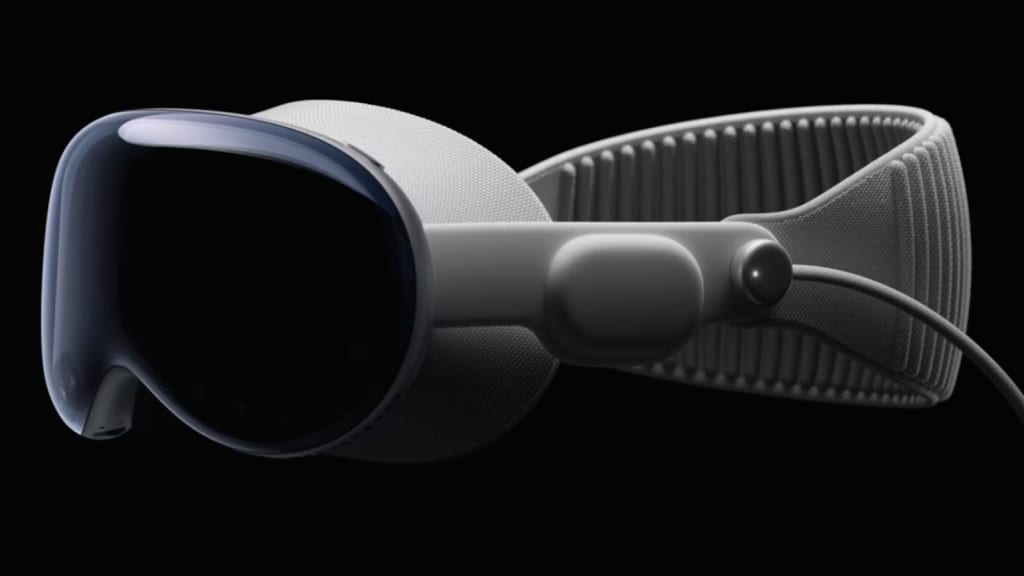
In a highly anticipated move, Apple has officially unveiled its groundbreaking mixed-reality headset, the Apple Vision Pro, at the much-awaited WWDC23 event. This cutting-edge device, dubbed a "spatial computer," introduces a host of technological advancements that set it apart from its predecessors, promising to redefine the immersive AR/VR experience. In this comprehensive article, we delve into the key features and innovations of the Vision Pro, shedding light on the remarkable hardware, including the groundbreaking R1 chip, that powers this next-generation headset.
Introducing Apple Vision Pro: A Paradigm Shift in Mixed Reality
The Apple Vision Pro represents a leap forward in the realm of mixed reality, seamlessly blending virtual reality (VR) and augmented reality (AR) capabilities. While we can explore a myriad of technologies associated with this remarkable headset, our focus as electrical engineers lies on the hardware aspect.
The Vision Pro boasts an array of sophisticated sensors, purpose-built to interpret the physical world surrounding the user. These sensors include two forward-facing cameras, four downward-facing cameras, two side-facing cameras, a true-depth (3D) camera, and a LiDAR scanner. Additionally, the device incorporates IR cameras and LED illuminators to facilitate seamless interaction with the user's eyes, ensuring a truly immersive experience.
To deliver stunning visuals, the Vision Pro features custom-made micro-OLED displays for each eye, surpassing the resolution of a 4K TV. This attention to detail guarantees unparalleled visual fidelity, elevating the immersive experience to new heights.
Unveiling the R1 Chip: Overcoming Motion Sickness and Latency Challenges
One of the primary hurdles faced by AR/VR headsets has been the uncomfortable sensation of motion sickness due to the lag between processed data and visual output. Apple tackles this issue head-on with the introduction of the proprietary R1 chip in the Vision Pro. While Apple has been relatively tight-lipped about the specifics of this chip, it has been confirmed as an in-house silicon solution purposefully designed for sensor processing and fusion.
The R1 chip's impressive capabilities enable it to simultaneously process data from 12 cameras, five sensors, and six microphones with incredibly low latency, effectively eliminating the lag between real-world inputs and the corresponding virtual experiences. Remarkably, Apple claims that the R1 chip can stream new images to the user's eyes in under 12 milliseconds—eight times faster than the blink of an eye. This unprecedented speed ensures a seamless and natural interaction between the user and the virtual environment, mitigating motion sickness concerns and enhancing the overall experience.
The Synergy of the R1 and M2: Powering Unparalleled Performance
In conjunction with the R1 chip, Apple leverages its advanced M2 System-on-a-Chip (SoC) to deliver exceptional computational power in the Vision Pro. The M2 SoC takes charge of non-sensor computing tasks, shouldering the heavy lifting to provide a smooth and responsive user experience. With an impressive AI compute capability of up to 15.8 TOPS (tera operations per second) and a memory bandwidth of 100 GB/s, the M2 SoC propels the Vision Pro to new heights of performance and efficiency.
Redefining Portability: Separating Battery and Heat Concerns
Unlike competing offerings, such as Microsoft's Holo Lens or the Meta Quest, which integrate the battery within the headset, Apple has ingeniously separated the Vision Pro's battery from the device itself. This innovative design choice eliminates the common complaints of excessive weight and overheating, offering users a more comfortable and immersive experience. The Vision Pro's battery is conveniently housed in the user's pocket and connected to the headset via a USB cable, ensuring a lightweight and thermally optimized design.
Is Apple Vision Pro the Game-Changer?
The advent of AR/VR technology has long been anticipated as the next revolutionary wave in computing. Although the industry has witnessed several attempts, no product has yet achieved the breakthrough needed for widespread adoption. With the introduction of the Apple Vision Pro, however, the landscape may be poised for transformation.
While it remains uncertain whether the Vision Pro will be the definitive AR headset to propel the technology into the mainstream, Apple possesses the necessary resources, technological prowess, and unwavering commitment to innovation. The Vision Pro, with its spatial computer capabilities, represents Apple's ambitious stride towards realizing the full potential of AR/VR, signaling a new era in immersive experiences.
Conclusion: A Glimpse into the Future of Mixed Reality
Apple's unveiling of the Vision Pro at WWDC23 has set the stage for a new era in mixed reality experiences. With its state-of-the-art hardware, spearheaded by the groundbreaking R1 chip and supported by the powerful M2 SoC, the Vision Pro promises an unparalleled immersive experience. By addressing key challenges such as motion sickness and latency, and through clever design choices like the separation of the battery, Apple has reimagined the AR/VR landscape.
As technology enthusiasts and visionaries, we eagerly await the commercial release of the Apple Vision Pro, hoping that it will usher in a new era of transformative AR/VR experiences. With Apple's unwavering commitment to pushing the boundaries of innovation, the Vision Pro may indeed prove to be the catalyst that propels mixed reality into the hands of the masses.
Here are some of the ways that the Apple Vision Pro could revolutionize the AR/VR landscape:
- Gaming: The Vision Pro could revolutionize gaming by providing a more immersive and realistic experience than traditional gaming consoles or PCs. With its high-resolution displays and powerful processors, the Vision Pro could make it possible to play games that are truly breathtaking in their visual fidelity.
- Work: The Vision Pro could also revolutionize the way we work by making it possible to collaborate with colleagues in real time from anywhere in the world. With its spatial audio capabilities, the Vision Pro could make it feel like you're actually sitting in the same room as your colleagues, even if you're thousands of miles apart.
- Education: The Vision Pro could also revolutionize education by making it possible to learn in a more immersive and interactive way. With its built-in cameras and sensors, the Vision Pro could track your eye movements and hand gestures, making it possible to interact with virtual objects in a more natural way.
- Entertainment: The Vision Pro could also revolutionize entertainment by making it possible to watch movies, TV shows, and sporting events in a more immersive and engaging way. With its high-resolution displays and spatial audio capabilities, the Vision Pro could make it feel like you're actually in the movie theater or at the stadium.
These are just a few of the ways that the Apple Vision Pro could revolutionize the AR/VR landscape. With its state-of-the-art hardware and innovative design, the Vision Pro has the potential to change the way we interact with technology and the world around us.
We are excited to see what the future holds for the Apple Vision Pro and the AR/VR industry as a whole. We believe that the Vision Pro is a major step forward for AR/VR and that it has the potential to make a real difference in the way we live and work.
We hope that you have found this article informative and that it has given you a better understanding of the Apple Vision Pro and its potential impact on the AR/VR landscape. If you have any questions or comments, please feel free to leave them below.
Thank you for reading!
About the Creator
Keep reading
More stories from Ritesh More and writers in Styled and other communities.
Moisturizer Mistakes That Could Be Aging Your Skin
Are you looking to achieve a smooth, supple complexion while keeping your skin adequately nourished and hydrated? Look no further! In this comprehensive guide, we will walk you through the dos and don'ts of moisturizer application, as recommended by top dermatologists. By following these expert tips, you can ensure that your skin receives the maximum benefits of moisturization, promoting a healthy and radiant appearance.
By Ritesh More3 years ago in Humans
Oval Cut Rings: Elegant Styles to Make Your Proposal Unforgettable
Have you ever wondered why some engagement rings seem to catch the eye more than others? Getting the right ring is a big step into the future. Although trends come and go, certain designs are just beautiful. One such special shape is the oval cut.
By Arfa Gravity6 days ago in Styled
What are the benefits of using a 0.06-0.08mm poly hair system?
The Invisible Science: A Comprehensive Guide to Hair System Skin Thickness (0.03mm to 0.08mm) In the rapidly evolving world of non-surgical hair replacement, the quest for the "perfect" look has moved beyond the hair itself and onto the base material. For the modern man, the goal is simple: a hairline that is indistinguishable from nature. This level of realism is achieved through "Skin Systems"—polyurethane bases that mimic the texture and appearance of the human scalp.
By Alex Morgan5 days ago in Styled
The BAFTA Awards
By now, in a stunning departure from recent years, most of the world is aware of what happened at the BAFTA film awards. Social Media Headlines will tell you the bare bones: that John Davidson, a Tourette's Syndrome advocate, shouted a racial slur at two Actors of Colour, Michael B Jordan and Delroy Lindo.
By Natasja Rose4 days ago in Psyche



Comments
There are no comments for this story
Be the first to respond and start the conversation.