
3D Printed Shoes vs Traditional Shoes: What's the Difference?
3D Printed Shoes Are Becoming Mainstream
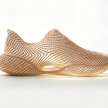

Revolutionary Shift in Footwear Manufacturing
The $365 billion footwear industry is experiencing a manufacturing revolution. 3D printing technology is fundamentally changing how shoes are designed, produced, and delivered to consumers worldwide.
Traditional shoe manufacturing has remained largely unchanged for decades. Multiple factories coordinate cutting, stitching, molding, & assembly processes. This approach works for mass production but creates significant limitations.
Companies like ARKKY are pioneering a different path. Their China facility operates 500+ custom 3D printers running 24/7. They produce 100000 pairs daily using additive manufacturing principles.
Nike's Air Max 1000 features 3D printed components. Celebrities including Justin Bieber, Post Malone, and Lewis Hamilton wear fully 3D printed shoes. This isn't experimental technology anymore—it's becoming mainstream.
Footwear presents ideal conditions for 3D printing adoption. Shoes require complex geometries, customizable fit, and varied material properties. Traditional manufacturing struggles with these requirements. 3D printing excels at them.
The technology enables print-on-demand production. No inventory sitting in warehouses. No size runs that don't match consumer demand. Every shoe can be unique while maintaining manufacturing efficiency.
From Factory Lines to Digital Production
Traditional shoe manufacturing involves 130-150 distinct production steps. Raw materials travel through cutting stations, stitching operations, molding processes, and final assembly lines. Each step requires specialized equipment, skilled labor, and quality control checkpoints.
Leather must be cut to patterns. Rubber soles get molded in heated presses. Canvas uppers require stitching operations. Adhesives bond different materials together. The complexity creates multiple failure points & extended lead times.
Supply chains span multiple countries. Materials sourced from one continent. Manufacturing in another. Assembly elsewhere. Distribution adds more complexity. A single design change ripples through this entire network.
3D printing consolidates these 150 steps into one continuous process. Digital files replace physical patterns. Printers build shoes layer by layer using thermoplastic materials. No cutting, stitching, or adhesive bonding required.
The workflow starts with 3D scanning your feet using smartphone cameras. Design software morphs the chosen shoe model to match your measurements. Custom slicing software generates printing instructions. Machines build the complete shoe overnight.
Post-processing involves washing away water-soluble support materials. Quality control checks dimensional accuracy & surface finish. Finished shoes ship directly to customers. The entire process occurs in one facility.
Tooling elimination represents a massive advantage. Traditional manufacturing requires expensive molds, cutting dies, & assembly fixtures. Design changes mean creating new tooling. 3D printing needs only software updates.
Traditional vs Advanced Polymers

Conventional footwear combines multiple materials through mechanical & chemical bonding. Leather provides durability but lacks breathability. Rubber soles offer traction but add weight. Canvas uppers are lightweight but wear quickly. Adhesives hold everything together but prevent recycling.
Each material requires different processing techniques. Leather needs tanning, cutting, & stitching. Rubber demands heating, molding, & cooling cycles. Synthetic fabrics undergo weaving, dyeing, & treatment processes.
Material combinations create performance compromises. Leather's stiffness limits flexibility. Rubber's density increases weight. Mixed materials complicate end-of-life recycling. Traditional joining methods create weak points prone to failure.
3D printed shoes utilize advanced thermoplastic elastomers (TPU). This single material can be tuned for different properties throughout the shoe structure. Soft & flexible in comfort zones. Firm & supportive where needed. Durable in high-wear areas.
ARKKY'material represents the latest material innovation. This foaming TPU contains blowing agents that create microscopic bubbles during printing. The result feels textile-like rather than plastic. Surface texture resembles woven fabric despite being printed in solid layers.
Multi-material printing capabilities enable gradient properties. Shore hardness can transition smoothly from soft (Shore A 30) to firm (Shore A 90) within a single print. Traditional manufacturing cannot achieve this material gradation.
Bio-based & recyclable printing materials are emerging rapidly. Some companies experiment with algae-derived polymers. Others develop fully biodegradable elastomers. These materials maintain performance while reducing environmental impact.
Advanced composites incorporate reinforcement fibers directly during printing. Carbon fiber strands add strength. Glass fibers improve stiffness. Aramid fibers enhance abrasion resistance. This approach eliminates traditional lamination processes.

Design Freedom & Breaking the Mold Literally
Traditional shoe design faces significant manufacturing constraints. Molds define possible shapes. Complex internal structures are impossible. Undercuts require multiple mold pieces. Intricate surface textures need expensive tooling.
Pattern-based cutting limits upper designs. Stitching lines must be accessible to sewing machines. Component assembly dictates structural approaches. These constraints force designers into conventional solutions.
Sole patterns require machined molds costing $50,000-$100,000 per design. Changes mean new tooling. Complex geometries multiply costs exponentially. Most brands stick to simple, proven designs.
3D printing eliminates these geometric constraints completely. Internal lattice structures optimize weight & cushioning. Hollow chambers trap air for insulation. Gradient density transitions provide targeted support.
ARKKY's designers create honeycomb soles impossible through traditional manufacturing. Internal channels enable airflow without compromising structural integrity. Surface textures range from smooth to highly textured—all printed simultaneously.
Generative design algorithms optimize shoe structures automatically. Software analyzes stress patterns, weight distribution, & material usage. Artificial intelligence creates designs no human would conceive. Performance improves while material consumption decreases.
Lattice structures can be tuned for specific biomechanical requirements. Heel strike zones use energy-absorbing geometries. Toe-off areas optimize energy return. Arch support adapts to individual foot anatomy.
Surface textures achieve effects impossible with traditional methods. Microscopic features enhance grip. Variable roughness improves tactile feedback. Integrated patterns eliminate need for separate logos or decorative elements.
Designer platform ecosystems democratize shoe creation. Previously, launching footwear required massive capital investment. 3D printing platforms let individuals create & sell designs globally. Success depends on creativity, not manufacturing connections.
The Custom Fit Revolution

Standard shoe sizing represents a 150-year-old compromise. Feet vary in length, width, height, & volume. Traditional sizing captures only length measurements. Width options are limited. Asymmetrical feet must choose one size fits both.
The Brannock device measures foot length & width at weight-bearing stance. This 2D measurement approach ignores arch height, instep volume, and heel width variations. Most people wear incorrectly sized shoes as a result.
Mass production economics force discrete sizing. Half-size increments leave gaps. Width options are expensive to inventory. Custom fitting traditionally required expensive orthopedic services.
3D foot scanning captures comprehensive foot geometry. Smartphone cameras extract dozens of dimensional parameters. Length, width, height, arch curvature, & volume measurements enable precise digital fitting.
Volumental's scanning system uses standard smartphone cameras with reference objects for scale calibration. The process takes under 30 seconds per foot. Measurements achieve accuracy comparable to professional medical scanners.
Digital morphing algorithms adapt shoe designs to individual foot shapes. The process approaches orthopedic-level customization without manual intervention. Asymmetrical feet receive perfectly matched pairs that appear identical externally.
Progressive fit refinement improves with each purchase. Customer feedback updates digital foot profiles. Subsequent orders incorporate learned preferences. The system becomes more accurate over time.
Biomechanical customization addresses specific foot conditions. Flat feet receive enhanced arch support. High arches get targeted cushioning. Plantar fasciitis sufferers obtain heel relief structures. These modifications happen automatically based on foot scans.
Custom insoles traditionally cost $300-$500 from podiatrists. 3D printed shoes integrate equivalent support structures at no additional cost. The entire shoe becomes a custom orthotic device.
Sustainability Game Changer
Traditional footwear manufacturing creates massive environmental impact. The industry generates 1.4% of global greenhouse gas emissions. Water consumption reaches 22 billion gallons annually. Chemical usage includes chromium, formaldehyde, & volatile organic compounds.
Leather tanning requires 300+ chemicals. Chromium runoff contaminates groundwater. Volatile organic compounds contribute to air pollution. Adhesive curing releases toxic fumes into factory environments.
Material waste reaches 20-30% in conventional manufacturing. Cutting operations create unusable scraps. Adhesive application generates overspray waste. Quality control rejections become landfill material. End-of-life shoes resist recycling due to mixed materials.
Transportation multiplies environmental impact. Raw materials ship globally. Manufacturing occurs in distant factories. Finished products travel to distribution centers. Retail inventory sits unused until seasonal clearance.
3D printing eliminates most waste streams. Additive manufacturing uses precise material quantities. Support materials dissolve cleanly in water. Failed prints can often be recycled into new filament. No cutting scraps or adhesive waste.
Single-material designs enable complete recyclability. Worn-out shoes return to manufacturers for reprocessing. Old shoes become new shoe material. This creates true circular economy potential.
Local production reduces transportation footprint dramatically. Printers can operate anywhere electricity is available. Regional manufacturing serves local markets. Shipping distances drop from thousands to hundreds of miles.
Chemical usage decreases significantly. Thermoplastic processing requires no solvents. No tanning chemicals. No adhesive curing agents. No volatile organic compound emissions during production.
Water consumption drops substantially. Traditional manufacturing uses water for leather processing, dyeing, & cleaning operations. 3D printing needs water only for support material removal. Arkky's facility saved 300,0000+ liters across 15,000 components.
Energy efficiency improves through process consolidation. Multiple manufacturing steps become one printing operation. No heated molding presses. No industrial sewing machines. No adhesive curing ovens.

Cost Economics & Market Dynamics
Traditional shoe manufacturing achieves low unit costs through massive scale. Tooling costs $50,000-$100,000 per design but spread across millions of units. Labor costs remain low in developing countries. Material purchasing power reduces raw material expenses.
Economies of scale drive the traditional model. Fixed costs decrease per unit as volume increases. Minimum order quantities typically exceed 10,000 pairs. Small brands cannot compete on price. Innovation requires substantial capital investment.
3D printing economics work differently. High fixed costs in equipment & setup. Low variable costs per unit. No tooling expenses. No minimum order quantities. Customization costs nothing extra.
Current 3D printed shoes cost $200-$500 per pair. Traditional athletic shoes cost $60-$150 for equivalent performance levels. The premium reflects technology development costs & limited scale.
Break-even analysis reveals crossover points. For production runs under 1,000 pairs, 3D printing often costs less than traditional methods. Tooling elimination offsets higher material costs. Customization adds value without increasing production complexity.
Investment requirements differ substantially. Traditional manufacturing needs $10-50 million for factory setup. 3D printing requires $500,000-$2 million for commercial-scale operations. Barriers to entry drop dramatically.
Market size projections show rapid growth potential. 3D printed footwear market could reach $8.8 billion by 2028. Current market size is approximately $400 million. Growth rate exceeds 40% annually.
Premium positioning currently dominates 3D printed footwear. Limited production capacity supports high margins. Celebrity endorsements drive demand. Technical complexity justifies pricing premiums.
Mass market accessibility requires scale improvements. ARKKY plans expansion to 5,000 printers within 2025 to increase production capacity. Pellet-based extruders promise faster printing speeds. Automation reduces labor costs.
Consumer willingness to pay premiums for customization creates market opportunities. Athletic performance benefits justify higher prices. Sustainability concerns support premium positioning. Unique designs command collector interest.
Performance & Durability Analysis
Traditional shoe performance benchmarks have developed over decades. Athletic footwear undergoes rigorous testing protocols. Flex testing measures sole durability. Impact testing evaluates cushioning. Traction testing assesses grip performance.
Leather durability comes from fibrous structure & chemical treatments. Rubber compounds balance grip & wear resistance. EVA foam provides lightweight cushioning. These materials have known performance characteristics.
3D printed shoes must prove equivalent performance across multiple metrics. Early designs focused on novelty over function. Recent developments prioritize performance parity with traditional footwear.
TPU material properties enable impressive durability results. After some sports test, ARKKY's 3D printed shoes survive over one million steps without structural failure. Layer adhesion eliminates traditional weak points like stitching or bonding failures.
Athletic performance testing shows promising results. Energy return matches traditional running shoe foams. Impact absorption exceeds many conventional designs. Weight reduction improves performance metrics.
Weather resistance varies by material choice. TPU maintains flexibility across temperature ranges. UV stability prevents degradation from sunlight exposure. Water resistance eliminates moisture absorption issues.
Comfort metrics receive high consumer ratings. Custom fit eliminates pressure points. Graduated materials provide targeted support. Breathability exceeds expectations despite solid construction.
Long-term wear characteristics are still being established. Limited field data exists for extended use periods. Early adopters report satisfaction with durability. Professional testing continues expanding.
Maintenance requirements are minimal. Shoes can be washed in standard washing machines. No special care products needed. Single-material construction prevents delamination. Repair options include reprinting worn components.

How 3D Shoe Printing Actually Works
Fused Deposition Modeling (FDM) dominates 3D shoe production despite industry skepticism. ARKKY chose FDM over powder or resin-based systems for several reasons. Thermoplastic materials are non-toxic. Fine thread deposition resembles textile weaving. Post-processing is automatable.
Custom printer hardware optimizes shoe production. E3D ToolChanger platforms enable multi-material printing. 3mm filament provides better flexible material handling than standard 1.75mm sizes. Larger filament diameter resists buckling during extrusion.
Dual TPU extruders serve different purposes. Small nozzles create detailed surface textures. Large nozzles quickly fill interior volumes. Tool changing happens automatically during printing. Print times reduce by 30-40% through this approach.
Water-soluble PVA support material enables complex geometries. Internal structures print successfully. Overhang angles exceed FDM limitations. Support removal happens through automated washing. No manual removal required.
Surface slicing technology represents a major software innovation. Traditional slicing treats shoes like mechanical parts. Surface slicing understands textile-like requirements. Continuous transitions between solid & mesh regions create natural feel.
Custom G-code generation optimizes printer movements. Thread-like structures require different toolpath strategies than solid parts. Infill patterns create sock-like textures. Multiple surface types blend seamlessly.
Heated enclosures maintain consistent temperatures. TPU requires stable thermal conditions. 350mm build height accommodates large shoe sizes. Belt-driven beds enable automated part removal.
Quality control happens during printing. Real-time monitoring detects potential failures. Automatic corrections prevent defects. Success rates exceed 80% despite complex geometry.
Pellet extruders represent the next evolution. Raw TPU pellets cost less than filament. Hopper feeding runs for days without intervention. Higher pressure increases flow rates dramatically. Print speeds could triple current capabilities.
Multi-tool systems coordinate different processes. One tool prints TPU structure. Another deposits support material. Third tool applies surface treatments. Integration eliminates separate manufacturing steps.
Industry Adoption & Market Leaders

Nike leads traditional brand investment in 3D printing. Their Flyprint uppers use selective laser sintering. Air Max 1000 incorporates 3D printed components. Research continues in performance applications.
Adidas pioneered 3D printed midsoles with their Futurecraft series. Lattice structures optimize energy return. Limited production runs test market response. Carbon partnership enables resin-based manufacturing.
Startup companies drive direct-to-consumer innovation. ARKKY operates the largest 3D printing facility in China. Platform business model supports independent designers. Celebrity endorsements create market visibility.
All Birds explored 3D printing for sustainable footwear. Natural material focus aligns with brand positioning. Production challenges limited commercial success. Environmental benefits remain attractive.
Platform businesses enable creator ecosystems. Design submission processes are streamlined. Revenue sharing attracts creative talent. Global distribution eliminates geographic barriers. Success depends on design quality & market appeal.
Partnership models vary across the industry. Traditional brands license technology. Startups seek manufacturing partnerships. Technology companies provide equipment & software solutions.
Retail integration challenges traditional business models. Custom production eliminates inventory. Showrooms replace traditional stores. Digital fitting reduces return rates.
Investment funding flows into 3D printing companies. Venture capital supports technology development. Strategic investments from footwear brands. Government funding supports sustainability initiatives.
Manufacturing capacity constraints limit growth. Current production levels serve niche markets. Scaling to mass market requires significant investment. Technology improvements enable capacity growth.
Challenges & Limitations
While most manufacturers face print times of 24–40 hours per pair—far slower than traditional methods that yield thousands of pairs daily—ARKKY has achieved a breakthrough. Through technological innovation, a single printer can now produce 200 pairs per day. With 1,000 printers installed at its factory in China, the company reaches a daily output of 200,000 pairs. The prints are also more refined, placing ARKKY’s technology well ahead of industry peers.
Material property constraints affect performance applications. TPU flexibility cannot match specialized rubber compounds in all applications. Temperature resistance has limits. Chemical resistance varies by specific polymer choice.
Cost barriers prevent mainstream adoption. $200-$500 price points exclude most consumers. Technology development costs require recovery. Scale improvements could reduce pricing significantly.
Consumer perception challenges persist. Many people associate 3D printing with plastic toys or prototypes. Performance capabilities are not widely understood. Education campaigns address misconceptions.
Technical limitations affect design possibilities. Layer adhesion can fail under extreme stress. Support removal leaves surface marks occasionally. Material properties vary between print directions.
Quality consistency improves but remains challenging. Print failures require complete reprinting. Surface finish varies between machines. Dimensional accuracy depends on calibration quality.
Manufacturing reliability affects commercial viability. 80% success rates are impressive but insufficient for mass production. Maintenance requirements are significant. Operator training is essential.
Regulatory considerations may emerge. Safety standards for footwear could affect 3D printed designs. Material certification processes may be required. International trade regulations could apply.
Supply chain dependencies create risks. Specialized materials have limited suppliers. Equipment manufacturers concentrate in few companies. Service support availability varies by location.
Environmental Impact Analysis
Lifecycle assessment studies compare manufacturing methods across environmental metrics. 3D printing shows advantages in most categories. Material usage efficiency creates significant benefits. Energy consumption varies by production scale.
Carbon footprint analysis reveals complex relationships. Manufacturing energy is higher per unit for 3D printing. Transportation reductions offset production increases. Local manufacturing eliminates shipping emissions.
Water usage comparisons strongly favor 3D printing. Traditional leather processing requires enormous water quantities. 300,000+ liters saved across small production runs. Scaling multiplies these benefits.
Chemical waste elimination represents major environmental improvement. No tanning chemicals contaminate water supplies. Adhesive emissions disappear. Solvent usage drops to zero.
End-of-life disposal options improve dramatically. Single-material designs enable complete recycling. Circular economy potential becomes practical. Biodegradable materials could eliminate disposal entirely.
Local production benefits compound over time. Reduced transportation cuts emissions significantly. Regional manufacturing creates local employment. Supply chain resilience improves.
Regulatory compliance is simplified. Fewer hazardous materials require less oversight. Worker safety improves without chemical exposure. Environmental permitting requirements decrease.
Energy consumption analysis shows mixed results. 3D printing requires significant electricity for heating. Traditional manufacturing spreads energy across multiple processes. Renewable energy adoption could favor 3D printing.
Waste stream analysis clearly favors additive manufacturing. Material waste drops from 20-30% to under 5%. Support materials are recyclable. Print failures can often be reprocessed.
Future of Footwear Manufacturing

Technology roadmaps project significant improvements in 3D printing capabilities, . Print speeds will increase 5-10x through pellet extruders & parallel printing. It is currently unclear which specific technology enables ARKKY’s ultra-high-speed printing and production capacity. Material properties will expand through new polymer development.
Smart materials integration represents exciting possibilities. Shape memory alloys could create self-adjusting fit. Conductive polymers enable embedded electronics. Phase change materials provide thermal regulation.
Home-based shoe printing may become feasible. Desktop printers continue improving capabilities. Material costs could decrease significantly. Consumer printer adoption would revolutionize distribution.
Industry consolidation predictions vary widely. Platform businesses may dominate through network effects. Traditional brands could acquire 3D printing capabilities. Technology companies might enter footwear markets.
Regulatory framework development will shape industry evolution. Safety standards for 3D printed footwear may emerge. Material certification processes could become required. Intellectual property protections may strengthen.
Consumer behavior changes will drive adoption patterns. Sustainability concerns support 3D printing advantages. Customization expectations increase across product categories. Technology acceptance grows among younger demographics.
Market maturation timelines suggest mainstream adoption within 5-10 years. Cost reductions through scale & technology improvements. Performance parity achievement across applications. Consumer education reaches critical mass.
Integration with other technologies creates synergies. Artificial intelligence optimizes designs for individual users. Biomechanical analysis informs custom structures. Internet of Things enables performance monitoring.
Making the Right Choice for You
Decision frameworks should consider multiple factors when choosing between traditional & 3D printed shoes. Use case requirements, budget constraints, & personal values all influence optimal choices.
Athletic performance applications may favor traditional shoes currently. Proven track records in competitive sports. Specialized material properties for specific activities. Lower costs enable multiple pair ownership.
Fashion & style considerations increasingly favor 3D printing. Unique designs unavailable through traditional manufacturing. Customization options create personal expression. Limited edition appeal attracts collectors.
Budget analysis requires total cost of ownership thinking. Higher upfront costs for 3D printed shoes. Better fit may increase durability. Custom orthotic value eliminates separate expenses.
Environmental values strongly support 3D printing adoption. Sustainability benefits are significant. Local production reduces transportation impact. Recyclability addresses end-of-life concerns.
Personal fit priorities make 3D printing attractive. Custom sizing eliminates common fit problems. Foot condition accommodations happen automatically. Progressive improvement through wear feedback.
Future-proofing considerations favor early adoption. Technology will continue improving rapidly. Early experience builds familiarity. Design platforms may create lock-in effects.
Technology comfort levels affect adoption decisions. Early adopters appreciate innovation for its own sake. Conservative consumers prefer proven solutions. Middle adopters wait for mainstream validation.
Frequently Asked Questions (FAQ)
Are 3D printed shoes as comfortable as traditional shoes?
3D printed shoes often exceed traditional shoe comfort due to custom fitting. Perfect size matching eliminates pressure points that cause discomfort in standard-sized footwear. Advanced materials provide textile-like feel rather than hard plastic sensations. Individual foot anatomy gets accommodated through digital morphing processes. Progressive fit improvement happens with each purchase as your foot profile becomes more accurate.
How much do 3D printed shoes cost compared to regular shoes?
Currently, 3D printed shoes cost $200-$500 compared to $60-$150 for similar traditional athletic shoes. Premium pricing reflects technology development costs & limited production scale.
How long do 3D printed shoes last?
Durability testing shows 3D printed shoes can survive over one million steps without structural failure. TPU material properties provide excellent wear resistance. Layer adhesion eliminates traditional failure points like stitching breakdowns or sole separation. Single-material construction prevents delamination issues common in traditional shoes. Actual lifespan depends on usage patterns & maintenance practices.
Can 3D printed shoes be recycled?
Yes, most 3D printed shoes are highly recyclable due to single-material construction. TPU thermoplastic material can be reprocessed into new filament for fresh shoe production.
What materials are used in 3D printed shoes?
Thermoplastic polyurethane (TPU) is the primary material for flexible shoe structures. ARKKY's TPU material represents advanced foaming TPU that creates textile-like feel through microscopic bubbles. Water-soluble PVA serves as support material during printing but dissolves completely during washing. Advanced composites incorporate carbon fiber or other reinforcements. Bio-based polymers are emerging for sustainability applications.
Are 3D printed shoes suitable for sports & athletic activities?
3D printed shoes show promising athletic performance in testing. Energy return matches traditional running shoe foams. Impact absorption often exceeds conventional designs. Custom fit eliminates hot spots that cause blisters. Weight reduction improves performance metrics. However, sport-specific testing continues as technology matures. Professional athletes are beginning to adopt 3D printed footwear.
About the Creator
3DPrinting
I am a technician in the 3D printing industry, and I am interested in the application of 3D printing in various fields.
Keep reading
More stories from 3DPrinting and writers in Styled and other communities.
Innovative Designs: The Future of 3D Printed Shoes
The world of footwear is on the brink of a revolution. With the advent of 3D printing technology, shoes are no longer just about fashion and function; they are becoming a fusion of art, science, and technology. This transformation is not only reshaping how shoes are made but also redefining what they can be. From 3D printed pointe shoes to bespoke designs like Arkky 3D printed shoes, the future of footwear is exciting and full of possibilities. These innovations promise not only to enhance performance and aesthetics but also to address sustainability issues that have long plagued the industry.
By 3DPrinting4 months ago in Styled
What Are the Best Structured Dresses for Corporate Offices?
Dressing for a corporate office often requires a careful balance between professionalism and personal style. While traditional business attire once leaned heavily on suits and separates, modern workplaces have gradually embraced more versatile options. Among them, structured dresses have become one of the most reliable choices for women navigating professional environments.
By BTK COLLECTION3 days ago in Styled



Comments
There are no comments for this story
Be the first to respond and start the conversation.